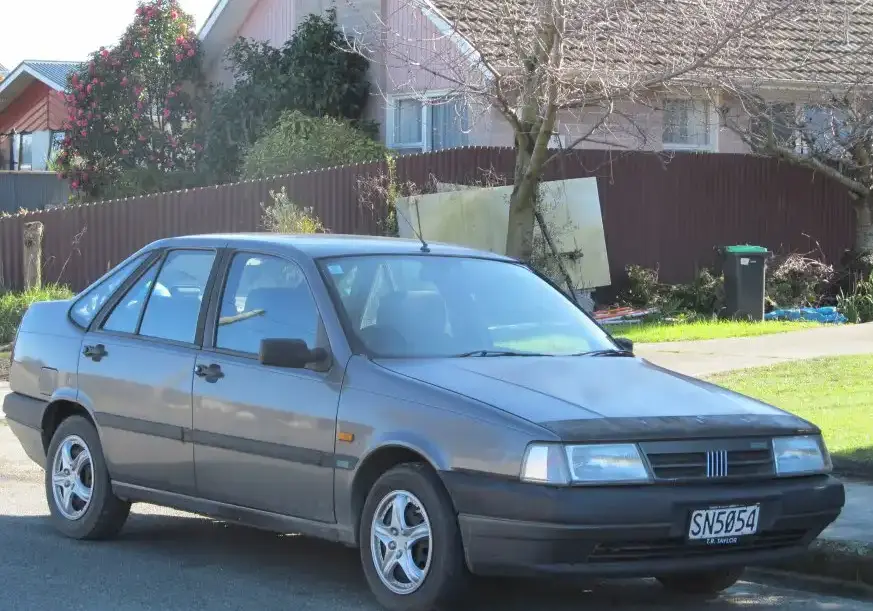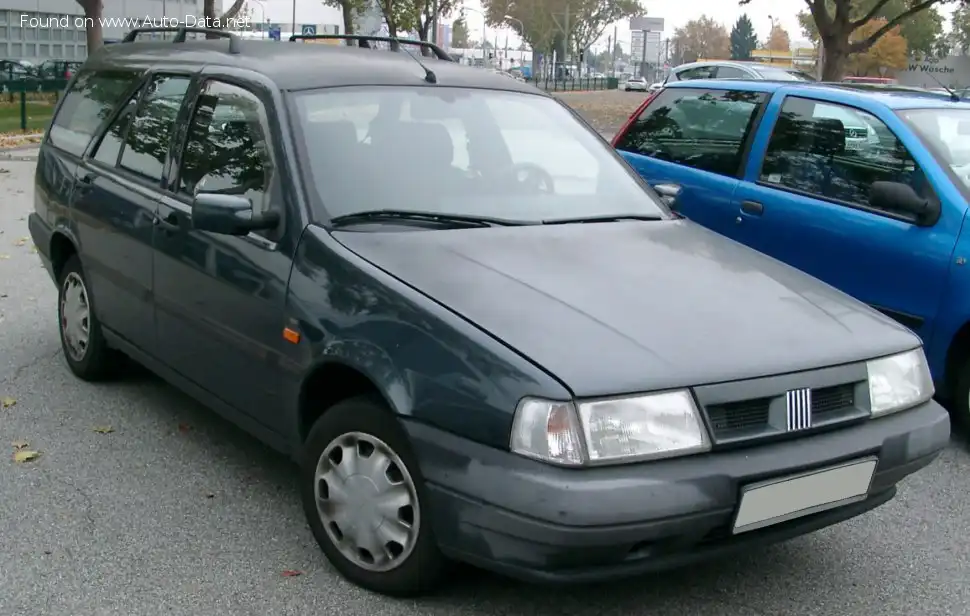
The Fiat Tempra S.w. (159) 2.0 i.e. 4×4, internally designated 159.AP, was a station wagon variant produced between 1992 and 1995. It represented a more practical and versatile offering within the Tempra range, which itself was Fiat’s replacement for the aging Regata. The Tempra, and specifically the S.w. (Station Wagon) model, aimed to provide a modern, spacious, and relatively affordable family vehicle for the European market. The 2.0 i.e. 4×4 trim sat towards the upper end of the Tempra lineup, offering all-wheel drive capability and a more powerful engine than the base models. It was positioned as a competitor to other mid-size family wagons like the Ford Mondeo Estate and Opel/Vauxhall Vectra Estate.
Technical Specifications
| Brand | Fiat |
| Model | Tempra |
| Generation | Tempra S.w. (159) |
| Type (Engine) | 2.0 i.e. 4×4 (159.AP) (115 Hp) |
| Start of production | 1992 |
| End of production | 1995 |
| Powertrain Architecture | Internal Combustion engine |
| Body type | Station wagon (estate) |
| Seats | 5 |
| Doors | 5 |
| Fuel consumption (combined) | 10 l/100 km (23.5 US mpg, 28.2 UK mpg, 10 km/l) |
| Fuel Type | Petrol (Gasoline) |
| Acceleration 0 – 100 km/h | 12.9 sec |
| Acceleration 0 – 62 mph | 12.9 sec |
| Acceleration 0 – 60 mph | 12.3 sec |
| Maximum speed | 182 km/h (113.09 mph) |
| Weight-to-power ratio | 11.8 kg/Hp, 84.7 Hp/tonne |
| Weight-to-torque ratio | 8.4 kg/Nm, 119.3 Nm/tonne |
| Power | 115 Hp @ 5750 rpm |
| Power per litre | 57.6 Hp/l |
| Torque | 162 Nm @ 4000 rpm (119.49 lb.-ft. @ 4000 rpm) |
| Engine layout | Front, Transverse |
| Engine Model/Code | 159 A6.046 |
| Engine displacement | 1995 cm3 (121.74 cu. in.) |
| Number of cylinders | 4 |
| Engine configuration | Inline |
| Cylinder Bore | 84 mm (3.31 in.) |
| Piston Stroke | 90 mm (3.54 in.) |
| Compression ratio | 9.5:1 |
| Number of valves per cylinder | 2 |
| Fuel injection system | Multi-port manifold injection |
| Engine aspiration | Naturally aspirated engine |
| Valvetrain | DOHC |
| Engine oil capacity | 5.2 l (5.49 US qt | 4.58 UK qt) |
| Coolant capacity | 6.9 l (7.29 US qt | 6.07 UK qt) |
| Kerb Weight | 1358 kg (2993.88 lbs.) |
| Max. weight | 1880 kg (4144.69 lbs.) |
| Max load | 522 kg (1150.81 lbs.) |
| Trunk (boot) space – minimum | 500 l (17.66 cu. ft.) |
| Trunk (boot) space – maximum | 1025 l (36.2 cu. ft.) |
| Fuel tank capacity | 60 l (15.85 US gal | 13.2 UK gal) |
| Length | 4472 mm (176.06 in.) |
| Width | 1695 mm (66.73 in.) |
| Height | 1540 mm (60.63 in.) |
| Wheelbase | 2540 mm (100 in.) |
| Front track | 1439 mm (56.65 in.) |
| Rear track | 1405 mm (55.31 in.) |
| Drive wheel | All wheel drive (4×4) |
| Number of gears | 5 gears, manual transmission |
| Front suspension | Independent, type McPherson with coil spring and anti-roll bar |
| Rear suspension | Independent coil spring |
| Front brakes | Ventilated discs |
| Rear brakes | Disc |
| Assisting systems | ABS (Anti-lock braking system) |
| Steering type | Steering rack and pinion |
| Power steering | Hydraulic Steering |
| Tires size | 185/60 R14 |
INTRODUCTION
The Fiat Tempra S.w. 2.0 i.e. 4×4, produced from 1992 to 1995, was a significant offering in Fiat’s lineup. It built upon the success of the Tempra saloon, adding the practicality of a station wagon body style and the added security of all-wheel drive. The Tempra range, based on the 1HX0 platform (later A3), was designed to replace the aging Fiat Regata and compete with increasingly sophisticated European and Japanese rivals. The 2.0 i.e. 4×4 variant represented a premium trim level, aimed at buyers needing both space and all-weather capability. It was a relatively uncommon version, making it a sought-after model among Fiat enthusiasts today.
Powertrain & Engine Architecture
The heart of the Tempra S.w. 2.0 i.e. 4×4 is the 159 A6.046 engine, a 1995cc inline-four cylinder petrol engine. This engine featured a dual overhead camshaft (DOHC) valvetrain with two valves per cylinder. Fuel delivery was handled by a multi-port fuel injection system, providing improved efficiency and responsiveness compared to earlier carbureted Fiat engines. The engine produced 115 horsepower at 5750 rpm and 162 Nm (119.49 lb-ft) of torque at 4000 rpm. The engine’s compression ratio was 9.5:1. The 4×4 system employed a viscous coupling to distribute power between the front and rear axles, providing automatic all-wheel drive engagement when needed. The transmission was a five-speed manual gearbox, chosen for its durability and driver engagement. This particular engine code was used in other Fiat and Lancia models of the era, demonstrating its versatility.
Driving Characteristics
The Tempra S.w. 2.0 i.e. 4×4 offered a balanced driving experience. While not a sports car, the 115 hp engine provided adequate power for comfortable cruising and overtaking. Acceleration from 0-60 mph took around 12.3 seconds, and the top speed was approximately 113 mph. The all-wheel drive system significantly improved traction, particularly on slippery surfaces, making it a capable vehicle in inclement weather. Compared to the lower-powered 1.6L and 1.8L versions, the 2.0 i.e. 4×4 offered noticeably stronger acceleration and a more relaxed driving experience, especially when fully loaded. The five-speed manual transmission allowed for precise gear selection, and the gear ratios were well-suited to both highway driving and city commuting. The steering was light and responsive, although not particularly communicative.
Equipment & Trim Levels
The 2.0 i.e. 4×4 trim level of the Tempra S.w. was relatively well-equipped for its time. Standard features typically included power steering, central locking, electric front windows, and an anti-lock braking system (ABS). The interior featured cloth upholstery, and the dashboard layout was functional and straightforward. Optional extras could include a sunroof, air conditioning, and upgraded audio systems. The S.w. offered a generous amount of cargo space, with 500 liters (17.66 cu. ft.) with the rear seats up and 1025 liters (36.2 cu. ft.) with the seats folded down. The interior trim quality was typical for a family car of the early 1990s, prioritizing durability over luxury.
Chassis & Braking
The Tempra S.w. featured an independent suspension system on all four wheels. The front suspension utilized a McPherson strut design with coil springs and an anti-roll bar, while the rear suspension employed independent coil springs. This setup provided a comfortable ride and decent handling characteristics. The braking system consisted of ventilated discs on the front wheels and solid discs on the rear wheels. The ABS system helped to prevent wheel lockup during hard braking, enhancing safety. The chassis was relatively lightweight for a station wagon, contributing to the car’s overall agility.
Market Reception & Comparison
The Fiat Tempra S.w. 2.0 i.e. 4×4 was generally well-received by automotive critics. It was praised for its spacious interior, comfortable ride, and all-weather capability. However, some critics noted that the engine, while adequate, wasn’t particularly exciting. Compared to the lower-powered Tempra variants, the 2.0 i.e. 4×4 offered a significant performance upgrade, but it also came with a higher price tag. Fuel economy was reasonable for a vehicle of its size and class, averaging around 23.5 US mpg. Reliability was generally good, although some owners reported minor electrical issues. Compared to rivals like the Ford Mondeo Estate and Opel/Vauxhall Vectra Estate, the Tempra offered a slightly more affordable option with a distinctive Italian flair.
Legacy
The Fiat Tempra S.w. 2.0 i.e. 4×4 has become a collectible car among Fiat enthusiasts. The 159 A6.046 engine is known for its durability, and with proper maintenance, it can provide many years of reliable service. Parts availability can be a challenge, but a dedicated network of Fiat specialists and online retailers can help owners source the necessary components. Today, well-maintained examples of the Tempra S.w. 2.0 i.e. 4×4 are increasingly rare and are valued for their unique combination of practicality, performance, and Italian styling. The car represents a significant chapter in Fiat’s history, showcasing the company’s commitment to building spacious, comfortable, and capable family vehicles.