
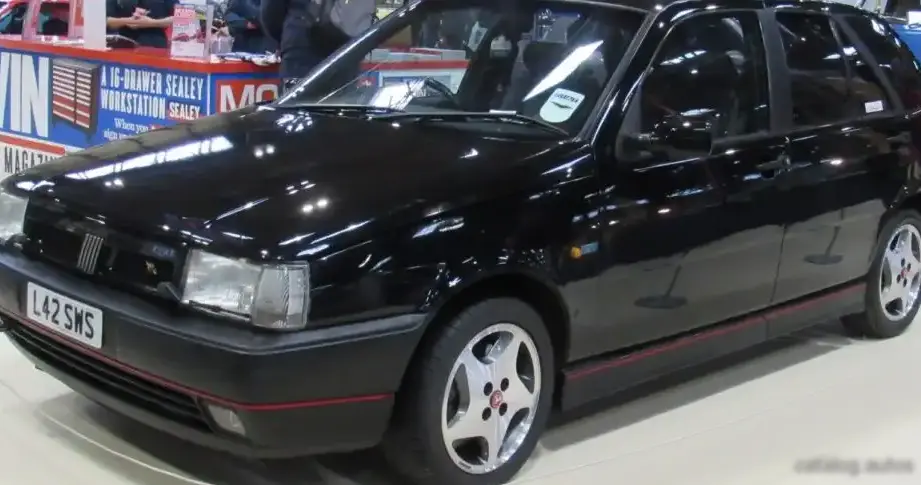
The Fiat Tipo (160) 1.6, producing 78 horsepower, was a mainstay of the Tipo range from its introduction in July 1990 until December 1992. Positioned as an entry-level offering within the broader Tipo family – which included more powerful 1.7, 2.0 liter, and diesel variants – this model aimed to provide affordable and practical transportation for a wide range of buyers. The Tipo (160) itself represented a significant step forward for Fiat, replacing the aging Ritmo and Regata, and was built on the Lancia Delta-derived Tipo 3 platform. This generation of Fiat was a critical model for the company, representing a move towards more modern design and engineering principles.
Technical Specifications
| Brand | Fiat |
| Model | Tipo |
| Generation | Tipo (160) |
| Type (Engine) | 1.6 (78 Hp) |
| Start of production | July, 1990 |
| End of production | December, 1992 |
| Powertrain Architecture | Internal Combustion engine |
| Body type | Hatchback |
| Seats | 5 |
| Doors | 5 |
| Fuel consumption (urban) | 10.5 l/100 km (22.4 US mpg, 26.9 UK mpg, 9.5 km/l) |
| Fuel consumption (extra urban) | 6.3 l/100 km (37.3 US mpg, 44.8 UK mpg, 15.9 km/l) |
| Fuel consumption (combined) | 8.2 l/100 km (28.7 US mpg, 34.4 UK mpg, 12.2 km/l) |
| Fuel Type | Petrol (Gasoline) |
| Acceleration 0 – 100 km/h | 12.4 sec |
| Acceleration 0 – 62 mph | 12.4 sec |
| Acceleration 0 – 60 mph | 11.8 sec |
| Maximum speed | 170 km/h (105.63 mph) |
| Weight-to-power ratio | 12.8 kg/Hp |
| Weight-to-torque ratio | 8.1 kg/Nm |
| Power | 78 Hp @ 6000 rpm |
| Torque | 124 Nm @ 3000 rpm (91.46 lb.-ft. @ 3000 rpm) |
| Engine Model/Code | 159A3.048 |
| Engine aspiration | Naturally aspirated |
| Engine oil capacity | 3.7 l (3.91 US qt, 3.26 UK qt) |
| Coolant capacity | 6.5 l (6.87 US qt, 5.72 UK qt) |
| Kerb Weight | 1000 kg (2204.62 lbs) |
| Max. weight | 1520 kg (3351.03 lbs) |
| Max load | 520 kg (1146.4 lbs) |
| Trunk (boot) space – minimum | 350 l (12.36 cu. ft) |
| Trunk (boot) space – maximum | 1100 l (38.85 cu. ft) |
| Fuel tank capacity | 52 l (13.74 US gal, 11.44 UK gal) |
| Max. roof load | 80 kg (176.37 lbs) |
| Permitted trailer load with brakes (12%) | 1100 kg (2425.08 lbs) |
| Length | 3958 mm (155.83 in) |
| Width | 1700 mm (66.93 in) |
| Height | 1445 mm (56.89 in) |
| Wheelbase | 2540 mm (100 in) |
| Minimum turning circle | 10.3 m (33.79 ft) |
| Drivetrain Architecture | Front wheel drive, Internal Combustion Engine |
| Number of gears | 5 gears, manual transmission |
| Front suspension | Independent, McPherson with coil spring and anti-roll bar |
| Rear suspension | Independent coil spring |
| Front brakes | Disc |
| Rear brakes | Drum |
| Assisting systems | ABS (Anti-lock braking system) |
| Steering type | Steering rack and pinion |
| Power steering | Hydraulic |
| Tires size | 165/70 R13; 165/65 R14 |
Powertrain & Engine Architecture
The heart of the Tipo 1.6 was the 159A3.048 engine, a 1581cc inline-four cylinder gasoline engine. This engine featured a single overhead camshaft (SOHC) valvetrain operating two valves per cylinder. Fuel delivery was managed by a Bosch Mono-Jetronic fuel injection system, a relatively simple system for the time, prioritizing reliability and cost-effectiveness over ultimate performance. The engine’s 78 horsepower output at 6000 rpm and 124 Nm (91.46 lb-ft) of torque at 3000 rpm were modest, but adequate for the vehicle’s weight and intended purpose. The engine was paired with a standard five-speed manual transmission, providing a reasonable balance between fuel economy and drivability. While an automatic transmission was offered on some Tipo models, it was not typically paired with the 1.6-liter engine.
Driving Characteristics
The Tipo 1.6 78 hp offered a predictable, if uninspiring, driving experience. Acceleration was leisurely, taking around 12.4 seconds to reach 62 mph (100 km/h). The engine felt strained at higher speeds, and overtaking required careful planning. The five-speed manual transmission was light and easy to use, but the gear ratios were spaced to prioritize fuel economy rather than spirited performance. Compared to the more powerful 1.7 and 2.0-liter versions, the 1.6 felt noticeably slower, particularly when fully loaded. However, the lighter engine weight contributed to a more nimble feel in city driving. The suspension provided a comfortable ride, absorbing bumps and imperfections in the road reasonably well.
Equipment & Trim Levels
The 1.6-liter Tipo typically came with a fairly basic level of equipment, reflecting its position as the entry-level model. Standard features generally included central locking, power steering, and a basic stereo system. Interior upholstery was typically cloth, and the dashboard featured a simple, functional design. Optional extras included electric windows, a sunroof, and upgraded audio systems. Higher trim levels, such as the SX, added features like alloy wheels, fog lights, and more luxurious interior trim. The overall interior design was practical and durable, prioritizing functionality over luxury.
Chassis & Braking
The Tipo 1.6 utilized an independent McPherson strut suspension at the front and an independent coil spring suspension at the rear. This setup provided a good balance of ride comfort and handling. The front brakes were ventilated discs, while the rear brakes were drums. This configuration was typical for cars in this class at the time, prioritizing cost-effectiveness. Anti-lock braking system (ABS) was available as an option, enhancing safety. The steering was a rack and pinion system with hydraulic power assistance, providing light and precise steering feel.
Market Reception & Comparison
The Fiat Tipo 1.6 was generally well-received by critics as a practical and affordable family car. It was praised for its spacious interior, comfortable ride, and reasonable fuel economy. However, the engine’s lack of power was a common criticism. Compared to rivals like the Volkswagen Golf and Ford Escort, the Tipo 1.6 offered a similar level of practicality but lacked the refinement and performance of some competitors. The 1.6-liter engine offered better fuel economy than the larger displacement engines in the Tipo range, but at the cost of performance. Reliability was generally good, although the Mono-Jetronic fuel injection system could occasionally require maintenance.
Legacy
The Fiat Tipo 1.6, while not the most exciting version of the Tipo, remains a popular choice among classic car enthusiasts and budget-conscious buyers. The 159A3.048 engine is known for its durability and relative simplicity, making it relatively easy and inexpensive to maintain. Parts availability is generally good, although some components may be becoming increasingly difficult to find. Today, the Tipo 1.6 represents a piece of automotive history, offering a glimpse into the design and engineering of the early 1990s. Its affordability and practicality continue to make it a viable option for those seeking a classic European hatchback.
