
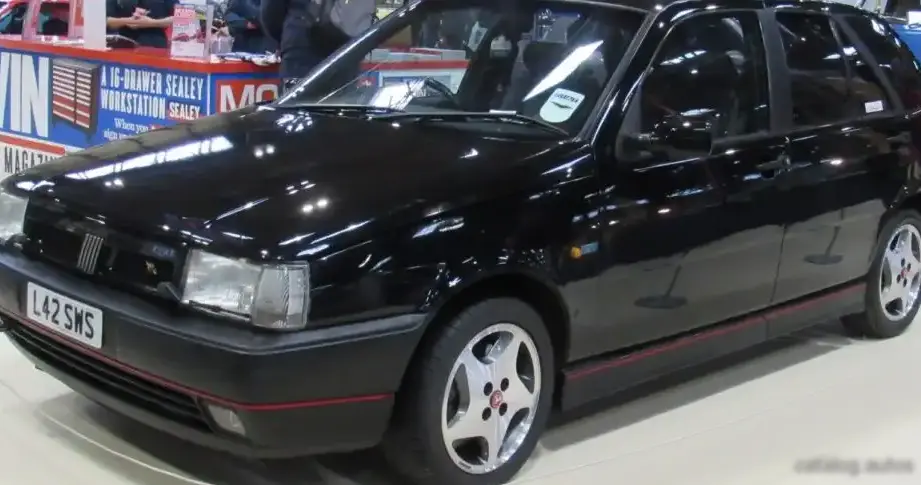
The Fiat Tipo (160) 1.8 i.e., produced between 1990 and 1993, represented a mid-range offering within the second generation of the Tipo family. The Tipo (160) series, launched in 1988, was Fiat’s attempt to consolidate its offerings in the compact family car segment, replacing the aging Uno, Ritmo, and Regata models. The 1.8 i.e. variant aimed to provide a balance between performance and affordability, appealing to buyers seeking a more refined driving experience than the base models but without the expense of the top-tier trims. It was a key component of Fiat’s strategy to compete with established rivals like the Volkswagen Golf and Opel Astra in the European market.
Technical Specifications
| Brand | Fiat |
| Model | Tipo |
| Generation | Tipo (160) |
| Type (Engine) | 1.8 i.e. (110 Hp) |
| Start of production | 1990 |
| End of production | 1993 |
| Powertrain Architecture | Internal Combustion engine |
| Body type | Hatchback |
| Fuel Type | Petrol (Gasoline) |
| Power | 110 Hp |
| Engine Model/Code | 159 A4.000 |
| Engine aspiration | Naturally aspirated engine |
| Engine oil capacity | 5.2 l (5.49 US qt | 4.58 UK qt) |
| Coolant capacity | 6.9 l (7.29 US qt | 6.07 UK qt) |
Powertrain & Engine Architecture
The heart of the Tipo 1.8 i.e. was the 159 A4.000 engine, an 1769 cc inline-four cylinder gasoline engine. This engine featured a cast iron block and an aluminum cylinder head, a common configuration for Fiat engines of the period. It employed a single overhead camshaft (SOHC) design operating two valves per cylinder. Fuel delivery was managed by Bosch Mono-Jetronic fuel injection, a system known for its simplicity and reliability, though less sophisticated than multi-point injection systems found in some competitors. The Mono-Jetronic system delivered fuel through a single injector positioned in the throttle body, providing a relatively even fuel distribution to all cylinders. The engine produced 110 horsepower (82 kW) at 5500 rpm and 154 Nm (114 lb-ft) of torque at 3800 rpm. The engine was typically paired with a three-speed automatic transmission, although a five-speed manual gearbox was also available. The automatic transmission, while offering convenience, was not known for its particularly quick shifts or fuel efficiency.
Driving Characteristics
The 1.8 i.e. automatic offered a comfortable, if not particularly sporty, driving experience. Acceleration was adequate for everyday driving, with a 0-60 mph time estimated around 11-12 seconds. The three-speed automatic transmission meant that the engine often operated at higher revs during highway cruising, impacting fuel economy. Compared to the 1.6-liter versions, the 1.8 i.e. provided noticeably more power, especially when overtaking or climbing hills. However, it lacked the responsiveness of the five-speed manual transmission. The automatic’s gear ratios were geared towards smooth operation rather than maximizing performance. The power delivery was relatively linear, making it easy to modulate the throttle. Compared to the later 2.0-liter 16V models, the 1.8 i.e. felt significantly less powerful and lacked the sharper handling characteristics of those higher-performance variants.
Equipment & Trim Levels
The 1.8 i.e. trim generally sat in the mid-range of the Tipo lineup. Standard equipment typically included central locking, electric front windows, a basic stereo system, and cloth upholstery. The interior was functional and reasonably well-built for its price point, though it lacked the premium feel of some competitors. Optional extras included air conditioning, a sunroof, and upgraded upholstery. The dashboard layout was typical of early 1990s Fiat designs, with a clear instrument cluster and logically arranged controls. The seats offered adequate support for long journeys. The 1.8 i.e. often featured body-colored bumpers and door handles, distinguishing it from the more basic models.
Chassis & Braking
The Tipo (160) utilized a MacPherson strut front suspension and a torsion beam rear suspension. This setup provided a comfortable ride, though it wasn’t particularly sporty. The 1.8 i.e. models typically featured front disc brakes and rear drum brakes. The braking system was adequate for normal driving conditions, but lacked the stopping power of models equipped with rear disc brakes. Stabilizer bars were fitted to both the front and rear axles, helping to reduce body roll during cornering. The steering was power-assisted, making it easy to maneuver at low speeds. The chassis was relatively lightweight, contributing to the car’s overall agility.
Market Reception & Comparison
The Fiat Tipo 1.8 i.e. was generally well-received by automotive critics as a practical and affordable family car. It was praised for its comfortable ride, spacious interior, and relatively fuel-efficient engine (around 28-32 mpg combined). However, the automatic transmission was often criticized for its sluggishness and lack of refinement. Compared to the 1.6-liter models, the 1.8 i.e. offered a noticeable performance improvement, making it a more appealing option for drivers who frequently traveled on highways or carried passengers. Compared to the 2.0-liter 16V models, the 1.8 i.e. was significantly less expensive to purchase and maintain, but it lacked the performance and handling characteristics of those higher-performance variants. The 1.9 TDI diesel version offered superior fuel economy, but at the expense of performance and refinement.
Legacy
The Fiat Tipo 1.8 i.e. powertrain, while not particularly groundbreaking, proved to be relatively reliable. The 159 A4.000 engine is known for its durability, and with regular maintenance, can withstand high mileage. The automatic transmission, however, is a potential weak point, and requires careful servicing to prevent issues. Today, the Tipo 1.8 i.e. is becoming increasingly sought after by classic car enthusiasts, particularly those looking for a well-preserved example of a 1990s family car. Parts availability is generally good, although some specific trim pieces may be difficult to find. The car represents a significant piece of Fiat’s history, and its simple, robust design continues to appeal to many drivers. The Tipo’s success helped establish Fiat as a major player in the European compact car market, paving the way for future models like the Bravo and Stilo.
