
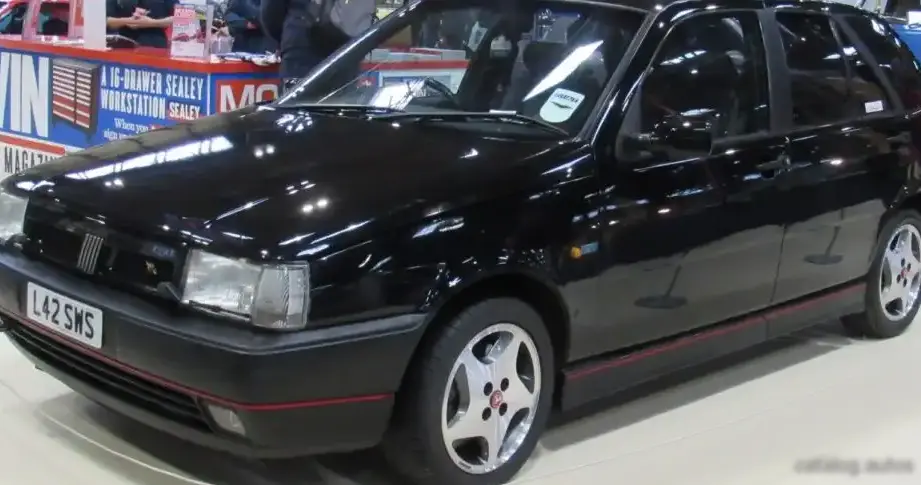
The Fiat Tipo 1.8 i.e.16V Sport, produced between 1989 and 1992, represents a performance-oriented variant within the Tipo (160) range. Positioned as a more engaging alternative to the standard Tipo models, the 1.8 i.e.16V Sport aimed to attract drivers seeking a blend of practicality and spirited driving. It was a key offering during a period where Fiat was attempting to modernize its image and compete more effectively in the increasingly competitive European compact car segment. The Tipo (160) itself was a significant departure from its predecessors, utilizing a modern, space-efficient design and offering a range of engines and trim levels. This particular variant, with its 16-valve engine, was intended to showcase Fiat’s engineering capabilities and appeal to a younger demographic.
Technical Specifications
| Brand | Fiat |
| Model | Tipo |
| Generation | Tipo (160) |
| Type (Engine) | 1.8 i.e.16V Sport (136 Hp) |
| Start of production | 1989 |
| End of production | 1992 |
| Powertrain Architecture | Internal Combustion engine |
| Body type | Hatchback |
| Fuel Type | Petrol (Gasoline) |
| Power | 136 Hp |
| Engine Model/Code | 160 A5.000 |
| Engine aspiration | Naturally aspirated engine |
| Engine oil capacity | 5.2 l (5.49 US qt | 4.58 UK qt) |
| Coolant capacity | 8 l (8.45 US qt | 7.04 UK qt) |
Powertrain & Engine Architecture
The heart of the Tipo 1.8 i.e.16V Sport is the 160 A5.000 engine, an 1769cc inline-four cylinder powerplant. The “i.e.” designation signifies fuel injection, and the “16V” denotes the four valves per cylinder configuration. This dual overhead camshaft (DOHC) design, a relatively advanced feature for its time in the compact car class, allowed for improved breathing and higher engine speeds. The engine utilized Bosch Motronic fuel injection, a sophisticated electronic system that precisely controlled fuel delivery based on various sensor inputs. This system contributed to both performance and fuel efficiency. The engine’s block was constructed from cast iron, providing durability, while the cylinder head was made of aluminum alloy to reduce weight. Unlike some contemporary engines, the 160 A5.000 did not feature variable valve timing. The engine was typically paired with a five-speed manual transmission, although a three-speed automatic transmission was also available, albeit less common in the Sport trim. The automatic transmission, while offering convenience, did impact acceleration performance.
Driving Characteristics
The 1.8 i.e.16V Sport offered a noticeable step up in performance compared to the lower-spec Tipo models. With 136 horsepower, it could achieve a 0-60 mph time of around 8.5 seconds, which was competitive for its class in the early 1990s. The engine delivered a relatively flat torque curve, providing usable power throughout the rev range. The five-speed manual transmission allowed drivers to fully exploit the engine’s capabilities, while the automatic, though smoother, resulted in some power loss. The Sport trim often featured a slightly lowered suspension and stiffer springs, improving handling and reducing body roll. Steering was precise, though not particularly communicative. The overall driving experience was one of balance – a comfortable ride combined with respectable performance. Compared to the base model Tipos, the 1.8 i.e.16V Sport felt significantly more responsive and engaging, making it a popular choice for drivers who enjoyed a more dynamic driving experience.
Equipment & Trim Levels
The “Sport” trim level of the Tipo 1.8 i.e.16V included several features designed to enhance both the aesthetic and functional appeal of the vehicle. Standard equipment typically included alloy wheels, a sporty interior with bolstered seats, and a leather-wrapped steering wheel. The dashboard featured a more comprehensive instrument cluster with additional gauges, such as a tachometer. Exterior styling cues included a rear spoiler and often, a unique color scheme. Optional extras included power windows, central locking, and an upgraded audio system. Interior upholstery was typically a combination of cloth and vinyl, with the Sport trim often featuring a more vibrant color scheme. The overall interior design was functional and modern for its time, prioritizing ergonomics and ease of use.
Chassis & Braking
The Tipo (160) utilized a MacPherson strut front suspension and a torsion beam rear suspension. The Sport trim often benefited from slightly stiffer springs and dampers, improving handling characteristics. Braking systems varied depending on the specific market and year of production. Generally, the front brakes were ventilated discs, while the rear brakes were either drum or disc brakes, with the Sport trim more likely to be equipped with rear discs. Power steering was standard on most models. The chassis was designed to maximize interior space while maintaining a reasonable level of rigidity. The Tipo’s relatively lightweight construction contributed to its nimble handling and respectable fuel economy.
Market Reception & Comparison
The Fiat Tipo 1.8 i.e.16V Sport was generally well-received by automotive critics. It was praised for its lively engine, comfortable ride, and spacious interior. However, some critics noted that the interior materials were not as refined as those found in some of its competitors, such as the Volkswagen Golf or Opel Astra. Compared to the standard Tipo models, the 1.8 i.e.16V Sport offered a significant performance upgrade, but at a higher price point. Fuel economy was reasonable for a 1.8-liter engine, averaging around 30-35 mpg in mixed driving conditions. Reliability was generally good, although some owners reported issues with the Bosch Motronic fuel injection system. Compared to the 1.6-liter and diesel variants, the 1.8 i.e.16V Sport was aimed at a more enthusiastic driver, prioritizing performance over outright fuel efficiency.
Legacy
The Fiat Tipo 1.8 i.e.16V Sport remains a popular choice among classic car enthusiasts. Its combination of performance, practicality, and affordability has ensured its continued appeal. The 160 A5.000 engine is known for its durability and relatively simple maintenance requirements. However, finding original parts can sometimes be challenging. Well-maintained examples of the Tipo 1.8 i.e.16V Sport are becoming increasingly collectible, and prices have been steadily rising in recent years. The car represents a significant moment in Fiat’s history, showcasing the company’s ability to produce a competitive and engaging compact car. Its influence can be seen in subsequent Fiat models, which continued to prioritize space efficiency and driving pleasure.
