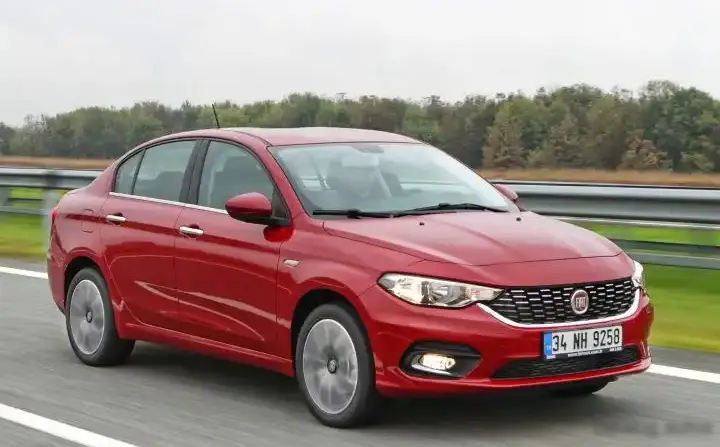
The Fiat Tipo (356) 1.6 MultiJet 120 hp, produced from 2015 to 2018, represented a key offering in Fiat’s re-entry into the compact sedan market. Positioned as a practical and fuel-efficient option, this variant aimed to provide a balance between performance and economy for European buyers. It was a core model within the 356 generation, built on the C-segment platform shared with other Stellantis vehicles. The Tipo aimed to recapture a segment where Fiat had previously lacked a competitive presence, offering a spacious and well-equipped vehicle at a competitive price point.
Technical Specifications
| Brand | Fiat |
| Model | Tipo |
| Generation | Tipo (356) |
| Type (Engine) | 1.6 MultiJet (120 Hp) |
| Start of production | 2015 |
| End of production | 2018 |
| Powertrain Architecture | Internal Combustion engine |
| Body type | Sedan |
| Seats | 5 |
| Doors | 4 |
| Fuel consumption (urban) | 5.2 l/100 km (45.2 US mpg, 54.3 UK mpg, 19.2 km/l) |
| Fuel consumption (extra urban) | 3.6 l/100 km (65.3 US mpg, 78.5 UK mpg, 27.8 km/l) |
| Fuel consumption (combined) | 4.2 l/100 km (56 US mpg, 67.3 UK mpg, 23.8 km/l) |
| CO2 emissions | 110 g/km |
| Fuel Type | Diesel |
| Acceleration 0 – 100 km/h | 9.7 sec |
| Acceleration 0 – 62 mph | 9.7 sec |
| Acceleration 0 – 60 mph | 9.2 sec |
| Maximum speed | 199 km/h (123.65 mph) |
| Emission standard | Euro 6 |
| Weight-to-power ratio | 10.6 kg/Hp, 94.5 Hp/tonne |
| Weight-to-torque ratio | 4 kg/Nm, 252 Nm/tonne |
| Power | 120 Hp @ 3750 rpm |
| Power per litre | 75.1 Hp/l |
| Torque | 320 Nm @ 1750 rpm (236.02 lb.-ft. @ 1750 rpm) |
| Engine layout | Front, Transverse |
| Engine Model/Code | 55260384 |
| Engine displacement | 1598 cm3 (97.52 cu. in.) |
| Number of cylinders | 4 |
| Engine configuration | Inline |
| Cylinder Bore | 79.5 mm (3.13 in.) |
| Piston Stroke | 80.5 mm (3.17 in.) |
| Compression ratio | 16.5:1 |
| Number of valves per cylinder | 4 |
| Fuel injection system | Diesel Commonrail |
| Engine aspiration | Turbocharger, Intercooler |
| Engine oil capacity | 4.8 l (5.07 US qt | 4.22 UK qt) |
| Coolant capacity | 6.1 l (6.45 US qt | 5.37 UK qt) |
| Kerb Weight | 1270 kg (2799.87 lbs.) |
| Max. weight | 1770 kg (3902.18 lbs.) |
| Max load | 500 kg (1102.31 lbs.) |
| Trunk (boot) space – minimum | 520 l (18.36 cu. ft.) |
| Fuel tank capacity | 45 l (11.89 US gal | 9.9 UK gal) |
| Permitted trailer load with brakes (12%) | 1200 kg (2645.55 lbs.) |
| Length | 4532 mm (178.43 in.) |
| Width | 1792 mm (70.55 in.) |
| Height | 1497 mm (58.94 in.) |
| Wheelbase | 2636 mm (103.78 in.) |
| Front track | 1542 mm (60.71 in.) |
| Rear track | 1543 mm (60.75 in.) |
| Minimum turning circle | 10.93 m (35.86 ft.) |
| Drivetrain Architecture | Front wheel drive |
| Number of gears | 6 |
| Gearbox type | Manual transmission |
| Front suspension | Independent type McPherson |
| Rear suspension | Semi-independent, coil spring |
| Front brakes | Disc |
| Rear brakes | Disc |
| Assisting systems | ABS (Anti-lock braking system) |
| Steering type | Steering rack and pinion |
| Tires size | 225/45 R17 |
| Wheel rims size | 17 |
Powertrain & Engine Architecture
The heart of the Tipo 1.6 MultiJet was the 55260384 engine code, a 1.6-liter inline-four cylinder diesel engine. This engine was part of Fiat’s second-generation MultiJet technology, known for its common-rail direct injection system and turbocharging. The MultiJet II system allowed for multiple injections per combustion cycle, improving efficiency and reducing noise. The engine featured a variable geometry turbocharger (VGT) and an intercooler to optimize boost pressure and intake air temperature. The 16.5:1 compression ratio was typical for a diesel engine, contributing to its thermal efficiency. The six-speed manual transmission was the standard offering, chosen for its balance of fuel economy and driver engagement. The engine’s transverse mounting and front-wheel-drive configuration were standard for this class of vehicle.
Driving Characteristics
The 120 hp output and 320 Nm (236 lb-ft) of torque provided adequate performance for everyday driving. Acceleration from 0-60 mph took approximately 9.2 seconds, and the car had a top speed of 199 km/h (123.65 mph). While not a particularly sporty variant, the 1.6 MultiJet offered sufficient power for highway cruising and overtaking. The manual transmission’s gear ratios were tuned for fuel efficiency, with taller gearing in higher gears. Compared to higher-output versions of the Tipo, such as those with more powerful diesel engines or gasoline options, the 1.6 MultiJet prioritized fuel economy over outright performance. The turbocharger did exhibit some lag at lower engine speeds, but the torque delivery was strong once the turbo spooled up.
Equipment & Trim Levels
The 1.6 MultiJet typically came with a reasonable level of standard equipment. Base models included air conditioning, power windows, central locking, and a basic audio system. Higher trim levels added features like alloy wheels, fog lights, a touchscreen infotainment system with Bluetooth connectivity, and cruise control. Interior upholstery was typically cloth, with options for upgraded materials on higher trims. Safety features included ABS, electronic stability control, and multiple airbags. Optional extras included parking sensors, a rearview camera, and a panoramic sunroof.
Chassis & Braking
The Tipo 1.6 MultiJet utilized a McPherson strut front suspension and a semi-independent coil spring rear suspension. This setup provided a comfortable ride quality, suitable for everyday use. The front brakes were ventilated discs, while the rear brakes were solid discs. ABS (Anti-lock Braking System) was standard. The chassis was tuned for stability and predictability, rather than sporty handling. The relatively modest weight of the vehicle (around 1270 kg / 2799.87 lbs) helped to contribute to its decent fuel economy and manageable handling characteristics.
Market Reception & Comparison
The Fiat Tipo 1.6 MultiJet was generally well-received by critics as a practical and affordable family car. Its fuel efficiency was a major selling point, and it offered a good level of space and comfort for its price. Compared to other diesel-powered compact sedans, the Tipo offered a competitive fuel economy and a reasonable level of performance. However, some critics noted that the interior materials were not as premium as those found in some rival vehicles. The 1.6 MultiJet was often seen as a more sensible and economical alternative to the higher-powered versions of the Tipo, appealing to buyers who prioritized fuel efficiency and practicality over outright performance.
Legacy
The 1.6 MultiJet engine proved to be a relatively reliable unit, although, like all diesel engines, it required regular maintenance, including oil changes and filter replacements. The Tipo 1.6 MultiJet has maintained a reasonable reputation for reliability in the used car market. The engine’s fuel efficiency and relatively low running costs continue to make it an attractive option for budget-conscious buyers. While not a particularly collectible vehicle, the Tipo 1.6 MultiJet represents a significant step in Fiat’s return to the competitive compact sedan segment, offering a practical and economical choice for European drivers.