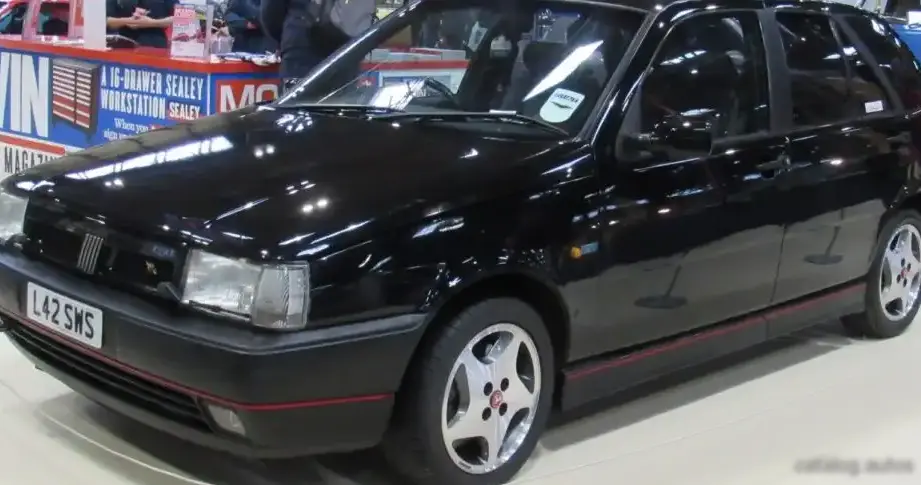
The Fiat Tipo (357) Hatchback 1.3 (95 hp) was a front-wheel-drive compact car produced by Fiat between 2016 and 2018. Positioned as an entry-level offering within the Tipo range, it aimed to provide affordable and efficient transportation. This variant played a significant role in re-establishing Fiat’s presence in the competitive European C-segment hatchback market, offering a practical and economical alternative to rivals like the Volkswagen Golf and Ford Focus. It was part of the broader Tipo family, which also included sedan and station wagon body styles, all built on the Small Wide architecture.
Technical Specifications
| Brand | Fiat |
| Model | Tipo |
| Generation | Tipo (357) Hatchback |
| Type (Engine) | 1.3 (95 Hp) |
| Start of production | 2016 |
| End of production | 2018 |
| Powertrain Architecture | Internal Combustion engine |
| Body type | Hatchback |
| Seats | 5 |
| Doors | 5 |
| Fuel consumption (urban) | 4.5 l/100 km (63.6 US mpg, 76.3 UK mpg, 27 km/l) |
| Fuel consumption (extra urban) | 3.3 l/100 km (71.3 US mpg, 85.6 UK mpg, 30.3 km/l) |
| Fuel consumption (combined) | 3.7 l/100 km (63.6 US mpg, 76.3 UK mpg, 27 km/l) |
| CO2 emissions | 99 g/km |
| Fuel Type | Diesel |
| Acceleration 0 – 100 km/h | 12 sec |
| Acceleration 0 – 62 mph | 12 sec |
| Acceleration 0 – 60 mph | 11.4 sec |
| Maximum speed | 180 km/h (111.85 mph) |
| Emission standard | Euro 6 |
| Weight-to-power ratio | 14.4 kg/Hp |
| Weight-to-torque ratio | 6.8 kg/Nm |
| Power | 95 Hp @ 3750 rpm |
| Torque | 200 Nm @ 1500 rpm (147.51 lb.-ft. @ 1500 rpm) |
| Engine layout | Front, Transverse |
| Engine Model/Code | 55283775 |
| Engine displacement | 1248 cm3 (76.16 cu. in.) |
| Number of cylinders | 4 |
| Engine configuration | Inline |
| Cylinder Bore | 69.6 mm (2.74 in.) |
| Piston Stroke | 82 mm (3.23 in.) |
| Compression ratio | 16.8:1 |
| Number of valves per cylinder | 4 |
| Fuel injection system | Diesel Commonrail |
| Engine aspiration | Turbocharger, Intercooler |
| Engine oil capacity | 3.9 l (4.12 US qt | 3.43 UK qt) |
| Coolant capacity | 6.1 l (6.45 US qt | 5.37 UK qt) |
| Kerb Weight | 1365 kg (3009.31 lbs.) |
| Max. weight | 1865 kg (4111.62 lbs.) |
| Max load | 500 kg (1102.31 lbs.) |
| Trunk (boot) space – minimum | 440 l (15.54 cu. ft.) |
| Fuel tank capacity | 50 l (13.21 US gal | 11 UK gal) |
| Permitted trailer load with brakes (12%) | 1200 kg (2645.55 lbs.) |
| Length | 4368 mm (171.97 in.) |
| Width | 1792 mm (70.55 in.) |
| Height | 1495 mm (58.86 in.) |
| Wheelbase | 2638 mm (103.86 in.) |
| Front track | 1542 mm (60.71 in.) |
| Rear track | 1543 mm (60.75 in.) |
| Front overhang | 893 mm (35.16 in.) |
| Rear overhang | 837 mm (32.95 in.) |
| Minimum turning circle | 10.93 m (35.86 ft.) |
| Drivetrain Architecture | Front wheel drive |
| Number of gears | 5 |
| Gearbox type | Manual transmission |
| Front suspension | Independent type McPherson |
| Rear suspension | Semi-independent, coil spring |
| Front brakes | Disc |
| Rear brakes | Disc |
| Assisting systems | ABS (Anti-lock braking system) |
| Steering type | Steering rack and pinion |
| Power steering | Electric |
Powertrain & Engine Architecture
The Tipo 1.3 was powered by Fiat’s 1.3-liter Multijet II turbocharged diesel engine, designated with engine code 55283775. This engine was a common rail direct injection diesel, known for its fuel efficiency and relatively low emissions. The engine featured four cylinders arranged in an inline configuration, with a displacement of 1248 cm3. It produced 95 horsepower at 3750 rpm and 200 Nm (147.51 lb-ft) of torque at 1500 rpm. The turbocharger and intercooler helped to boost power and efficiency. The engine utilized a sophisticated common rail fuel injection system, delivering precise fuel metering for optimal combustion. The 5-speed manual transmission was the only gearbox option available with this engine, prioritizing fuel economy over outright performance.
Driving Characteristics
The 1.3-liter engine, paired with the 5-speed manual transmission, provided adequate, but not exhilarating, performance. Acceleration from 0 to 100 km/h (0-62 mph) took around 12 seconds. The engine’s torque peak at 1500 rpm meant that it felt reasonably responsive in everyday driving situations, particularly for overtaking at lower speeds. However, it lacked the punch of higher-powered variants like the 1.6-liter petrol engine. The gear ratios were tuned for economy, meaning the engine could feel strained at higher speeds or when fully loaded. Compared to the petrol versions, the diesel offered significantly better fuel economy, but at the cost of refinement and engine noise.
Equipment & Trim Levels
The 1.3-liter Tipo typically came with a base level of equipment, focusing on practicality and value. Standard features generally included air conditioning, power steering, electric front windows, a basic audio system with USB connectivity, and ABS brakes. Safety features such as driver and passenger airbags were also standard. Higher trim levels, available with other engine options, offered features like alloy wheels, a touchscreen infotainment system, rear parking sensors, and cruise control. Interior upholstery was typically cloth, with a functional, if somewhat basic, dashboard layout. Optional extras included metallic paint, fog lights, and upgraded audio systems.
Chassis & Braking
The Tipo 1.3 utilized a McPherson strut independent suspension at the front and a semi-independent coil spring suspension at the rear. This setup provided a reasonable balance between ride comfort and handling. The front brakes were ventilated discs, while the rear brakes were solid discs. ABS (Anti-lock Braking System) was standard. The chassis was designed to provide a stable and predictable driving experience, prioritizing comfort over sporty handling. The weight of the vehicle (approximately 1365 kg or 3009.31 lbs) contributed to its relatively modest performance.
Market Reception & Comparison
The Fiat Tipo 1.3 received mixed reviews. Critics praised its fuel efficiency, practicality, and competitive pricing. However, it was often criticized for its somewhat unrefined engine, basic interior, and lack of dynamic flair. Compared to other engines in the Tipo lineup, the 1.3 diesel was the most economical but also the slowest. The petrol versions offered more power and refinement, while the higher-output diesel variants provided a better balance of performance and economy. In terms of reliability, the 1.3 Multijet II engine was generally considered to be robust, but like all diesel engines, it was susceptible to issues related to the diesel particulate filter (DPF) if not driven on longer journeys regularly.
Legacy
The Fiat Tipo 1.3 (95 hp) represents a practical and economical option in the compact hatchback segment. While not a performance standout, it offered a compelling combination of fuel efficiency, space, and affordability. On the used car market, these models are generally available at attractive prices. The 1.3 Multijet II engine has proven to be relatively durable, but potential buyers should be aware of the potential for DPF issues and ensure the vehicle has been properly maintained. The Tipo, in general, helped Fiat regain some market share in the European C-segment, offering a viable alternative to established rivals.