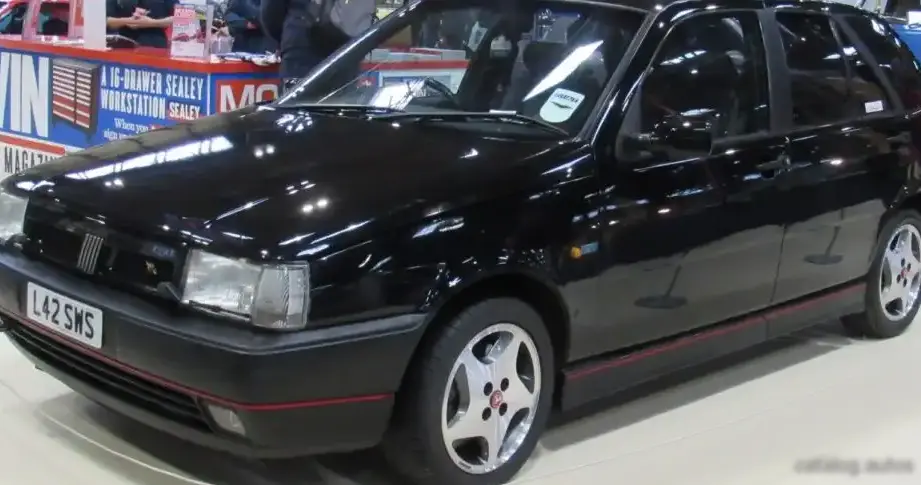
The Fiat Tipo (357) Hatchback 1.6 (110 hp) Automatic, produced between 2016 and 2018, represented a mid-range offering within the revived Tipo lineup. The Tipo nameplate, historically significant for Fiat, returned in 2016 as a practical, value-oriented compact car aimed primarily at the European market. This particular variant, combining a 1.6-liter gasoline engine with a six-speed automatic transmission, was designed to appeal to buyers seeking a balance between fuel efficiency and ease of driving. It sat between the base 1.4-liter engine and the more powerful 1.6 diesel in terms of performance and price point.
Technical Specifications
| Brand | Fiat |
| Model | Tipo |
| Generation | Tipo (357) Hatchback |
| Type (Engine) | 1.6 (110 Hp) Automatic |
| Start of production | 2016 |
| End of production | 2018 |
| Powertrain Architecture | Internal Combustion engine |
| Body type | Hatchback |
| Seats | 5 |
| Doors | 5 |
| Fuel consumption (urban) | 9.2 l/100 km (25.6 US mpg) |
| Fuel consumption (extra urban) | 4.6 l/100 km (51.1 US mpg) |
| Fuel consumption (combined) | 6.3 l/100 km (37.3 US mpg) |
| CO2 emissions | 147 g/km |
| Fuel Type | Petrol (Gasoline) |
| Acceleration 0 – 100 km/h | 11.5 sec |
| Acceleration 0 – 62 mph | 11.5 sec |
| Acceleration 0 – 60 mph | 10.9 sec |
| Maximum speed | 192 km/h (119.3 mph) |
| Emission standard | Euro 6 |
| Weight-to-power ratio | 12.6 kg/Hp |
| Weight-to-torque ratio | 9.1 kg/Nm |
| Power | 110 Hp @ 5500 rpm |
| Torque | 152 Nm @ 4500 rpm (112.11 lb.-ft. @ 4500 rpm) |
| Engine layout | Front, Transverse |
| Engine Model/Code | 55268036 |
| Engine displacement | 1598 cm3 (97.52 cu. in.) |
| Number of cylinders | 4 |
| Engine configuration | Inline |
| Cylinder Bore | 77 mm (3.03 in.) |
| Piston Stroke | 85.8 mm (3.38 in.) |
| Compression ratio | 11:1 |
| Number of valves per cylinder | 4 |
| Fuel injection system | Multi-port manifold injection |
| Engine aspiration | Naturally aspirated engine |
| Engine oil capacity | 4.7 l (4.97 US qt | 4.14 UK qt) |
| Coolant capacity | 5.4 l (5.71 US qt | 4.75 UK qt) |
| Kerb Weight | 1385 kg (3053.4 lbs.) |
| Max. weight | 1885 kg (4155.71 lbs.) |
| Max load | 500 kg (1102.31 lbs.) |
| Trunk (boot) space – minimum | 440 l (15.54 cu. ft.) |
| Fuel tank capacity | 50 l (13.21 US gal | 11 UK gal) |
| Permitted trailer load with brakes (12%) | 800 kg (1763.7 lbs.) |
| Length | 4368 mm (171.97 in.) |
| Width | 1792 mm (70.55 in.) |
| Height | 1495 mm (58.86 in.) |
| Wheelbase | 2638 mm (103.86 in.) |
| Front track | 1542 mm (60.71 in.) |
| Rear track | 1543 mm (60.75 in.) |
| Front overhang | 893 mm (35.16 in.) |
| Rear overhang | 837 mm (32.95 in.) |
| Minimum turning circle | 10.93 m (35.86 ft.) |
| Drivetrain Architecture | Front wheel drive |
| Number of gears and type of gearbox | 6 gears, automatic transmission |
| Front suspension | Independent type McPherson |
| Rear suspension | Semi-independent, coil spring |
| Front brakes | Disc |
| Rear brakes | Disc |
| Assisting systems | ABS (Anti-lock braking system) |
| Steering type | Steering rack and pinion |
| Power steering | Electric Steering |
Powertrain & Engine Architecture
The heart of this Tipo variant is Fiat’s 1.6-liter inline-four cylinder gasoline engine, internally designated as the 55268036. This engine is a naturally aspirated unit, meaning it doesn’t employ turbocharging or supercharging. It utilizes a multi-point fuel injection system, delivering fuel directly into the intake ports. The engine features a double overhead camshaft (DOHC) valvetrain with four valves per cylinder, contributing to its relatively efficient breathing. The 110 horsepower peak is achieved at 5500 rpm, while the 152 Nm (112 lb-ft) of torque is delivered at 4500 rpm. Paired with this engine is a six-speed automatic transmission. This transmission, while providing convenience, wasn’t known for particularly rapid shifts or sporting performance. It was selected for its smooth operation and suitability for everyday driving.
Driving Characteristics
The 1.6-liter automatic Tipo delivers adequate, but not exhilarating, performance. Acceleration from 0-60 mph takes around 10.9 seconds, and top speed is rated at 119.3 mph. The automatic transmission, while smooth, does sap some power compared to the available manual transmission options. Gear ratios are tuned for fuel economy rather than outright acceleration. In real-world driving, the engine feels reasonably responsive around town, but can feel strained when attempting quicker overtaking maneuvers or climbing hills. The automatic transmission tends to hold onto gears longer to maximize fuel efficiency, which can sometimes result in a slight delay in response when pressing the accelerator.
Equipment & Trim Levels
The 1.6 Automatic trim typically included standard features such as air conditioning, power windows, central locking, and a basic audio system with USB connectivity. Safety equipment included ABS brakes, electronic stability control, and multiple airbags. Higher trim levels, available as options, added features like alloy wheels, a touchscreen infotainment system, rear parking sensors, and cruise control. Interior upholstery was typically cloth, with a functional, if somewhat basic, dashboard layout. The overall interior design prioritized practicality and durability over luxury.
Chassis & Braking
The Tipo (357) utilizes a McPherson strut independent suspension setup at the front, providing a comfortable ride quality. The rear suspension employs a semi-independent coil spring arrangement. Brakes are disc brakes on all four wheels, offering adequate stopping power for the vehicle’s weight and performance. The steering is electrically assisted, providing light and easy steering feel. The chassis is tuned for comfort and stability, rather than sporty handling. Stabilizer bars are present, but are relatively modest in size, reflecting the car’s focus on everyday usability.
Market Reception & Comparison
The Fiat Tipo 1.6 Automatic was generally well-received as a practical and affordable family car. Critics praised its spacious interior, comfortable ride, and competitive pricing. However, the engine and automatic transmission combination were often criticized for being somewhat underpowered and lacking refinement compared to rivals. Compared to the 1.4-liter engine, the 1.6 offered a noticeable performance improvement, but at the cost of slightly increased fuel consumption. The diesel variants provided superior fuel economy and torque, but came with a higher purchase price. The Tipo competed with other mainstream compact hatchbacks like the Volkswagen Golf, Ford Focus, and Peugeot 308.
Legacy
The Fiat Tipo (357) 1.6 Automatic, while not a performance standout, proved to be a reliable and durable vehicle. The 1.6-liter engine, while not particularly technologically advanced, is known for its robustness and relatively low maintenance costs. In the used car market, these models represent a good value proposition for buyers seeking an affordable and practical family car. Common issues are generally limited to wear-and-tear items such as brake pads, tires, and suspension components. The automatic transmission, if properly maintained, is generally reliable. The Tipo’s legacy lies in its ability to provide a functional and affordable transportation solution for a wide range of buyers.