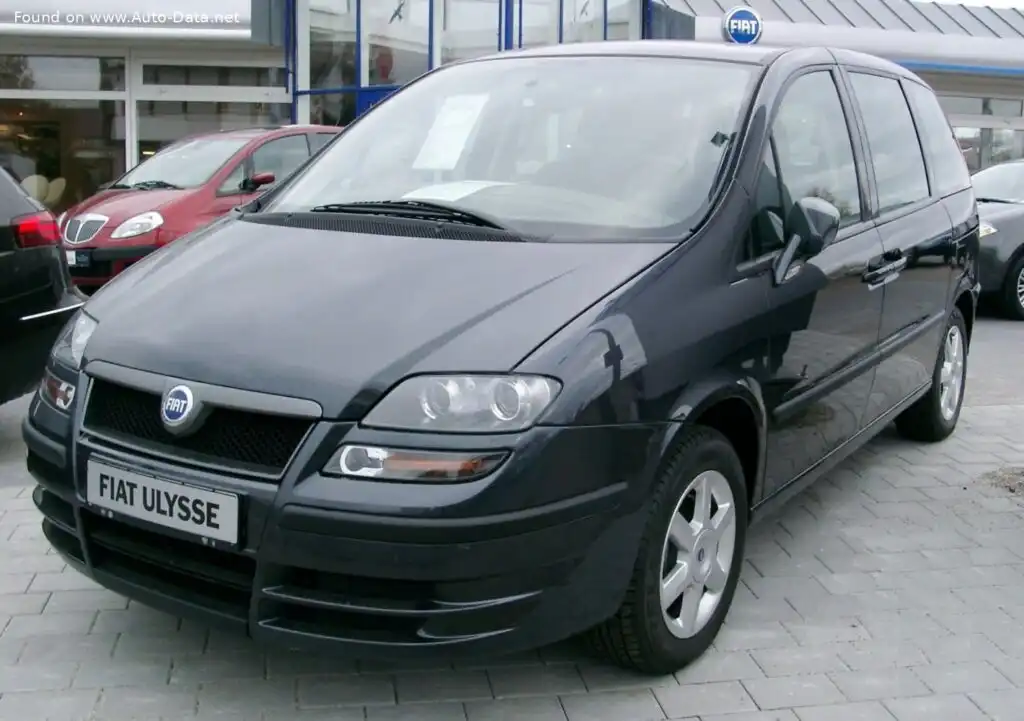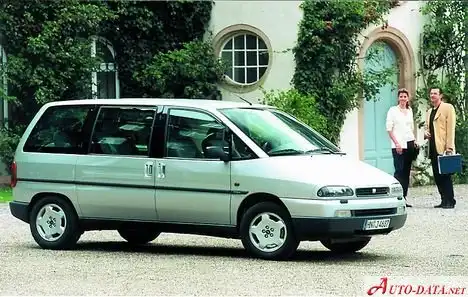
The Fiat Ulysse I (22/220) 2.0 JTD, produced between 1999 and 2002, represents a significant offering in the European minivan and MPV (Multi-Purpose Vehicle) segment. Part of the first generation Ulysse range (designated 22/220), this variant was powered by a 2.0-liter turbocharged diesel engine producing 109 horsepower. The Ulysse, developed in collaboration with Peugeot and Citroën (resulting in the Peugeot 806 and Citroën Evasion/Synergie), aimed to provide a spacious and versatile vehicle for families and those requiring substantial passenger or cargo capacity. This particular 2.0 JTD model occupied a middle ground in the Ulysse lineup, offering a balance between fuel efficiency, performance, and affordability.
Technical Specifications
| Brand | Fiat |
| Model | Ulysse |
| Generation | Ulysse I (22/220) |
| Type (Engine) | 2.0 JTD (109 Hp) |
| Start of production | 1999 |
| End of production | 2002 |
| Powertrain Architecture | Internal Combustion engine |
| Body type | Minivan, MPV |
| Seats | 7 |
| Doors | 5 |
| Fuel Type | Diesel |
| Acceleration 0 – 100 km/h | 14 sec |
| Acceleration 0 – 62 mph | 14 sec |
| Acceleration 0 – 60 mph | 13.3 sec |
| Maximum speed | 175 km/h (108.74 mph) |
| Weight-to-power ratio | 14.7 kg/Hp, 68.1 Hp/tonne |
| Weight-to-torque ratio | 6.4 kg/Nm, 156.3 Nm/tonne |
| Power | 109 Hp @ 4000 rpm |
| Power per litre | 54.6 Hp/l |
| Torque | 250 Nm @ 1750 rpm (184.39 lb.-ft. @ 1750 rpm) |
| Engine layout | Front, Transverse |
| Engine Model/Code | RHZ |
| Engine displacement | 1997 cm3 (121.86 cu. in.) |
| Number of cylinders | 4 |
| Engine configuration | Inline |
| Compression ratio | 17:1 |
| Number of valves per cylinder | 2 |
| Fuel injection system | Diesel Commonrail |
| Engine aspiration | Turbocharger, Intercooler |
| Engine oil capacity | 4.5 l (4.76 US qt | 3.96 UK qt) |
| Coolant | 9 l (9.51 US qt | 7.92 UK qt) |
| Kerb Weight | 1600 kg (3527.4 lbs) |
| Max. weight | 2385 kg (5258.02 lbs) |
| Max load | 785 kg (1730.63 lbs) |
| Trunk (boot) space – minimum | 340 l (12.01 cu. ft.) |
| Trunk (boot) space – maximum | 3300 l (116.54 cu. ft.) |
| Fuel tank capacity | 80 l (21.13 US gal | 17.6 UK gal) |
| Length | 4454 mm (175.35 in) |
| Width | 1834 mm (72.2 in) |
| Height | 1714 mm (67.48 in) |
| Wheelbase | 2825 mm (111.22 in) |
| Front track | 1534 mm (60.39 in) |
| Rear (Back) track | 1540 mm (60.63 in) |
| Drivetrain Architecture | The Internal combustion engine (ICE) drives the front wheels of the vehicle. |
| Drive wheel | Front wheel drive |
| Number of gears and type of gearbox | 5 gears, manual transmission |
| Front suspension | Double wishbone |
| Rear suspension | Coil spring |
| Front brakes | Disc |
| Rear brakes | Drum |
| Assisting systems | ABS (Anti-lock braking system) |
| Steering type | Steering rack and pinion |
| Power steering | Hydraulic Steering |
| Tires size | 205/65 R15 |
Powertrain & Engine Architecture
The heart of the Ulysse I 2.0 JTD is the RHZ engine, a 1997cc inline four-cylinder diesel. This engine utilized a common rail direct injection system, a relatively new technology at the time, which allowed for more precise fuel delivery and improved combustion efficiency. The turbocharger, coupled with an intercooler, boosted power output to 109 horsepower and 250 Nm (184 lb-ft) of torque. The engine featured a relatively low compression ratio of 17:1, contributing to its durability. The five-speed manual transmission was the standard offering for this variant, providing a balance between fuel economy and drivability. The engine’s layout was front transverse, a common configuration for front-wheel-drive vehicles.
Driving Characteristics
The 2.0 JTD engine in the Ulysse I provided adequate, though not exhilarating, performance. Acceleration from 0-60 mph took around 13.3 seconds, and top speed was approximately 108.74 mph. The engine’s torque peak at 1750 rpm meant that it offered reasonable pulling power for everyday driving and when fully loaded with passengers and luggage. Compared to the more powerful 2.4 JTD variants, the 2.0 JTD felt less responsive, particularly when overtaking. However, it offered superior fuel economy. The five-speed manual transmission was well-matched to the engine’s characteristics, providing smooth gear changes. The gear ratios were geared towards maximizing fuel efficiency rather than outright performance.
Equipment & Trim Levels
The Ulysse I 2.0 JTD typically came equipped with a reasonable level of standard features. These included power steering, central locking, electric front windows, and an ABS anti-lock braking system. Interior upholstery was typically cloth, with a functional, if somewhat basic, dashboard layout. Optional extras included air conditioning, rear electric windows, upgraded audio systems, and alloy wheels. Higher trim levels offered features like leather upholstery and wood trim inserts. The Ulysse was designed with practicality in mind, offering a flexible seating arrangement with individual seats that could be folded or removed to maximize cargo space.
Chassis & Braking
The Ulysse I featured a front-wheel-drive layout with a double wishbone suspension at the front and a coil spring suspension at the rear. This setup provided a comfortable ride, although handling was not particularly sporty. The front brakes were discs, while the rear brakes were drums – a cost-saving measure common in this class of vehicle. The hydraulic power steering provided light and easy steering, making it maneuverable in urban environments. Stabilizer bars were included to reduce body roll during cornering, but the Ulysse was primarily designed for comfortable cruising rather than dynamic driving.
Market Reception & Comparison
The Fiat Ulysse I 2.0 JTD was generally well-received by critics as a practical and spacious MPV. It was praised for its versatility, comfortable ride, and relatively fuel-efficient engine. However, some reviewers noted that the 2.0 JTD engine lacked the punch of the larger 2.4 JTD variants. Compared to competitors like the Renault Espace and Volkswagen Sharan, the Ulysse offered a competitive price point and a generous amount of interior space. The 2.0 JTD model was particularly popular with families and those seeking a cost-effective MPV.
Legacy
The Fiat Ulysse I 2.0 JTD, while not known for being a particularly exciting vehicle, proved to be a reliable and durable workhorse. The 2.0 JTD engine, when properly maintained, is known for its longevity. In the used car market today, these vehicles are often found with high mileage but can still offer affordable transportation for those needing a spacious and versatile vehicle. Common issues include wear and tear on suspension components and potential problems with the diesel injection system, but these are generally manageable with regular maintenance. The Ulysse I 2.0 JTD represents a significant chapter in Fiat’s history of producing practical and family-oriented vehicles.