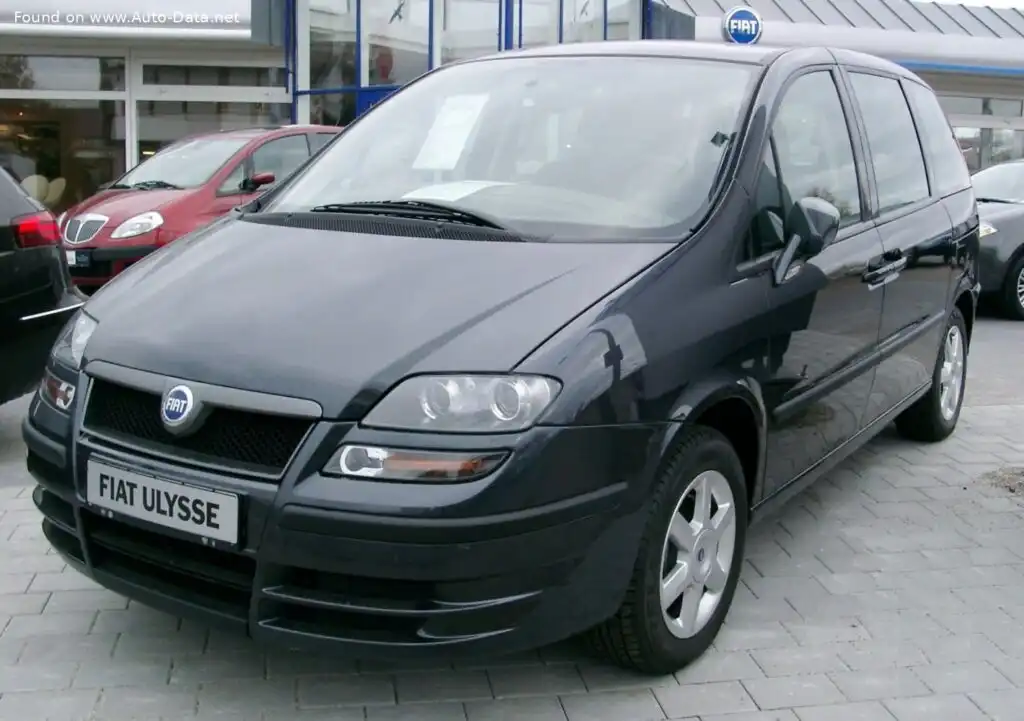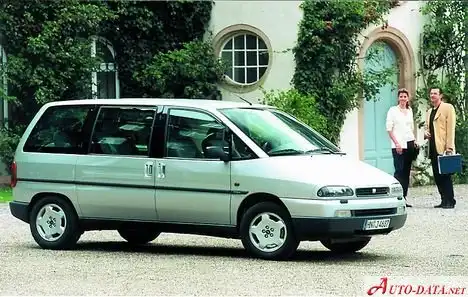
The Fiat Ulysse I, specifically the 22/220 variant powered by the 2.0 Turbo (220.AD5) engine producing 147 horsepower, was a significant offering in the European minivan market from 1994 to 2002. This model represented Fiat’s entry into the increasingly popular multi-purpose vehicle (MPV) segment, developed in collaboration with Peugeot and Citroën – resulting in the shared platform known as the Eurovan. The Ulysse aimed to provide a spacious, comfortable, and versatile vehicle for families and those requiring flexible passenger and cargo capacity. The 2.0 Turbo engine represented a mid-range option within the Ulysse lineup, positioned above the base petrol engines and below the more powerful and often diesel-powered alternatives.
Technical Specifications
| Brand | Fiat |
| Model | Ulysse |
| Generation | Ulysse I (22/220) |
| Type (Engine) | 2.0 Turbo (220.AD5) (147 Hp) |
| Start of production | 1994 |
| End of production | 2002 |
| Powertrain Architecture | Internal Combustion engine |
| Body type | Minivan, MPV |
| Seats | 5 |
| Doors | 4 |
| Fuel consumption (urban) | 12.8 l/100 km (18.4 US mpg, 22.1 UK mpg, 7.8 km/l) |
| Fuel consumption (extra urban) | 7.6 l/100 km (30.9 US mpg, 37.2 UK mpg, 13.2 km/l) |
| Fuel consumption (combined) | 9.9 l/100 km (23.8 US mpg, 28.5 UK mpg, 10.1 km/l) |
| Fuel Type | Petrol (Gasoline) |
| Acceleration 0 – 100 km/h | 10.1 sec |
| Acceleration 0 – 62 mph | 10.1 sec |
| Acceleration 0 – 60 mph | 9.6 sec |
| Maximum speed | 195 km/h (121.17 mph) |
| Weight-to-power ratio | 10.7 kg/Hp, 93.3 Hp/tonne |
| Weight-to-torque ratio | 6.7 kg/Nm, 149.2 Nm/tonne |
| Power | 147 Hp @ 5300 rpm |
| Power per litre | 73.6 Hp/l |
| Torque | 235 Nm @ 2500 rpm (173.33 lb.-ft. @ 2500 rpm) |
| Engine layout | Front, Transverse |
| Engine Model/Code | RGX XU10J2CTE |
| Engine displacement | 1998 cm3 (121.93 cu. in.) |
| Number of cylinders | 4 |
| Engine configuration | Inline |
| Cylinder Bore | 86 mm (3.39 in.) |
| Piston Stroke | 86 mm (3.39 in.) |
| Compression ratio | 8:1 |
| Number of valves per cylinder | 2 |
| Fuel injection system | Multi-port manifold injection |
| Engine aspiration | Turbocharger |
| Valvetrain | OHC |
| Engine oil capacity | 4.5 l (4.76 US qt | 3.96 UK qt) |
| Coolant | 8.5 l (8.98 US qt | 7.48 UK qt) |
| Kerb Weight | 1575 kg (3472.28 lbs.) |
| Max. weight | 2340 kg (5158.82 lbs.) |
| Max load | 765 kg (1686.54 lbs.) |
| Trunk (boot) space – minimum | 340 l (12.01 cu. ft.) |
| Trunk (boot) space – maximum | 3300 l (116.54 cu. ft.) |
| Fuel tank capacity | 80 l (21.13 US gal | 17.6 UK gal) |
| Length | 4454 mm (175.35 in.) |
| Width | 1834 mm (72.2 in.) |
| Height | 1714 mm (67.48 in.) |
| Wheelbase | 2824 mm (111.18 in.) |
| Front track | 1534 mm (60.39 in.) |
| Rear (Back) track | 1540 mm (60.63 in.) |
| Drivetrain Architecture | The Internal combustion engine (ICE) drives the front wheels of the vehicle. |
| Drive wheel | Front wheel drive |
| Number of gears and type of gearbox | 5 gears, manual transmission |
| Front suspension | Double wishbone |
| Rear suspension | Coil spring |
| Front brakes | Ventilated discs |
| Rear brakes | Disc |
| Assisting systems | ABS (Anti-lock braking system) |
| Steering type | Steering rack and pinion |
| Power steering | Hydraulic Steering |
| Tires size | 205/65 R15 |
Powertrain & Engine Architecture
The heart of this Ulysse variant is the RGX XU10J2CTE engine, a 1.998-liter inline-four cylinder petrol engine. This engine was originally developed by Peugeot and Citroën, and subsequently used by Fiat in various applications. The “XU10J2CTE” designation indicates a turbocharged, multi-point fuel-injected engine. The engine features a single overhead camshaft (OHC) valvetrain with two valves per cylinder. The turbocharger significantly boosts power output compared to naturally aspirated versions of the same engine. Fuel delivery is managed by a multi-port fuel injection system, optimizing combustion efficiency. The 5-speed manual transmission was the standard offering for this engine, providing a balance between performance and fuel economy. The transmission’s gear ratios were tuned to maximize the engine’s torque output, providing adequate acceleration for a vehicle of this size and weight.
Driving Characteristics
The 147 hp 2.0 Turbo Ulysse offered a noticeable step up in performance compared to the lower-powered petrol options. While not a sports vehicle, it provided sufficient power for comfortable highway cruising and overtaking maneuvers. Acceleration from 0-60 mph took around 9.6 seconds, and it could reach a top speed of approximately 121 mph. The turbocharger did introduce a degree of turbo lag, meaning there was a slight delay between pressing the accelerator and feeling the full power delivery. However, once the turbo spooled up, the engine provided a strong and linear powerband. Compared to the diesel variants, the 2.0 Turbo offered a smoother and quieter driving experience, but at the expense of fuel economy. The manual transmission allowed for greater driver control, but required more effort than the available automatic options.
Equipment & Trim Levels
The Ulysse I 2.0 Turbo typically came with a reasonable level of standard equipment. This included power steering, central locking, electric front windows, and an adjustable steering column. Interior upholstery was typically cloth, with options for upgraded materials. Air conditioning was often an optional extra, as were features like alloy wheels and a radio/cassette player. Higher trim levels might have included features like rear air conditioning vents, a sunroof, and upgraded interior trim. The Ulysse was designed with practicality in mind, offering a flexible interior with configurable seating arrangements. The rear seats could be folded flat or removed entirely to maximize cargo space.
Chassis & Braking
The Ulysse I utilized a front-wheel-drive layout with independent double wishbone suspension at the front and a coil spring setup at the rear. This suspension configuration provided a comfortable ride quality, absorbing bumps and imperfections in the road surface effectively. The braking system consisted of ventilated discs at the front and solid discs at the rear, providing adequate stopping power for a vehicle of this weight. Anti-lock Braking System (ABS) was standard, enhancing safety by preventing wheel lockup during hard braking. The steering was rack and pinion, offering precise and responsive handling.
Market Reception & Comparison
The Fiat Ulysse I 2.0 Turbo was generally well-received by critics as a capable and versatile MPV. It was praised for its spacious interior, comfortable ride, and decent performance. However, some reviewers noted the turbo lag and the relatively high fuel consumption compared to diesel alternatives. Compared to the diesel-powered Ulysse variants, the 2.0 Turbo offered a more refined driving experience but lacked the fuel efficiency and low-end torque of the diesel engines. Against competitors like the Renault Espace and Volkswagen Sharan, the Ulysse offered a competitive package in terms of space, comfort, and price.
Legacy
The Fiat Ulysse I, including the 2.0 Turbo variant, established Fiat as a player in the MPV market. While the XU10J2CTE engine is generally considered reliable, regular maintenance is crucial to prevent issues such as turbocharger wear and oil leaks. Today, the Ulysse I is a relatively affordable used car, offering a practical and spacious option for families. The 2.0 Turbo variant, while less common than the diesel models, is sought after by those who prioritize a smoother and quieter driving experience. Parts availability is generally good, thanks to the shared platform with Peugeot and Citroën.