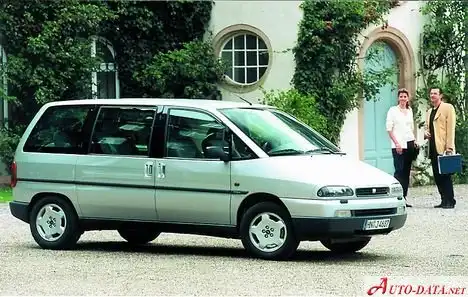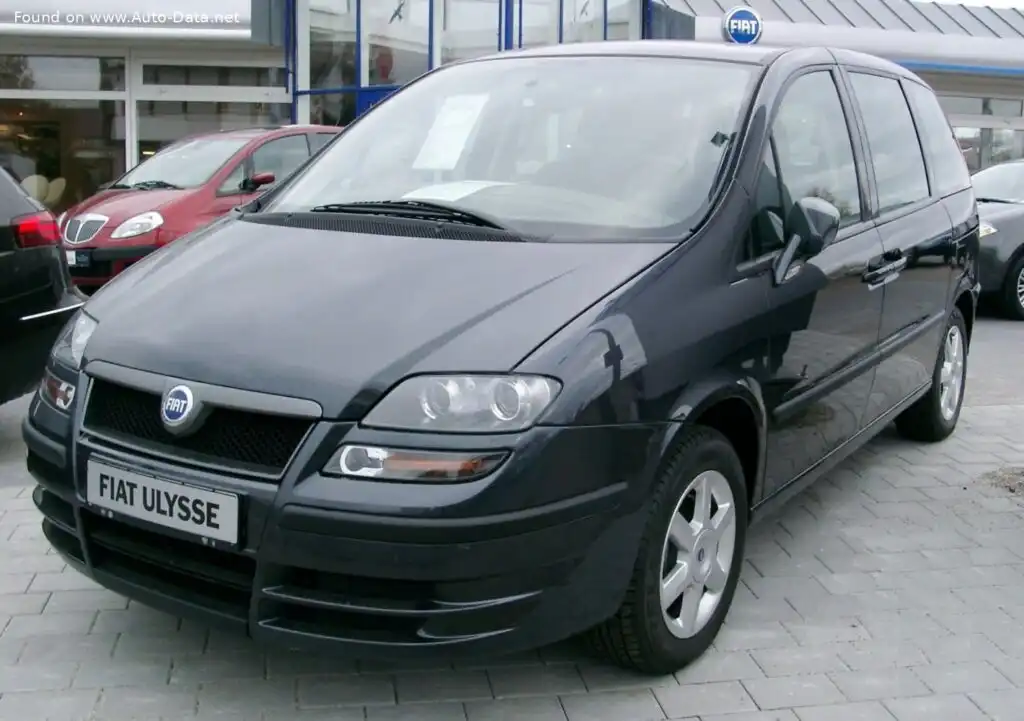
The Fiat Ulysse II, specifically the 2.0 16V (136 hp) variant, was a popular European minivan produced between 2002 and 2005. Part of the 179 series, it represented the second generation of the Ulysse, a vehicle born from a collaborative effort between Fiat and PSA Peugeot Citroën. This generation shared its platform – the 1HX0/A3 – with the Peugeot 806, Citroën Evasion, and Lancia Zeta, offering a spacious and practical people-mover solution for families and those requiring substantial cargo capacity. The 2.0 16V engine, paired with a five-speed manual transmission, occupied a middle ground in the Ulysse II lineup, offering a balance between performance and fuel economy.
Technical Specifications
| Brand | Fiat |
| Model | Ulysse |
| Generation | Ulysse II (179) |
| Type (Engine) | 2.0 16V (136 Hp) |
| Start of production | 2002 |
| End of production | 2005 |
| Powertrain Architecture | Internal Combustion engine |
| Body type | Minivan, MPV |
| Seats | 5 |
| Doors | 5 |
| Fuel consumption (urban) | 12.3 l/100 km (19.1 US mpg, 23 UK mpg, 8.1 km/l) |
| Fuel consumption (extra urban) | 7.3 l/100 km (32.2 US mpg, 38.7 UK mpg, 13.7 km/l) |
| Fuel consumption (combined) | 9.1 l/100 km (25.8 US mpg, 31 UK mpg, 11 km/l) |
| Fuel Type | Petrol (Gasoline) |
| Acceleration 0 – 100 km/h | 12.2 sec |
| Acceleration 0 – 62 mph | 12.2 sec |
| Acceleration 0 – 60 mph | 11.6 sec |
| Maximum speed | 185 km/h (114.95 mph) |
| Weight-to-power ratio | 11.8 kg/Hp, 85 Hp/tonne |
| Weight-to-torque ratio | 8.4 kg/Nm, 118.8 Nm/tonne |
| Power | 136 Hp @ 6000 rpm |
| Power per litre | 68.1 Hp/l |
| Torque | 190 Nm @ 4100 rpm (140.14 lb.-ft. @ 4100 rpm) |
| Engine layout | Front, Transverse |
| Engine Model/Code | RFN EW10J4 |
| Engine displacement | 1997 cm3 (121.86 cu. in.) |
| Number of cylinders | 4 |
| Engine configuration | Inline |
| Cylinder Bore | 85 mm (3.35 in.) |
| Piston Stroke | 88 mm (3.46 in.) |
| Compression ratio | 10.4:1 |
| Number of valves per cylinder | 4 |
| Fuel injection system | Multi-port manifold injection |
| Engine aspiration | Naturally aspirated engine |
| Valvetrain | DOHC |
| Engine oil capacity | 4.3 l (4.54 US qt | 3.78 UK qt) |
| Coolant | 8.5 l (8.98 US qt | 7.48 UK qt) |
| Kerb Weight | 1600 kg (3527.4 lbs.) |
| Max. weight | 2380 kg (5247 lbs.) |
| Max load | 780 kg (1719.61 lbs.) |
| Trunk (boot) space – minimum | 324 l (11.44 cu. ft.) |
| Trunk (boot) space – maximum | 2948 l (104.11 cu. ft.) |
| Fuel tank capacity | 80 l (21.13 US gal | 17.6 UK gal) |
| Length | 4730 mm (186.22 in.) |
| Width | 1850 mm (72.83 in.) |
| Height | 1750 mm (68.9 in.) |
| Wheelbase | 2825 mm (111.22 in.) |
| Front track | 1570 mm (61.81 in.) |
| Rear (Back) track | 1600 mm (62.99 in.) |
| Drivetrain Architecture | ICE, Front wheel drive |
| Drive wheel | Front wheel drive |
| Number of gears and type of gearbox | 5 gears, manual transmission |
| Front suspension | Spring Strut |
| Rear suspension | Coil spring |
| Front brakes | Ventilated discs |
| Rear brakes | Disc |
| Assisting systems | ABS (Anti-lock braking system) |
| Steering type | Steering rack and pinion |
| Power steering | Hydraulic Steering |
| Tires size | 205/65 R15 |
| Wheel rims size | 6.5J x 15 |
Powertrain & Engine Architecture
The heart of this Ulysse variant is the RFN (EW10J4) 2.0-liter inline-four cylinder gasoline engine. This engine was a product of the joint venture between Fiat and PSA, and was also found in various Peugeot and Citroën models. It features a double overhead camshaft (DOHC) valvetrain with four valves per cylinder, contributing to its respectable power output for its displacement. Fuel delivery is managed by a multi-port fuel injection system, providing precise fuel metering for efficient combustion. The engine’s 136 horsepower at 6000 rpm and 190 Nm (140 lb-ft) of torque at 4100 rpm were considered adequate for moving the relatively heavy Ulysse II, though it wasn’t a performance-oriented setup. The five-speed manual transmission offered a fairly conventional gear ratio spread, prioritizing usability and fuel efficiency over outright acceleration.
Driving Characteristics
The 2.0 16V Ulysse II offered a comfortable, if not particularly exciting, driving experience. Acceleration from 0-60 mph took around 11.6 seconds, and top speed was limited to 185 km/h (115 mph). Compared to the more powerful engine options (such as the 2.4 JTD diesel), the 2.0-liter felt somewhat strained when fully loaded or tackling steep inclines. However, the manual transmission allowed drivers to maintain control and extract the most from the engine’s powerband. The gear ratios were well-suited for everyday driving, providing sufficient torque for merging onto highways and overtaking slower vehicles. The Ulysse II’s focus was on providing a smooth and refined ride, and the 2.0-liter engine contributed to this by operating relatively quietly.
Equipment & Trim Levels
The 2.0 16V trim typically included features such as power windows, central locking, and an adjustable steering column. Air conditioning was often standard, though higher trim levels might offer climate control. Interior upholstery was usually cloth, with options for upgraded materials. Safety features included ABS brakes and driver/passenger airbags. Optional extras could include a sunroof, alloy wheels, and a more advanced audio system. The Ulysse II aimed to provide a good level of equipment for the price, making it an attractive option for families.
Chassis & Braking
The Ulysse II utilized a front-wheel-drive layout with a MacPherson strut suspension at the front and a coil spring suspension at the rear. This setup provided a comfortable ride, absorbing bumps and imperfections in the road surface effectively. The front brakes were ventilated discs, offering good stopping power, while the rear brakes were solid discs. The hydraulic power steering provided light and easy steering, making maneuvering in tight spaces relatively effortless. The suspension was tuned for comfort rather than sporty handling, prioritizing a smooth and stable ride.
Market Reception & Comparison
The Fiat Ulysse II 2.0 16V was generally well-received by critics as a practical and spacious minivan. However, some reviewers noted that the 2.0-liter engine felt underpowered when the vehicle was fully loaded. Compared to the diesel variants, the gasoline engine offered less torque and lower fuel economy. However, the 2.0-liter was often more affordable to purchase and maintain. It appealed to buyers who prioritized a lower initial cost and didn’t require the extra power or fuel efficiency of the diesel models.
Legacy
The Fiat Ulysse II 2.0 16V, while not the most powerful or fuel-efficient version of the Ulysse, remains a reasonably reliable and practical vehicle in the used car market. The RFN engine is generally considered durable, though regular maintenance is crucial to prevent issues. Common problems include wear and tear on suspension components and potential issues with the electrical system. Overall, the Ulysse II 2.0 16V represents a solid choice for those seeking an affordable and spacious minivan, offering a good balance of comfort, practicality, and reliability.