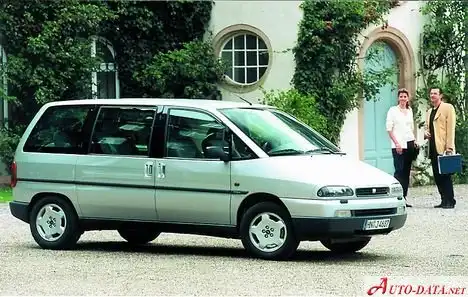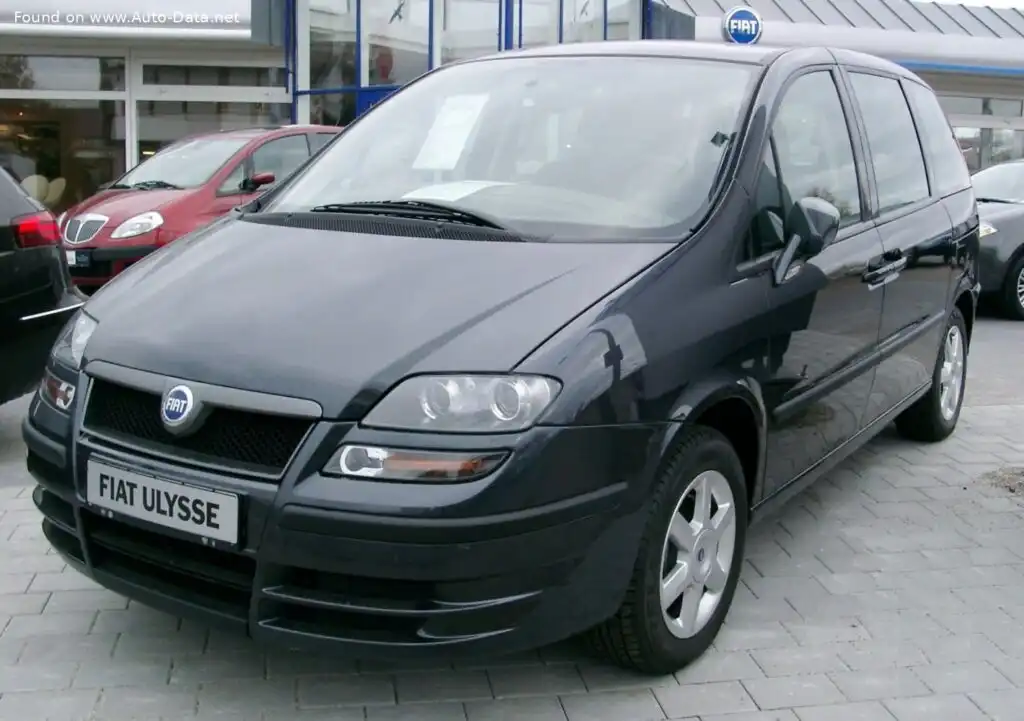
The Fiat Ulysse II, specifically the 2.0 16V (136 hp) variant with an automatic transmission, was produced between 2002 and 2005. This model represents the second generation of the Ulysse, designated internally as the 179 series. Positioned as a mid-range offering within the Ulysse lineup, it aimed to provide a balance between affordability, practicality, and comfort for families. The Ulysse, a collaborative effort between Fiat and PSA Peugeot Citroën, was primarily marketed in Europe as a spacious and versatile multi-purpose vehicle (MPV), competing with models like the Renault Espace and Volkswagen Sharan.
Technical Specifications
| Brand | Fiat |
| Model | Ulysse |
| Generation | Ulysse II (179) |
| Type (Engine) | 2.0 16V (136 Hp) Automatic |
| Start of production | 2002 |
| End of production | 2005 |
| Powertrain Architecture | Internal Combustion engine |
| Body type | Minivan, MPV |
| Seats | 5 |
| Doors | 5 |
| Fuel consumption (urban) | 13.7 l/100 km (17.2 US mpg, 20.6 UK mpg) |
| Fuel consumption (extra urban) | 7.3 l/100 km (32.2 US mpg, 38.7 UK mpg) |
| Fuel consumption (combined) | 9.6 l/100 km (24.5 US mpg, 29.4 UK mpg) |
| Fuel Type | Petrol (Gasoline) |
| Acceleration 0 – 100 km/h | 14.4 sec |
| Acceleration 0 – 62 mph | 14.4 sec |
| Acceleration 0 – 60 mph | 13.7 sec |
| Maximum speed | 178 km/h (110.6 mph) |
| Weight-to-power ratio | 11.8 kg/Hp |
| Weight-to-torque ratio | 8.4 kg/Nm |
| Power | 136 Hp @ 6000 rpm |
| Torque | 190 Nm @ 4100 rpm (140.14 lb.-ft. @ 4100 rpm) |
| Engine layout | Front, Transverse |
| Engine Model/Code | RFN EW10J4 |
| Engine displacement | 1997 cm3 (121.86 cu. in.) |
| Number of cylinders | 4 |
| Engine configuration | Inline |
| Cylinder Bore | 85 mm (3.35 in.) |
| Piston Stroke | 88 mm (3.46 in.) |
| Compression ratio | 10.4:1 |
| Number of valves per cylinder | 4 |
| Fuel injection system | Multi-port manifold injection |
| Engine aspiration | Naturally aspirated engine |
| Valvetrain | DOHC |
| Engine oil capacity | 4.3 l (4.54 US qt | 3.78 UK qt) |
| Coolant capacity | 8.5 l (8.98 US qt | 7.48 UK qt) |
| Kerb Weight | 1600 kg (3527.4 lbs.) |
| Max. weight | 2380 kg (5247 lbs.) |
| Max load | 780 kg (1719.61 lbs.) |
| Trunk (boot) space – minimum | 324 l (11.44 cu. ft.) |
| Trunk (boot) space – maximum | 2948 l (104.11 cu. ft.) |
| Fuel tank capacity | 80 l (21.13 US gal | 17.6 UK gal) |
| Length | 4730 mm (186.22 in.) |
| Width | 1850 mm (72.83 in.) |
| Height | 1750 mm (68.9 in.) |
| Wheelbase | 2825 mm (111.22 in.) |
| Front track | 1570 mm (61.81 in.) |
| Rear track | 1600 mm (62.99 in.) |
| Drivetrain Architecture | Front wheel drive |
| Number of gears | 4 |
| Gearbox type | Automatic transmission |
| Front suspension | Spring Strut |
| Rear suspension | Coil spring |
| Front brakes | Ventilated discs |
| Rear brakes | Disc |
| Assisting systems | ABS (Anti-lock braking system) |
| Steering type | Steering rack and pinion |
| Power steering | Hydraulic Steering |
| Tires size | 205/65 R15 |
| Wheel rims size | 6.5J x 15 |
Powertrain & Engine Architecture
The heart of this Ulysse variant is the RFN (EW10J4) 2.0-liter inline-four cylinder gasoline engine. This engine was developed jointly by Fiat and PSA, and is also found in various Peugeot and Citroën models. It features a double overhead camshaft (DOHC) valvetrain with four valves per cylinder, contributing to its relatively high output for its displacement. Fuel delivery is managed by a multi-port fuel injection system. The engine produces 136 horsepower at 6000 rpm and 190 Nm (140 lb-ft) of torque at 4100 rpm. The engine’s 10.4:1 compression ratio was a compromise between performance and fuel efficiency. Paired with this engine is a four-speed automatic transmission, designed to provide smooth and convenient shifting. This transmission, while adequate for everyday driving, wasn’t known for its sportiness or efficiency compared to more modern automatic gearboxes.
Driving Characteristics
The 2.0 16V automatic Ulysse offered a comfortable, if not particularly exhilarating, driving experience. The automatic transmission, while providing ease of use, did impact acceleration. The 0-60 mph time of around 13.7 seconds and a top speed of 110.6 mph reflect this. Compared to the manual transmission versions of the same engine, the automatic suffered a slight performance penalty. The gear ratios were tuned for fuel economy and smooth cruising rather than rapid acceleration. The engine felt adequate for highway driving and carrying a full load of passengers, but could feel strained when attempting quick overtaking maneuvers. The steering was light and easy, making it well-suited for urban environments, but lacked the precision of more performance-oriented MPVs.
Equipment & Trim Levels
The 2.0 16V automatic Ulysse typically came equipped with features such as air conditioning, power windows, central locking, and an audio system. Higher trim levels offered options like alloy wheels, upgraded upholstery, a sunroof, and rear parking sensors. Interior materials were generally durable and practical, prioritizing functionality over luxury. The Ulysse’s modular interior allowed for flexible seating configurations, with the ability to remove or fold down seats to maximize cargo space. Safety features included ABS brakes and driver/passenger airbags as standard equipment.
Chassis & Braking
The Ulysse II utilized a front-wheel-drive layout with a MacPherson strut suspension in the front and a coil spring suspension in the rear. The suspension was tuned for comfort, providing a relatively smooth ride even on uneven surfaces. Braking duties were handled by ventilated discs on the front wheels and solid discs on the rear. The ABS system helped to maintain control during emergency braking situations. The chassis was designed to accommodate the vehicle’s weight and provide stable handling, although it wasn’t particularly sporty.
Market Reception & Comparison
The Fiat Ulysse II 2.0 16V automatic was generally well-received as a practical and spacious MPV. Critics praised its comfortable ride, flexible interior, and reasonable fuel economy (around 24.5 US mpg combined). However, the automatic transmission was often criticized for its lack of responsiveness and the engine’s performance was considered adequate but not exciting. Compared to the diesel-powered Ulysse variants (like the 2.0 HDI), the gasoline version offered less torque and lower fuel economy, but was generally quieter and smoother. The gasoline engine was favored by those who primarily drove shorter distances and prioritized refinement over fuel savings.
Legacy
The Fiat Ulysse II 2.0 16V automatic, while not a standout performer, remains a reasonably reliable and affordable MPV in the used car market. The RFN engine, when properly maintained, is known for its durability. Common issues include occasional sensor failures and wear and tear on the automatic transmission. However, parts availability is generally good, and maintenance costs are relatively low. Today, these Ulysse models are often sought after by families looking for a spacious and practical vehicle at a budget-friendly price. The Ulysse’s collaborative design and focus on practicality cemented its place as a popular choice in the European MPV segment.