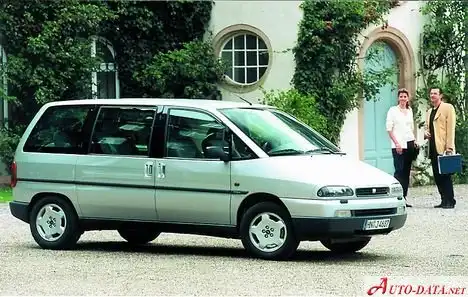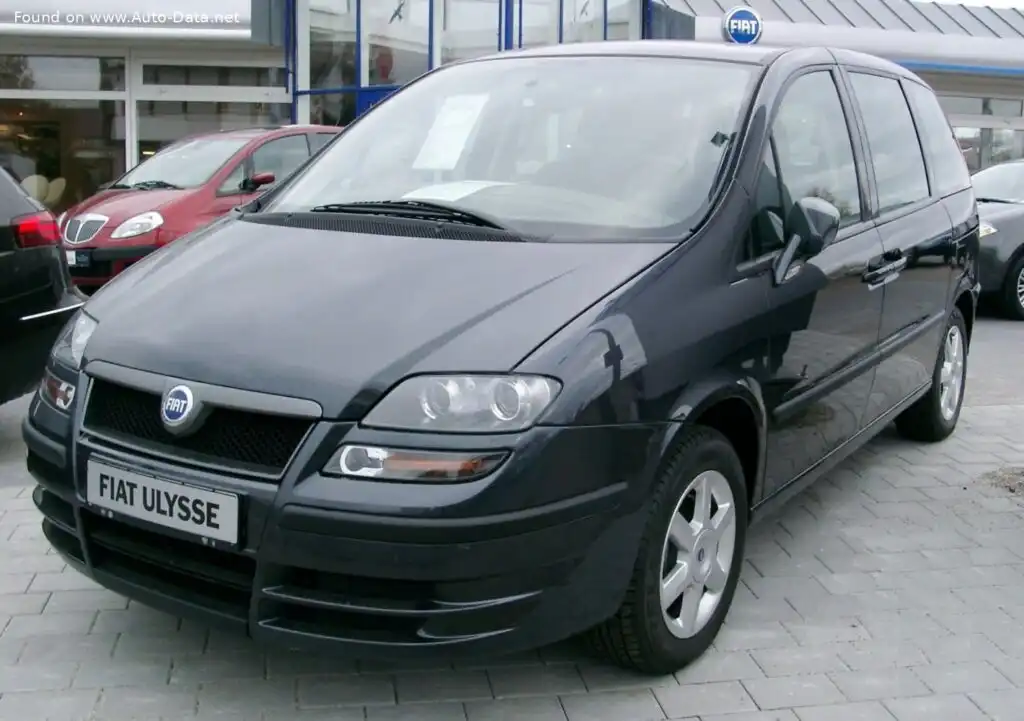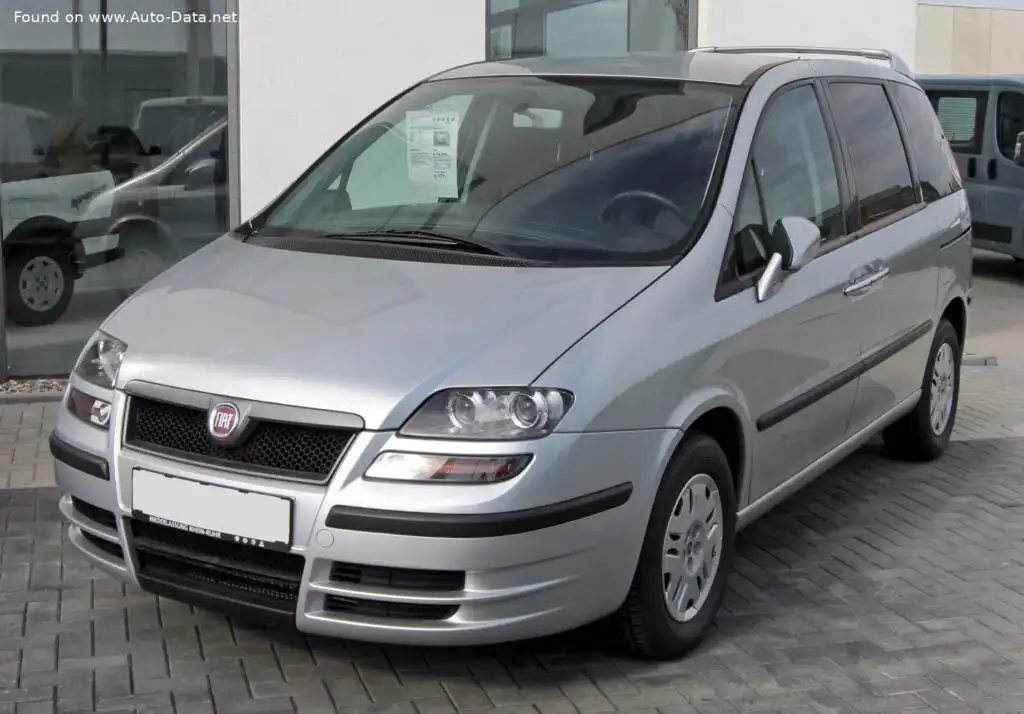
The Fiat Ulysse II, specifically the 2.0 JTD Multijet 16V (136 hp) variant produced from 2008 to 2010, represents a mid-cycle refresh of the second-generation Ulysse (model code 179). Positioned as a mainstream offering within the Ulysse range, this version aimed to balance fuel efficiency, practicality, and affordability for families. The Ulysse, a collaborative effort between Fiat and PSA Peugeot Citroën, was marketed primarily in Europe as a competitor to vehicles like the Renault Espace and Volkswagen Sharan. This facelift brought styling updates and refinements to the engine lineup, including the introduction of more advanced common-rail diesel technology.
Technical Specifications
| Brand | Fiat |
| Model | Ulysse |
| Generation | Ulysse II (179, facelift 2008) |
| Type (Engine) | 2.0 JTD Multijet 16V (136 Hp) |
| Start of production | January, 2008 |
| End of production | 2010 |
| Powertrain Architecture | Internal Combustion engine |
| Body type | Minivan, MPV |
| Seats | 5-8 |
| Doors | 5 |
| Fuel consumption (urban) | 9 l/100 km (26.1 US mpg, 31.4 UK mpg, 11.1 km/l) |
| Fuel consumption (extra urban) | 6 l/100 km (39.2 US mpg, 47.1 UK mpg, 16.7 km/l) |
| Fuel consumption (combined) | 7.1 l/100 km (33.1 US mpg, 39.8 UK mpg, 14.1 km/l) |
| CO2 emissions | 188 g/km |
| Fuel Type | Diesel |
| Acceleration 0 – 100 km/h | 11.4 sec |
| Acceleration 0 – 62 mph | 11.4 sec |
| Acceleration 0 – 60 mph | 10.8 sec |
| Maximum speed | 190 km/h (118.06 mph) |
| Emission standard | Euro 4 |
| Weight-to-power ratio | 12.8 kg/Hp, 78 Hp/tonne |
| Weight-to-torque ratio | 5.4 kg/Nm, 183.6 Nm/tonne |
| Power | 136 Hp @ 4000 rpm |
| Power per litre | 68.1 Hp/l |
| Torque | 320 Nm @ 2000 rpm (236.02 lb.-ft. @ 2000 rpm) |
| Engine layout | Front, Transverse |
| Engine Model/Code | RHR |
| Engine displacement | 1997 cm3 (121.86 cu. in.) |
| Number of cylinders | 4 |
| Engine configuration | Inline |
| Cylinder Bore | 85 mm (3.35 in.) |
| Piston Stroke | 88 mm (3.46 in.) |
| Compression ratio | 17.5:1 |
| Number of valves per cylinder | 4 |
| Fuel injection system | Diesel Commonrail |
| Engine aspiration | Turbocharger, Intercooler |
| Valvetrain | DOHC |
| Engine oil capacity | 5.25 l (5.55 US qt | 4.62 UK qt) |
| Coolant capacity | 9 l (9.51 US qt | 7.92 UK qt) |
| Kerb Weight | 1743-1908 kg (3842.66 – 4206.42 lbs.) |
| Max. weight | 2530 kg (5577.7 lbs.) |
| Max load | 622-787 kg (1371.28 – 1735.04 lbs.) |
| Trunk (boot) space – minimum | 183 l (6.46 cu. ft.) |
| Trunk (boot) space – maximum | 2948 l (104.11 cu. ft.) |
| Fuel tank capacity | 80 l (21.13 US gal | 17.6 UK gal) |
| Max. roof load | 100 kg (220.46 lbs.) |
| Permitted trailer load with brakes (12%) | 1850 kg (4078.55 lbs.) |
| Permitted trailer load without brakes | 750 kg (1653.47 lbs.) |
| Permitted towbar download | 76 kg (167.55 lbs.) |
| Length | 4719 mm (185.79 in.) |
| Width | 1863 mm (73.35 in.) |
| Width including mirrors | 2205 mm (86.81 in.) |
| Height | 1759 mm (69.25 in.) |
| Wheelbase | 2823 mm (111.14 in.) |
| Front track | 1570 mm (61.81 in.) |
| Rear track | 1548 mm (60.94 in.) |
| Front overhang | 1009 mm (39.72 in.) |
| Rear overhang | 887 mm (34.92 in.) |
| Minimum turning circle | 11.6 m (38.06 ft.) |
| Drivetrain | Front wheel drive |
| Number of gears | 6 |
| Gearbox type | Manual transmission |
| Front suspension | Independent, type McPherson with coil spring and anti-roll bar |
| Rear suspension | Coil spring, Torsion |
| Front brakes | Ventilated discs, 285 mm |
| Rear brakes | Disc, 272 mm |
| Assisting systems | ABS (Anti-lock braking system) |
| Steering type | Steering rack and pinion |
| Power steering | Hydraulic Steering |
| Tires size | 215/65 R15; 215/60 R16 |
| Wheel rims size | 6.5J x 15; 7J x 16 |
Powertrain & Engine Architecture
The heart of this Ulysse variant is the 2.0 JTD Multijet 16V engine, identified by the engine code RHR. This engine is a four-cylinder, inline diesel engine utilizing common-rail direct injection. The “Multijet” technology, a further refinement of common-rail, allows for multiple injection events per combustion cycle, improving efficiency, reducing noise, and lowering emissions. The engine features a turbocharger with an intercooler to enhance power output. The 16-valve DOHC (Double Overhead Camshaft) valvetrain optimizes gas flow for improved performance. The engine’s 17.5:1 compression ratio is typical for a direct-injection diesel. The 2.0 JTD Multijet was paired with a six-speed manual transmission, providing a good balance between fuel economy and drivability. The transmission’s gear ratios were tuned for relaxed cruising and adequate acceleration when fully loaded.
Driving Characteristics
The 136 hp 2.0 JTD Multijet, coupled with the six-speed manual transmission, offered a respectable, if not exhilarating, driving experience. Acceleration from 0-60 mph took around 10.8 seconds, making it suitable for everyday driving and highway merging. The 320 Nm (236 lb-ft) of torque, available from 2000 rpm, provided ample pulling power for carrying passengers and luggage. Compared to higher-output versions of the Ulysse, such as those with more powerful diesel engines, this variant felt less responsive, particularly when overtaking. However, it offered significantly better fuel economy. The manual transmission allowed for greater driver control compared to the available automatic options, and the gear ratios were well-suited to the engine’s torque curve.
Equipment & Trim Levels
The 2.0 JTD Multijet 16V typically came equipped with a reasonable level of standard features. These included air conditioning, power windows, central locking, and an audio system. Higher trim levels offered options such as alloy wheels, rear parking sensors, a panoramic sunroof, and upgraded interior upholstery. Interior materials were generally durable and practical, reflecting the Ulysse’s family-oriented focus. The dashboard layout was functional and straightforward, with easy-to-read instrumentation.
Chassis & Braking
The Ulysse II utilized a McPherson strut front suspension and a torsion beam rear suspension. This setup provided a comfortable ride quality, although it wasn’t particularly sporty. The front brakes were ventilated discs, while the rear brakes were solid discs. ABS (Anti-lock Braking System) was standard. The suspension was tuned to prioritize ride comfort over handling precision, making it well-suited for long journeys with a full load.
Market Reception & Comparison
The 2.0 JTD Multijet 16V variant of the Fiat Ulysse II was generally well-received by critics as a practical and economical choice. It offered a good balance between performance, fuel efficiency, and price. Compared to the more powerful engine options, it was considered a more sensible choice for drivers who prioritized fuel economy and everyday usability. The Ulysse, in general, faced stiff competition from rivals like the Renault Espace and Volkswagen Sharan, but it offered a compelling alternative with its spacious interior and competitive pricing.
Legacy
The 2.0 JTD Multijet engine proved to be relatively reliable, although, like all diesel engines, it required regular maintenance, including oil changes and filter replacements. The common-rail system, while advanced for its time, could be susceptible to issues if not properly maintained. Today, used examples of this Ulysse variant are readily available and represent an affordable option for those seeking a spacious and practical MPV. Its fuel efficiency and relatively simple mechanicals make it a viable choice for budget-conscious buyers, but potential owners should be aware of the potential maintenance costs associated with a diesel engine of this age.