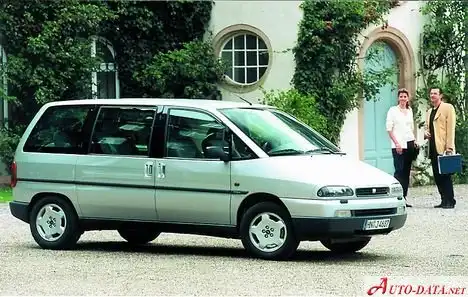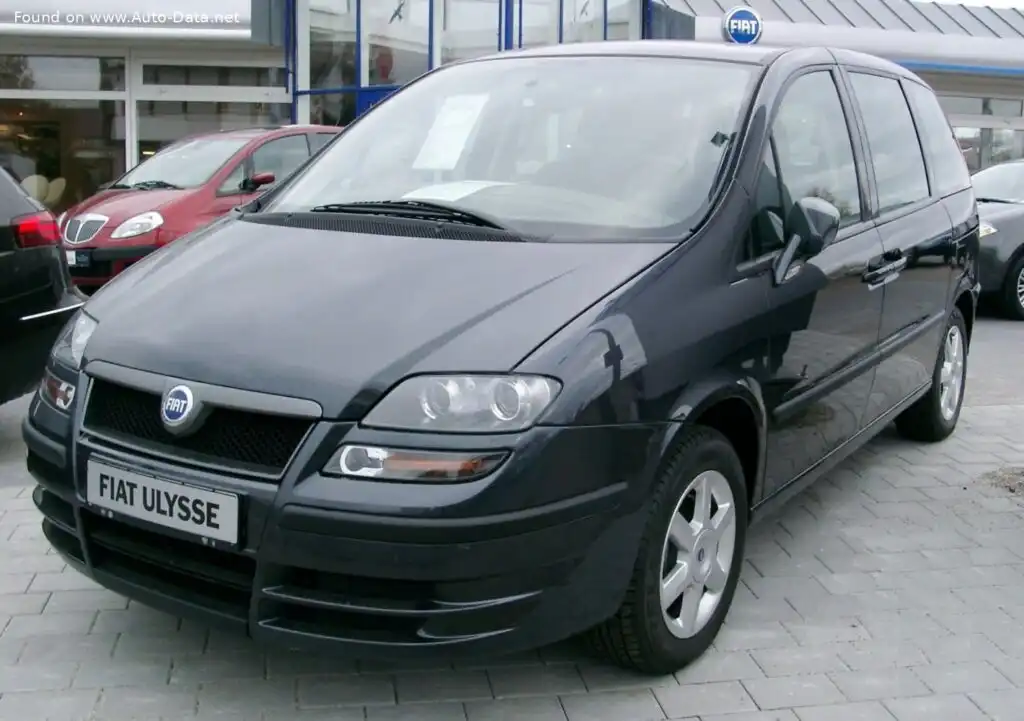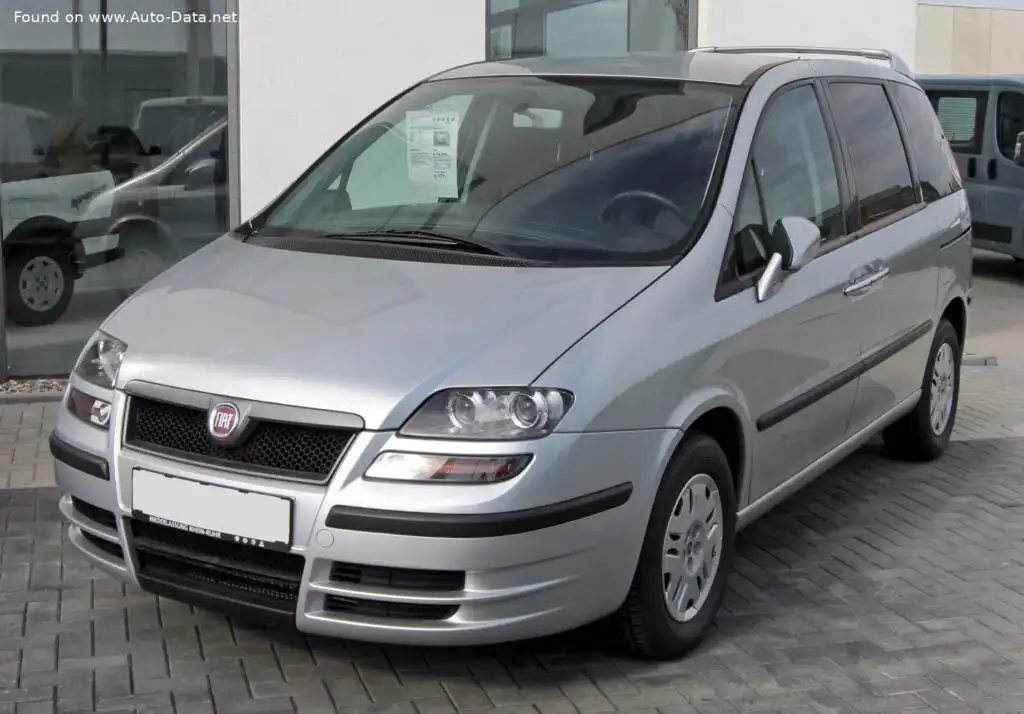
The Fiat Ulysse II 2.2 JTD Multijet 16V Automatic, produced from 2008 to 2010, represents a significant iteration of Fiat’s large MPV offering. This variant, designated internally as the 179 series with a facelift introduced in 2008, was positioned as a comfortable and practical family vehicle within the Ulysse range. It shared its platform – the PSA/Fiat 1HX0 platform – with the Peugeot 807 and Citroën C8, resulting in a collaborative effort to compete in the European minivan market. The 2.2 JTD Multijet Automatic trim aimed to provide a balance between performance and ease of driving, appealing to families prioritizing convenience over outright sportiness.
Technical Specifications
| Brand | Fiat |
| Model | Ulysse |
| Generation | Ulysse II (179, facelift 2008) |
| Type (Engine) | 2.2 JTD Multijet 16V (170 Hp) Automatic |
| Start of production | January, 2008 |
| End of production | 2010 |
| Powertrain Architecture | Internal Combustion engine |
| Body type | Minivan, MPV |
| Seats | 5-8 |
| Doors | 5 |
| Fuel consumption (economy) – urban (NEDC) | 11 l/100 km (21.4 US mpg, 25.7 UK mpg, 9.1 km/l) |
| Fuel consumption (economy) – extra urban (NEDC) | 6.6 l/100 km (35.6 US mpg, 42.8 UK mpg, 15.2 km/l) |
| Fuel consumption (economy) – combined (NEDC) | 8.2 l/100 km (28.7 US mpg, 34.4 UK mpg, 12.2 km/l) |
| CO2 emissions (NEDC) | 218 g/km |
| Fuel Type | Diesel |
| Acceleration 0 – 100 km/h | 10.8 sec |
| Acceleration 0 – 62 mph | 10.8 sec |
| Acceleration 0 – 60 mph | 10.3 sec |
| Maximum speed | 197 km/h (122.41 mph) |
| Emission standard | Euro 4 |
| Weight-to-power ratio | 10.7 kg/Hp, 93.3 Hp/tonne |
| Weight-to-torque ratio | 4.6 kg/Nm, 219.4 Nm/tonne |
| Power | 170 Hp @ 4000 rpm |
| Power per litre | 78 Hp/l |
| Torque | 400 Nm @ 1750 rpm (295.02 lb.-ft. @ 1750 rpm) |
| Engine layout | Front, Transverse |
| Engine Model/Code | 4HS |
| Engine displacement | 2179 cm3 (132.97 cu. in.) |
| Number of cylinders | 4 |
| Engine configuration | Inline |
| Cylinder Bore | 85 mm (3.35 in.) |
| Piston Stroke | 96 mm (3.78 in.) |
| Compression ratio | 16.6:1 |
| Number of valves per cylinder | 4 |
| Fuel injection system | Diesel Commonrail |
| Engine aspiration | BiTurbo, Intercooler |
| Valvetrain | DOHC |
| Engine oil capacity | 4.75 l (5.02 US qt, 4.18 UK qt) |
| Coolant | 9 l (9.51 US qt, 7.92 UK qt) |
| Kerb Weight | 1823-1970 kg (4019.03 – 4343.11 lbs.) |
| Max. weight | 2610 kg (5754.07 lbs.) |
| Max load | 640-787 kg (1410.96 – 1735.04 lbs.) |
| Trunk (boot) space – minimum | 183 l (6.46 cu. ft.) |
| Trunk (boot) space – maximum | 2948 l (104.11 cu. ft.) |
| Fuel tank capacity | 80 l (21.13 US gal, 17.6 UK gal) |
| Max. roof load | 100 kg (220.46 lbs.) |
| Permitted trailer load with brakes (12%) | 1850 kg (4078.55 lbs.) |
| Permitted trailer load without brakes | 750 kg (1653.47 lbs.) |
| Permitted towbar download | 80 kg (176.37 lbs.) |
| Length | 4719 mm (185.79 in.) |
| Width | 1863 mm (73.35 in.) |
| Width including mirrors | 2205 mm (86.81 in.) |
| Height | 1759 mm (69.25 in.) |
| Wheelbase | 2823 mm (111.14 in.) |
| Front track | 1570 mm (61.81 in.) |
| Rear (Back) track | 1548 mm (60.94 in.) |
| Front overhang | 1009 mm (39.72 in.) |
| Rear overhang | 887 mm (34.92 in.) |
| Minimum turning circle (turning diameter) | 11.6 m (38.06 ft.) |
| Drivetrain Architecture | The Internal combustion engine (ICE) drives the front wheels of the vehicle. |
| Drive wheel | Front wheel drive |
| Number of gears and type of gearbox | 6 gears, automatic transmission |
| Front suspension | Independent, type McPherson with coil spring and anti-roll bar |
| Rear suspension | Coil spring, Torsion |
| Front brakes | Ventilated discs, 310 mm |
| Rear brakes | Disc, 272 mm |
| Assisting systems | ABS (Anti-lock braking system) |
| Steering type | Steering rack and pinion |
| Power steering | Hydraulic Steering |
| Tires size | 215/65 R15; 215/60 R16 |
| Wheel rims size | 6.5J x 15; 7J x 16 |
Powertrain & Engine Architecture
The heart of this Ulysse variant is the 2.2 JTD Multijet 16V engine, identified by the code 4HS. This engine is a four-cylinder, inline diesel engine utilizing common rail direct injection and a bi-turbocharger setup with an intercooler. The bi-turbo system employs two turbochargers of different sizes – a smaller one for quicker response at low engine speeds and a larger one for increased power at higher RPMs. This configuration helps to mitigate turbo lag and deliver a broader torque curve. The engine features a double overhead camshaft (DOHC) valvetrain with four valves per cylinder, contributing to efficient gas exchange. The 16.6:1 compression ratio is typical for a direct injection diesel engine, maximizing combustion efficiency. The automatic transmission is a six-speed unit, designed to provide smooth gear changes and optimize fuel economy.
Driving Characteristics
The 170 horsepower and 400 Nm (295 lb-ft) of torque offered by the 2.2 JTD Multijet, coupled with the six-speed automatic transmission, provided a reasonably refined driving experience. Acceleration from 0-100 km/h (0-62 mph) took approximately 10.8 seconds, which was adequate for a large MPV but noticeably slower than versions equipped with the manual transmission or the more powerful 2.0-liter HDi engine found in some trim levels. The automatic transmission, while convenient, did slightly diminish the responsiveness compared to the manual. The gear ratios were tuned for comfortable cruising and maximizing fuel efficiency, rather than outright performance. In real-world driving, the engine felt strongest in the mid-range, making it well-suited for overtaking maneuvers on highways.
Equipment & Trim Levels
The 2.2 JTD Multijet Automatic trim typically included features such as air conditioning, power windows, central locking, and an integrated audio system. Higher-spec versions often added features like alloy wheels, rear parking sensors, and a more sophisticated infotainment system. Interior upholstery was generally cloth, with options for leather upgrades. The Ulysse II offered a flexible seating configuration, with options for five, seven, or eight seats, depending on the specific configuration chosen by the buyer. Safety features included ABS brakes, airbags, and seatbelt pretensioners.
Chassis & Braking
The Ulysse II utilized an independent McPherson strut suspension setup at the front, providing a comfortable ride and decent handling. The rear suspension employed a coil spring and torsion beam arrangement, which prioritized space efficiency and ride comfort over ultimate handling precision. Braking duties were handled by ventilated discs at the front and solid discs at the rear. The ABS system provided enhanced braking control, particularly in slippery conditions. Steering was rack and pinion with hydraulic power assistance, offering a reasonable level of feel and responsiveness.
Market Reception & Comparison
The Fiat Ulysse II 2.2 JTD Multijet Automatic was generally well-received by critics as a practical and comfortable family vehicle. However, it wasn’t considered the most dynamic or engaging MPV in its class. Compared to the manual transmission versions, the automatic suffered a slight performance penalty and a marginal decrease in fuel economy. The 2.0-liter HDi engine, available in some markets, offered a more engaging driving experience and slightly better fuel efficiency. However, the 2.2 JTD Multijet Automatic appealed to buyers who prioritized convenience and ease of driving over outright performance.
Legacy
The 2.2 JTD Multijet engine proved to be a relatively reliable unit, although, like all diesel engines, it required regular maintenance, including oil changes and filter replacements. The automatic transmission, when properly maintained, also demonstrated good durability. Today, the Ulysse II 2.2 JTD Multijet Automatic can be found on the used car market at affordable prices. While it may not offer the latest technology or the most refined driving experience, it remains a practical and spacious option for families seeking a comfortable and reliable MPV. Common issues reported by owners include wear and tear on suspension components and occasional problems with the electronic systems, but these are generally manageable with proper maintenance.