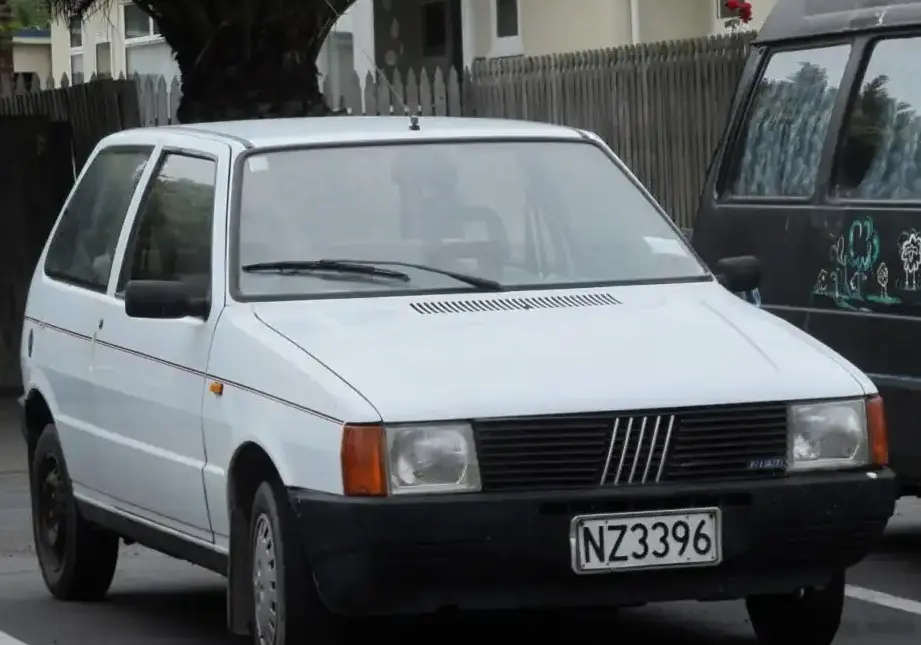
The Fiat Uno 1.4 i Turbo, produced between 1995 and 2002, represented a performance-oriented variant within the popular Uno range. Positioned as a sporty offering, it aimed to provide a more engaging driving experience than the standard, naturally aspirated models. This variant was primarily sold in European markets, where small, economical, yet spirited hatchbacks were highly sought after. The 1.4 i Turbo utilized a turbocharged engine to deliver significantly more power than its displacement would suggest, making it a standout in its class. It falls within the second generation of the Uno (Project 146), known for its improved refinement and features compared to the original.
Technical Specifications
| Brand | Fiat |
| Model | UNO |
| Generation | UNO |
| Type (Engine) | 1.4 i Turbo (114 Hp) |
| Start of production | 1995 year |
| End of production | 2002 year |
| Powertrain Architecture | Internal Combustion engine |
| Body type | Hatchback |
| Seats | 5 |
| Doors | 3 |
| Fuel consumption (urban) | 9.8 l/100 km (24 US mpg, 28.8 UK mpg, 10.2 km/l) |
| Fuel consumption (extra urban) | 6 l/100 km (39.2 US mpg, 47.1 UK mpg, 16.7 km/l) |
| Fuel consumption (combined) | 8.2 l/100 km (28.7 US mpg, 34.4 UK mpg, 12.2 km/l) |
| Fuel Type | Petrol (Gasoline) |
| Acceleration 0 – 100 km/h | 8.4 sec |
| Acceleration 0 – 62 mph | 8.4 sec |
| Acceleration 0 – 60 mph | 8 sec |
| Maximum speed | 200 km/h (124.27 mph) |
| Weight-to-power ratio | 8.2 kg/Hp, 121.3 Hp/tonne |
| Weight-to-torque ratio | 5.7 kg/Nm, 175.5 Nm/tonne |
| Power | 114 Hp @ 6000 rpm |
| Power per litre | 83.1 Hp/l |
| Torque | 165 Nm @ 3500 rpm (121.7 lb.-ft. @ 3500 rpm) |
| Engine layout | Front, Transverse |
| Engine Model/Code | 146 A8.046 |
| Engine displacement | 1372 cm3 (83.72 cu. in.) |
| Number of cylinders | 4 |
| Engine configuration | Inline |
| Cylinder Bore | 80.5 mm (3.17 in.) |
| Piston Stroke | 67.4 mm (2.65 in.) |
| Compression ratio | 7.8:1 |
| Number of valves per cylinder | 2 |
| Fuel injection system | Multi-port manifold injection |
| Engine aspiration | Turbocharger |
| Engine oil capacity | 4.1 l (4.33 US qt | 3.61 UK qt) |
| Coolant | 7.5 l (7.93 US qt | 6.6 UK qt) |
| Kerb Weight | 940 kg (2072.35 lbs.) |
| Max. weight | 1360 kg (2998.29 lbs.) |
| Max load | 420 kg (925.94 lbs.) |
| Trunk (boot) space – minimum | 270 l (9.53 cu. ft.) |
| Trunk (boot) space – maximum | 970 l (34.26 cu. ft.) |
| Fuel tank capacity | 40 l (10.57 US gal | 8.8 UK gal) |
| Length | 3690 mm (145.28 in.) |
| Width | 1560 mm (61.42 in.) |
| Height | 1420 mm (55.91 in.) |
| Wheelbase | 2360 mm (92.91 in.) |
| Front track | 1350 mm (53.15 in.) |
| Rear (Back) track | 1310 mm (51.57 in.) |
| Minimum turning circle | 9.8 m (32.15 ft.) |
| Drivetrain Architecture | The Internal combustion engine (ICE) drives the front wheels of the vehicle. |
| Drive wheel | Front wheel drive |
| Number of gears and type of gearbox | 5 gears, manual transmission |
| Front suspension | Coil spring |
| Rear suspension | Coil spring |
| Front brakes | Disc |
| Rear brakes | Disc |
| Assisting systems | ABS (Anti-lock braking system) |
| Steering type | Steering rack and pinion |
| Power steering | Hydraulic Steering |
| Tires size | 175/60 R13 |
Powertrain & Engine Architecture
The heart of the Uno 1.4 i Turbo was the 146 A8.046 engine, a 1372cc inline-four cylinder unit. This engine featured a single overhead camshaft (SOHC) valvetrain with two valves per cylinder. The key differentiator was the addition of a turbocharger, significantly boosting power output compared to the naturally aspirated 1.4-liter engines available in other Uno models. Fuel delivery was handled by a multi-port fuel injection system, providing precise fuel metering for optimal combustion. The turbocharger itself was a relatively small unit, tuned for responsiveness rather than outright peak power, aligning with the Uno’s character as a nimble city car. The engine’s 7.8:1 compression ratio was a compromise between performance and reliability when used with the forced induction. The five-speed manual transmission was the only gearbox option offered with this engine, chosen for its efficiency and driver engagement.
Driving Characteristics
The Uno 1.4 i Turbo offered a noticeable step up in performance compared to the standard Uno. The 114 horsepower output, while modest by modern standards, was ample for a car of its weight (around 940 kg or 2072 lbs). Acceleration to 100 km/h (62 mph) took approximately 8.4 seconds, and it could reach a top speed of 200 km/h (124 mph). The turbocharger provided a distinct surge of power in the mid-range, making overtaking maneuvers easier. However, turbo lag was present, requiring the driver to downshift to maintain optimal power delivery. The five-speed gearbox was well-matched to the engine’s characteristics, with relatively short ratios that kept the engine within its power band. Compared to the slower, naturally aspirated Uno variants, the 1.4 i Turbo felt significantly more lively and capable, though it wasn’t intended to be a dedicated sports car.
Equipment & Trim Levels
The 1.4 i Turbo typically came with a higher level of standard equipment than the base Uno models. This often included features like power steering, upgraded interior trim, and alloy wheels. Interior upholstery was usually a cloth material, with a sporty design. Optional extras could include electric windows, a sunroof, and a more advanced audio system. The dashboard layout was typical of the Uno, functional and straightforward, with clearly marked gauges. The trim level often featured unique badging to distinguish it from other Uno variants.
Chassis & Braking
The Uno 1.4 i Turbo utilized a relatively simple chassis design, featuring coil spring suspension at both the front and rear. The front suspension employed MacPherson struts, while the rear used a twist beam setup. Braking was provided by disc brakes on all four wheels, a significant upgrade over the drum brakes found on some lower-spec Uno models. An Anti-lock Braking System (ABS) was often included as standard equipment, enhancing safety. The steering was a rack and pinion system with hydraulic power assistance, providing precise and responsive handling. The relatively lightweight construction of the Uno contributed to its nimble handling characteristics.
Market Reception & Comparison
The Fiat Uno 1.4 i Turbo was generally well-received by automotive critics, who praised its performance and affordability. It was seen as a fun-to-drive and practical hatchback, offering a good balance between economy and performance. Compared to other small hatchbacks of the time, such as the Peugeot 205 and Renault Clio, the Uno 1.4 i Turbo offered a competitive level of performance at a lower price point. Fuel economy was respectable, averaging around 8.2 l/100 km (28.7 US mpg). Reliability was generally good, although the turbocharger did require more maintenance than a naturally aspirated engine.
Legacy
The Fiat Uno 1.4 i Turbo remains a popular choice among enthusiasts and collectors today. Its combination of affordability, performance, and retro charm has made it a sought-after classic. The 146 A8.046 engine, while not known for exceptional longevity, is relatively straightforward to maintain, and parts are still available. The Uno 1.4 i Turbo represents a significant chapter in Fiat’s history, demonstrating the brand’s ability to create engaging and affordable vehicles. Well-maintained examples command a premium in the used car market, reflecting their enduring appeal.