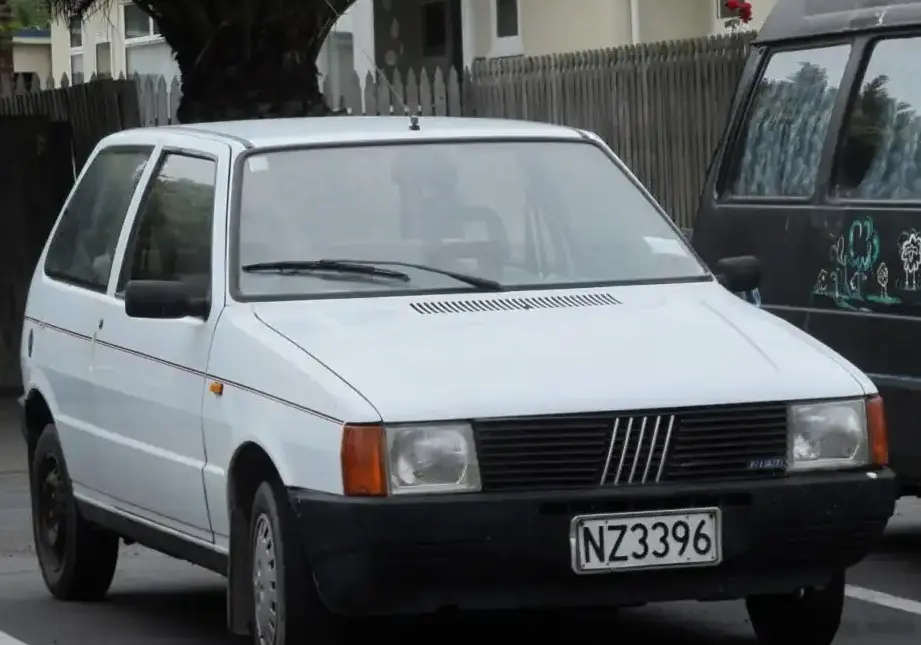
The Fiat Uno 1.3 Turbo i.e., produced briefly in 1987, represents a high-performance variant of the popular 146A Uno series. This model, characterized by its turbocharged 1.3-liter engine, was a short-lived but significant offering in the European small car market. It aimed to provide a sporty driving experience within the confines of an economical and practical hatchback. Production was limited, making it a relatively rare find today. The 146A Uno platform, launched in 1983, was a revolutionary design for Fiat, emphasizing lightweight construction and efficient packaging. The Turbo i.e. version was positioned as the flagship performance model within the initial Uno range.
Technical Specifications
| Brand | Fiat |
| Model | UNO |
| Generation | UNO (146A) |
| Type (Engine) | 1.3 Turbo i.e. (99 Hp) |
| Start of production | 1987 |
| End of production | 1987 |
| Powertrain Architecture | Internal Combustion engine |
| Body type | Hatchback |
| Fuel Type | Petrol (Gasoline) |
| Power | 99 Hp |
| Engine Model/Code | 146 A2.146 |
| Engine aspiration | Turbocharger |
| Engine oil capacity | 4.1 l / 4.33 US qt / 3.61 UK qt |
| Coolant capacity | 7 l / 7.4 US qt / 6.16 UK qt |
Powertrain & Engine Architecture
The heart of the Uno Turbo i.e. is the 146 A2.146 engine, a 1301cc inline-four cylinder unit. What sets this engine apart is its turbocharger, a Garrett T25 unit, which significantly boosts power output compared to naturally aspirated Uno models. The engine utilizes Bosch Mono-Motronic fuel injection, a single-point injection system that was relatively advanced for its time. This system controlled fuel delivery and ignition timing. The engine features a single overhead camshaft (SOHC) valvetrain with two valves per cylinder. The turbocharger provides approximately 8.5 psi of boost, increasing the engine’s output to 99 horsepower. The engine’s compression ratio is 8.8:1. While specific transmission options varied by market, the Uno Turbo i.e. was typically equipped with a four-speed manual gearbox, although a three-speed automatic transmission was also available, albeit less common. The automatic transmission was a conventional hydraulic unit, not known for its particularly quick shifts but offering ease of use.
Driving Characteristics
The Uno Turbo i.e. offered a noticeable performance upgrade over standard Uno models. With 99 hp propelling a relatively lightweight chassis (around 1,897 lbs), the car could achieve a 0-60 mph time of around 10.5 seconds, which was competitive for small hatchbacks of the late 1980s. The turbocharger introduces a degree of turbo lag, meaning there’s a slight delay between pressing the accelerator and feeling the full power delivery. However, once the turbo spooled up, the acceleration was brisk and enjoyable. The four-speed manual transmission allowed drivers to keep the engine in its optimal power band. The automatic transmission, while convenient, dulled the performance somewhat due to its slower shift times and higher gear ratios. Handling was generally good, thanks to the Uno’s lightweight construction and relatively firm suspension. However, the car’s narrow track and basic suspension setup meant it wasn’t as capable in corners as some of its more sophisticated rivals.
Equipment & Trim Levels
The Uno Turbo i.e. was generally well-equipped for its price point, although it wasn’t a luxury vehicle. Standard features typically included cloth upholstery, a basic instrument cluster, and a steering wheel. The interior was functional and designed for practicality rather than opulence. Optional extras included power windows, central locking, and a sunroof. The exterior styling was relatively understated, with a small rear spoiler and Turbo i.e. badging being the most noticeable visual cues. The dashboard layout was typical of Fiat designs of the era, with a simple and straightforward design. The seats offered reasonable comfort for short to medium-distance journeys.
Chassis & Braking
The Uno 146A utilized a front-wheel-drive layout with an independent front suspension featuring MacPherson struts and a twist-beam rear suspension. The front brakes were disc brakes, while the rear brakes were typically drum brakes, although some later models featured rear disc brakes. The steering was a rack-and-pinion system, providing reasonably precise control. The suspension was tuned to provide a balance between comfort and handling, leaning towards the firmer side to complement the car’s sporty aspirations. Stabilizer bars were fitted to both the front and rear axles to reduce body roll during cornering. The braking system was adequate for the car’s performance, but it lacked the sophistication of more modern systems.
Market Reception & Comparison
The Fiat Uno Turbo i.e. was generally well-received by automotive journalists, who praised its performance and affordability. It was seen as a fun and engaging small car that offered a lot of bang for the buck. However, some critics noted the turbo lag and the somewhat basic interior. Compared to other small hatchbacks of the time, such as the Peugeot 205 GTI and the Volkswagen Polo GT, the Uno Turbo i.e. offered a similar level of performance at a lower price point. Fuel economy was reasonable, averaging around 35-40 mpg. Reliability was generally good, although the turbocharger could be a potential source of problems if not properly maintained. The 1.0-liter and 1.3-liter naturally aspirated Uno models offered significantly lower running costs and greater reliability, but at the expense of performance. The Turbo i.e. appealed to drivers who wanted a sporty and engaging driving experience without breaking the bank.
Legacy
The Fiat Uno Turbo i.e. remains a fondly remembered model among enthusiasts. Its limited production run and distinctive turbocharged engine have made it a sought-after classic. The 146 A2.146 engine, while not without its quirks, proved to be relatively durable when properly maintained. Today, finding a well-preserved Uno Turbo i.e. is becoming increasingly difficult. The car’s value has been steadily increasing in recent years, reflecting its rarity and its status as a cult classic. The Uno Turbo i.e. demonstrated Fiat’s ability to create affordable and engaging performance cars, and it paved the way for future hot hatch models from the Italian manufacturer. Parts availability can be a challenge, but a dedicated community of enthusiasts continues to support the model.