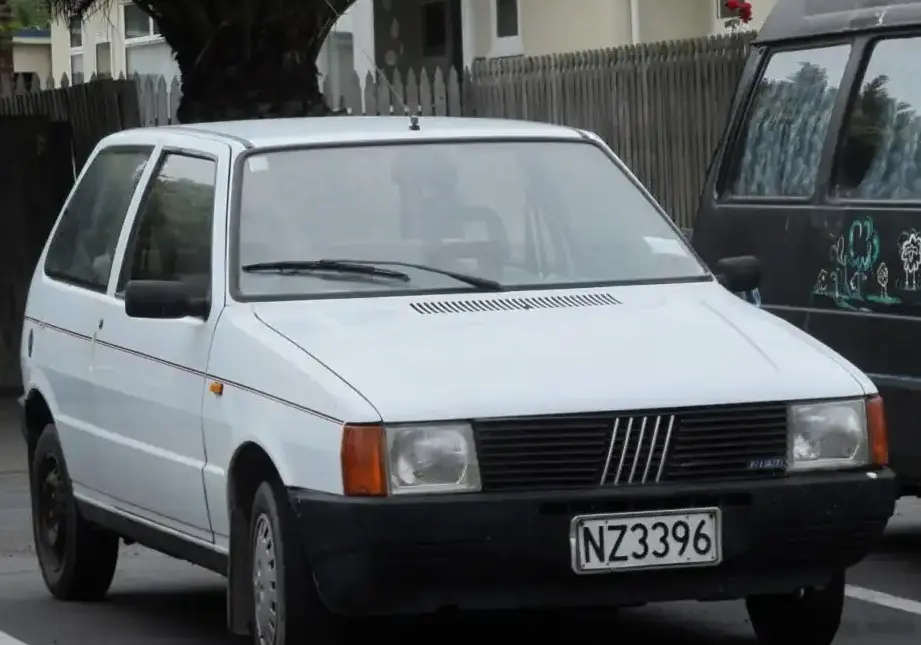
The Fiat UNO 1.5 i (76 hp) was a popular subcompact hatchback produced from 1985 to 1993 as part of the 146A generation. Introduced as a replacement for the Fiat 127, the UNO represented a significant step forward in small car design, offering a spacious interior, modern styling, and a range of efficient engine options. The 1.5 i variant, equipped with a 1.5-liter gasoline engine and typically paired with a five-speed manual transmission, occupied a mid-range position within the UNO lineup, offering a balance between performance and economy. While an automatic transmission was offered in some markets, the 1.5 i was most commonly found with a manual gearbox. The UNO was a cornerstone of Fiat’s European sales during the late 1980s and early 1990s, and its simple, robust design made it a favorite among budget-conscious buyers.
Technical Specifications
| Brand | Fiat |
| Model | UNO |
| Generation | UNO (146A) |
| Type (Engine) | 1.5 i (76 Hp) |
| Start of production | 1985 |
| End of production | 1993 |
| Powertrain Architecture | Internal Combustion engine |
| Body type | Hatchback |
| Seats | 5 |
| Doors | 3-5 |
| Fuel consumption (urban) | 8.4 l/100 km (28 US mpg, 33.6 UK mpg, 11.9 km/l) |
| Fuel consumption (extra urban) | 5.5 l/100 km (42.8 US mpg, 51.4 UK mpg, 18.2 km/l) |
| Fuel consumption (combined) | 7 l/100 km (33.6 US mpg, 40.4 UK mpg, 14.3 km/l) |
| Fuel Type | Petrol (Gasoline) |
| Acceleration 0 – 100 km/h | 11.2 sec |
| Acceleration 0 – 62 mph | 11.2 sec |
| Acceleration 0 – 60 mph | 10.6 sec |
| Maximum speed | 171 km/h (106.25 mph) |
| Weight-to-power ratio | 11.1 kg/Hp, 90.5 Hp/tonne |
| Weight-to-torque ratio | 7.4 kg/Nm, 134.5 Nm/tonne |
| Power | 76 Hp @ 5600 rpm |
| Power per litre | 50.7 Hp/l |
| Torque | 113 Nm @ 3000 rpm (83.34 lb.-ft. @ 3000 rpm) |
| Engine layout | Front, Transverse |
| Engine Model/Code | 138 C2.048 |
| Engine displacement | 1499 cm3 (91.47 cu. in.) |
| Number of cylinders | 4 |
| Engine configuration | Inline |
| Cylinder Bore | 86.4 mm (3.4 in.) |
| Piston Stroke | 63.9 mm (2.52 in.) |
| Compression ratio | 9.2:1 |
| Number of valves per cylinder | 2 |
| Fuel injection system | Single-point injection |
| Engine aspiration | Naturally aspirated |
| Engine oil capacity | 4.1 l (4.33 US qt | 3.61 UK qt) |
| Coolant capacity | 6 l (6.34 US qt | 5.28 UK qt) |
| Kerb Weight | 840 kg (1851.88 lbs.) |
| Max. weight | 1295 kg (2854.99 lbs.) |
| Max load | 455 kg (1003.1 lbs.) |
| Trunk (boot) space – minimum | 270 l (9.53 cu. ft.) |
| Trunk (boot) space – maximum | 970 l (34.26 cu. ft.) |
| Fuel tank capacity | 40 l (10.57 US gal | 8.8 UK gal) |
| Length | 3690 mm (145.28 in.) |
| Width | 1560 mm (61.42 in.) |
| Height | 1420 mm (55.91 in.) |
| Wheelbase | 2360 mm (92.91 in.) |
| Front track | 1340 mm (52.76 in.) |
| Rear track | 1300 mm (51.18 in.) |
| Minimum turning circle | 9.8 m (32.15 ft.) |
| Drivetrain | Front wheel drive |
| Number of gears | 5 gears, manual transmission |
| Front suspension | Independent, type McPherson with coil spring and anti-roll bar |
| Rear suspension | Coil spring |
| Front brakes | Disc |
| Rear brakes | Drum |
| Steering type | Steering rack and pinion |
| Tires size | 155/70 R13 |
Powertrain & Engine Architecture
The Fiat UNO 1.5 i was powered by the 138 C2.048 engine, a 1.5-liter inline-four cylinder gasoline engine. This engine featured a cast iron block and an aluminum cylinder head, utilizing a single overhead camshaft (SOHC) design with two valves per cylinder. Fuel delivery was handled by a single-point fuel injection system, a relatively simple and cost-effective technology for the time. This system injected fuel into the intake manifold rather than directly into the cylinders, contributing to its lower cost but also resulting in slightly less precise fuel control compared to multi-point injection systems. The engine produced 76 horsepower at 5600 rpm and 113 Nm (83.34 lb-ft) of torque at 3000 rpm. The most common transmission pairing was a five-speed manual gearbox, providing a reasonable balance of performance and fuel efficiency. While an automatic transmission was available in some markets, it was less frequently seen with the 1.5-liter engine.
Driving Characteristics
The UNO 1.5 i offered modest but adequate performance for everyday driving. Acceleration from 0 to 60 mph took around 10.6 seconds, and the top speed was approximately 106 mph. The engine’s torque delivery was relatively flat, making it tractable in urban environments. Compared to the more powerful 1.4-liter turbocharged version or the more economical diesel variants, the 1.5 i provided a middle-ground experience. The manual transmission offered precise shifts, and the relatively light weight of the UNO (around 840 kg or 1852 lbs) helped to compensate for the engine’s modest power output. The gear ratios were tuned for fuel efficiency, meaning that the engine could feel somewhat strained at higher speeds or when carrying a full load.
Equipment & Trim Levels
The UNO 1.5 i typically came equipped with basic but functional features. Standard equipment generally included cloth upholstery, a basic instrument cluster, and manual windows and door locks. Higher trim levels, often denoted by suffixes like “S” or “SX”, added features such as upgraded interior trim, a more comprehensive instrument panel, and optional extras like a sunroof or alloy wheels. The interior design was simple and utilitarian, prioritizing practicality and durability over luxury. The rear seats could be folded down to increase cargo space, adding to the UNO’s versatility.
Chassis & Braking
The UNO featured a front-wheel-drive layout with an independent McPherson strut suspension at the front and a coil spring suspension at the rear. The front suspension incorporated an anti-roll bar to reduce body roll during cornering. Braking duties were handled by disc brakes at the front and drum brakes at the rear. The steering system was a rack-and-pinion setup, providing reasonably precise steering feel. The tires were typically 155/70 R13 size, offering a good balance of grip and ride comfort.
Market Reception & Comparison
The Fiat UNO 1.5 i was well-received in European markets as an affordable and practical small car. Critics praised its spacious interior, fuel efficiency, and robust construction. Compared to the base 1.0-liter models, the 1.5 i offered a noticeable improvement in performance, making it more suitable for longer journeys and highway driving. However, it lacked the refinement and performance of more expensive competitors like the Volkswagen Polo or the Peugeot 205. The 1.5 i’s fuel economy was competitive with other small cars of the era, and its relatively simple mechanical design contributed to its reliability.
Legacy
The Fiat UNO, and specifically the 1.5 i variant, has earned a reputation for reliability and durability. Many examples are still on the road today, testament to the quality of its construction. The 138 engine family, while not particularly sophisticated, proved to be robust and relatively easy to maintain. In the used car market, the UNO 1.5 i remains an affordable and practical option for those seeking a classic small car. Its simple design and readily available parts make it a popular choice for enthusiasts and those looking for a reliable and inexpensive mode of transportation. The UNO’s impact on the small car segment was significant, paving the way for future generations of Fiat hatchbacks.