
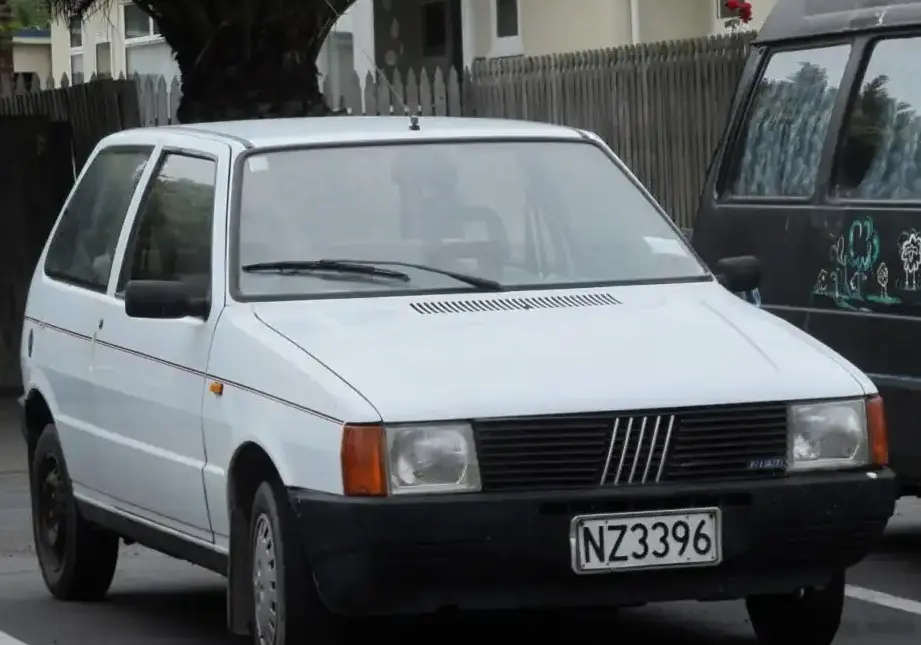
The Fiat UNO (146A) 1.9 D, produced from 1989 to 1994, represented a pragmatic and economical offering within the broader UNO range. Positioned as the diesel variant, it catered to buyers prioritizing fuel efficiency and durability over outright performance. The UNO, launched in 1983, was a supermini designed to replace the aging Fiat 127. The 146A series, representing the first generation, was a significant success for Fiat, particularly in Europe and South America, offering a modern and spacious interior for its class. The 1.9 D model specifically targeted buyers seeking a low-cost, reliable vehicle for daily commuting and utility purposes. It was a popular choice in markets where diesel fuel was readily available and affordable.
Technical Specifications
| Brand | Fiat |
| Model | UNO |
| Generation | UNO (146A) |
| Type (Engine) | 1.9 D (60 Hp) |
| Start of production | 1989 year |
| End of production | 1994 year |
| Powertrain Architecture | Internal Combustion engine |
| Body type | Hatchback |
| Seats | 5 |
| Doors | 3-5 |
| Fuel consumption (urban) | 6 l/100 km (39.2 US mpg, 47.1 UK mpg, 16.7 km/l) |
| Fuel consumption (extra urban) | 4.4 l/100 km (53.5 US mpg, 64.2 UK mpg, 22.7 km/l) |
| Fuel consumption (combined) | 6.2 l/100 km (37.9 US mpg, 45.6 UK mpg, 16.1 km/l) |
| Fuel Type | Diesel |
| Acceleration 0 – 100 km/h | 15.9 sec |
| Acceleration 0 – 62 mph | 15.9 sec |
| Acceleration 0 – 60 mph | 15.1 sec |
| Maximum speed | 157 km/h (97.56 mph) |
| Weight-to-power ratio | 14.8 kg/Hp, 67.8 Hp/tonne |
| Weight-to-torque ratio | 8.2 kg/Nm, 122 Nm/tonne |
| Power | 60 Hp @ 4400 rpm |
| Power per litre | 31.1 Hp/l |
| Torque | 108 Nm @ 2500 rpm (79.66 lb.-ft. @ 2500 rpm) |
| Engine layout | Front, Transverse |
| Engine Model/Code | 149 B5.046 |
| Engine displacement | 1929 cm3 (117.71 cu. in.) |
| Number of cylinders | 4 |
| Engine configuration | Inline |
| Cylinder Bore | 82.6 mm (3.25 in.) |
| Piston Stroke | 90 mm (3.54 in.) |
| Compression ratio | 20:1 |
| Number of valves per cylinder | 2 |
| Fuel injection system | Precombustion chamber injection |
| Engine aspiration | Naturally aspirated engine |
| Engine oil capacity | 4.1 l (4.33 US qt | 3.61 UK qt) |
| Coolant capacity | 8 l (8.45 US qt | 7.04 UK qt) |
| Kerb Weight | 885 kg (1951.09 lbs.) |
| Max. weight | 1320 kg (2910.1 lbs.) |
| Max load | 435 kg (959.01 lbs.) |
| Trunk (boot) space – minimum | 270 l (9.53 cu. ft.) |
| Trunk (boot) space – maximum | 970 l (34.26 cu. ft.) |
| Fuel tank capacity | 40 l (10.57 US gal | 8.8 UK gal) |
| Length | 3690 mm (145.28 in.) |
| Width | 1560 mm (61.42 in.) |
| Height | 1420 mm (55.91 in.) |
| Wheelbase | 2360 mm (92.91 in.) |
| Front track | 1340 mm (52.76 in.) |
| Rear track | 1300 mm (51.18 in.) |
| Minimum turning circle | 9.8 m (32.15 ft.) |
| Drivetrain Architecture | Front wheel drive |
| Number of gears | 5 gears, manual transmission |
| Front suspension | Coil spring |
| Rear suspension | Coil spring |
| Front brakes | Disc |
| Rear brakes | Drum |
| Assisting systems | ABS (Anti-lock braking system) |
| Steering type | Steering rack and pinion |
| Power steering | Hydraulic Steering |
| Tires size | 155/70 R13 |
Powertrain & Engine Architecture
The heart of the UNO 1.9 D was the 149 B5.046 engine, a 1.9-liter inline-four diesel. This engine utilized precombustion chamber injection, a common diesel technology of the era. This system involved injecting fuel into a precombustion chamber connected to the main cylinder, promoting more complete combustion, especially in colder conditions. The engine featured a relatively low compression ratio of 20:1, contributing to its durability. The engine produced 60 horsepower at 4400 rpm and 108 Nm (79.66 lb-ft) of torque at 2500 rpm. The five-speed manual transmission was the only gearbox option available with this engine, prioritizing fuel economy and simplicity. The engine’s transverse mounting saved space within the front-wheel-drive configuration.
Driving Characteristics
The UNO 1.9 D was not designed for spirited driving. Its focus was firmly on economy and practicality. Acceleration was leisurely, taking approximately 15.9 seconds to reach 62 mph. The engine’s torque, however, provided adequate pulling power for everyday driving, making it suitable for navigating city streets and carrying moderate loads. The gear ratios were optimized for fuel efficiency, meaning the engine often needed to be revved to maintain speed on inclines. Compared to the gasoline-powered UNO variants, the 1.9 D offered significantly better fuel economy but lacked the responsiveness and refinement of its petrol counterparts. The manual transmission, while basic, provided a direct connection to the engine and allowed for precise control.
Equipment & Trim Levels
The UNO 1.9 D was typically offered in fairly basic trim levels, reflecting its position as an affordable vehicle. Standard equipment generally included cloth upholstery, a simple dashboard layout, and manual windows and door locks. Optional extras, depending on the market, could include a radio, upgraded interior trim, and occasionally, power steering. The interior was designed for functionality rather than luxury, with durable materials and a focus on maximizing space within the small cabin. The 3-door and 5-door body styles were available, with the 5-door offering increased practicality for families.
Chassis & Braking
The UNO 146A featured a relatively simple chassis design. Both front and rear suspension utilized coil springs, providing a comfortable, if somewhat basic, ride. The front brakes were discs, offering better stopping power than the rear drums. An optional Anti-lock Braking System (ABS) was available on some models, enhancing safety. The steering was a rack and pinion system with hydraulic assistance, making it relatively easy to maneuver at low speeds. The tires were typically 155/70 R13, chosen for their balance of fuel efficiency and grip.
Market Reception & Comparison
The Fiat UNO 1.9 D was well-received in markets where diesel vehicles were popular, particularly in Europe and South America. Critics praised its fuel economy and reliability, but noted its lack of performance and refinement. Compared to other superminis of the time, such as the Peugeot 205 and Renault Clio, the UNO offered a more affordable entry point, albeit with fewer features and a less sophisticated driving experience. The 1.9 D variant was often compared to the gasoline-powered UNO models; while the petrol versions offered more power and responsiveness, the diesel provided significantly better fuel economy, making it a more practical choice for high-mileage drivers.
Legacy
The Fiat UNO 1.9 D powertrain proved to be remarkably durable and reliable. Many examples remain on the road today, a testament to its robust construction. In the used car market, these vehicles are often sought after by those looking for a simple, affordable, and fuel-efficient runabout. While not a performance icon, the UNO 1.9 D played a significant role in providing affordable transportation to a wide range of buyers, and its legacy as a practical and dependable vehicle endures. Maintenance is generally straightforward, with parts readily available and relatively inexpensive, contributing to its continued appeal among budget-conscious car owners.

