
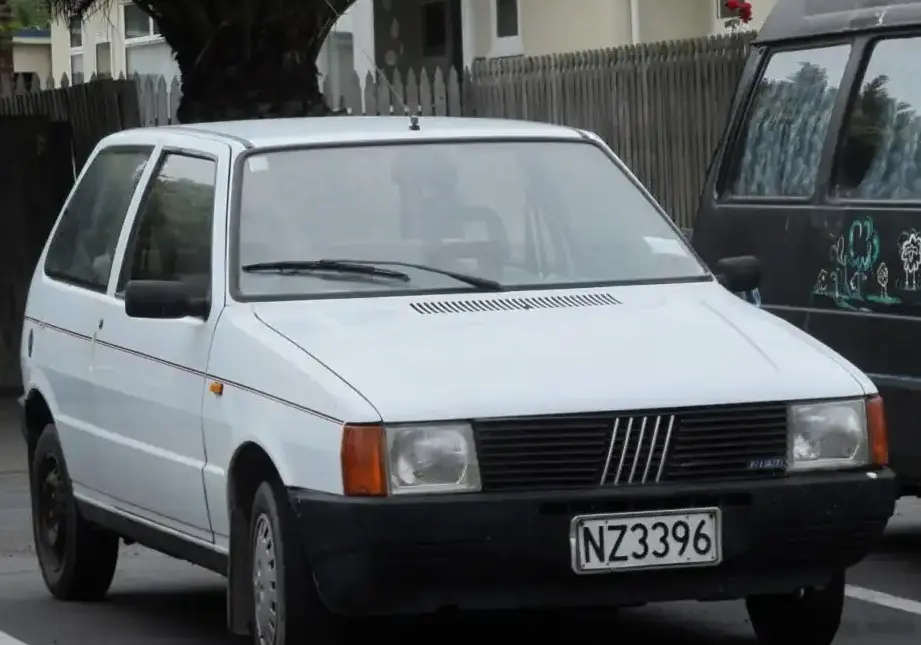
The Fiat Uno 60 Diesel 1.7, produced between 1986 and 1989, represents an entry-level variant within the 146A series of the Fiat Uno. Introduced as a practical and economical option, this model played a significant role in providing affordable transportation in European markets, particularly in Italy and other countries where diesel fuel was readily available and cost-effective. The Uno, as a whole, was a revolutionary design for Fiat, embracing a space-efficient package and modern engineering principles. The 60 Diesel trim specifically targeted buyers prioritizing fuel economy and low running costs over outright performance.
Technical Specifications
| Brand | Fiat |
| Model | UNO |
| Generation | UNO (146A) |
| Type (Engine) | 60 Diesel 1.7 (60 Hp) |
| Start of production | 1986 |
| End of production | 1989 |
| Powertrain Architecture | Internal Combustion engine |
| Body type | Hatchback |
| Fuel Type | Diesel |
| Power | 60 Hp |
| Engine Model/Code | 149 B3.000 |
| Engine aspiration | Naturally aspirated engine |
| Engine oil capacity | 4.1 l (4.33 US qt | 3.61 UK qt) |
| Coolant capacity | 8.9 l (9.4 US qt | 7.83 UK qt) |
Powertrain & Engine Architecture
The Fiat Uno 60 Diesel 1.7 utilized the 149 B3.000 engine, a 1.7-liter inline-four cylinder diesel engine. This engine was a relatively simple, naturally aspirated design, prioritizing durability and fuel efficiency. It featured indirect injection, a common characteristic of diesel engines of that era. The indirect injection system employed a pre-chamber where fuel was initially injected and partially combusted, before being transferred to the main combustion chamber. This design contributed to quieter operation and reduced emissions compared to direct injection systems available at the time, though at the cost of some efficiency. The engine employed a robust cast iron block and a simple, single overhead camshaft (SOHC) valvetrain operating two valves per cylinder. The engine’s relatively low compression ratio, typical for indirect injection diesels, helped to manage noise and stress on engine components. The 60 Diesel was exclusively offered with a four-speed manual transmission, reflecting the focus on simplicity and cost-effectiveness. An automatic transmission was not available for this specific variant.
Driving Characteristics
The Uno 60 Diesel 1.7 was not designed for spirited driving. With only 60 horsepower and 88 lb-ft of torque, acceleration was modest. The four-speed manual transmission was geared for economy, with relatively tall ratios. This resulted in a relaxed cruising experience at highway speeds, but required frequent downshifting when encountering hills or needing to overtake. The engine’s torque characteristics meant that usable power was available from relatively low RPMs, making it suitable for urban driving and navigating congested roads. Compared to the more powerful petrol (gasoline) versions of the Uno, the 60 Diesel offered significantly less performance, but compensated with substantially better fuel economy. The manual transmission provided a direct connection to the engine, allowing drivers to maximize the available power, but the overall driving experience was characterized by its practicality rather than excitement.
Equipment & Trim Levels
The Uno 60 Diesel was positioned as the base model in the Uno range. As such, it featured a relatively sparse equipment list. Standard features typically included basic steel wheels, black plastic bumpers, and simple cloth upholstery. The interior was functional and utilitarian, with a basic dashboard layout and minimal trim. Power steering and central locking were generally not standard, though they could be added as optional extras. The instrument cluster was straightforward, providing essential information such as speed, fuel level, and engine temperature. Optional equipment often included a radio, upgraded seat upholstery, and occasionally, a sunroof. The emphasis was on providing a basic, reliable, and affordable vehicle, and luxury features were kept to a minimum.
Chassis & Braking
The Fiat Uno 146A featured a front-engine, front-wheel-drive layout. The suspension consisted of independent front suspension with MacPherson struts and a twist-beam rear axle. This configuration provided a reasonable balance between ride comfort and handling. The 60 Diesel variant, being the entry-level model, typically featured drum brakes on the rear wheels and disc brakes on the front. The braking system was adequate for the vehicle’s performance capabilities, but lacked the stopping power of more advanced systems found on higher-spec Uno models. The steering was a recirculating ball system, providing a relatively direct feel, but lacking the precision of rack-and-pinion steering. Stabilizer bars were often omitted from the base model to further reduce costs.
Market Reception & Comparison
The Fiat Uno 60 Diesel was well-received in markets where diesel fuel was affordable and fuel economy was a primary concern. Critics praised its practicality, low running costs, and surprisingly spacious interior for its size. However, it was often criticized for its lack of performance and basic interior appointments. Compared to the petrol-powered Uno variants, the 60 Diesel offered significantly better fuel economy – often exceeding 50 miles per gallon – but at the expense of acceleration and refinement. Compared to other small diesel cars of the era, such as the Peugeot 205 Diesel, the Uno 60 Diesel offered a competitive price point and a reputation for reliability. The 60 Diesel was often seen as a sensible choice for first-time car buyers, commuters, and those seeking a low-cost vehicle for everyday transportation.
Legacy
The Fiat Uno 60 Diesel 1.7, while not a performance icon, established a reputation for durability and fuel efficiency. The 149 B3.000 engine proved to be a robust and reliable unit, capable of withstanding years of use with proper maintenance. In the used car market, these Unos are often sought after by enthusiasts looking for a simple, affordable, and economical classic car. Parts availability can be a challenge, but the engine’s simplicity makes it relatively easy to repair. The Uno 60 Diesel remains a testament to Fiat’s ability to produce practical and affordable vehicles that met the needs of a wide range of buyers. Its legacy lies in its contribution to making personal transportation accessible to a broader segment of the population, particularly in Europe during the late 1980s.

