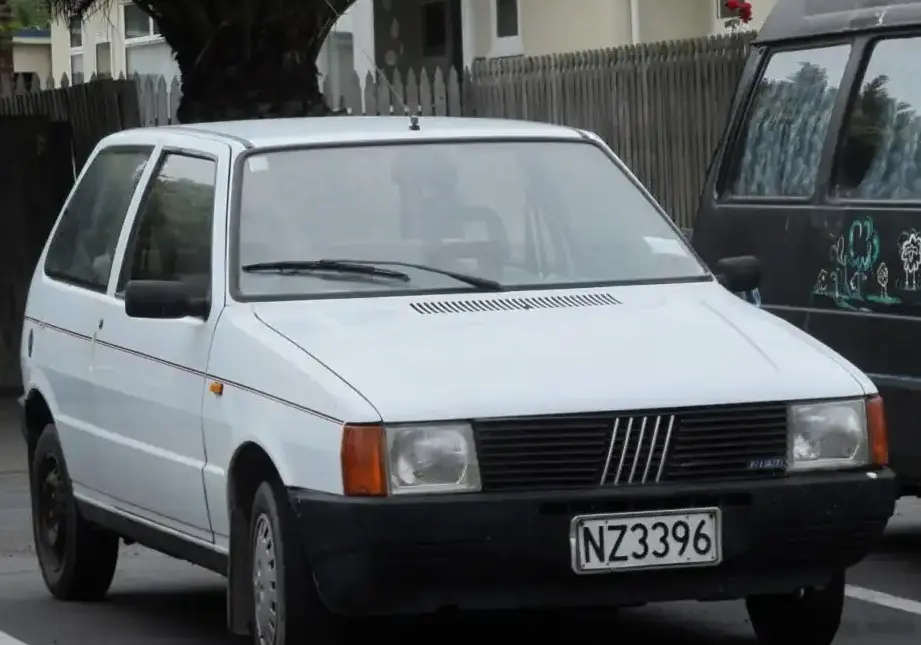
The Fiat Uno 70 1.3, produced between 1985 and 1989, represents an entry-level variant of the 146A series Uno, a supermini designed to modernize Fiat’s offerings in the small car segment. Launched as a replacement for the Fiat 127, the Uno was a radical departure in design and engineering, prioritizing interior space and fuel efficiency. The 70 1.3 model, designated by its approximate maximum power output and engine displacement, served as the foundation of the Uno range, offering affordable transportation to a broad customer base, particularly in Europe and Latin America. It was a key component in Fiat’s strategy to offer a modern, economical, and practical vehicle in a competitive market.
Technical Specifications
| Brand | Fiat |
| Model | UNO |
| Generation | UNO (146A) |
| Type (Engine) | 70 1.3 (65 Hp) |
| Start of production | 1985 |
| End of production | 1989 |
| Powertrain Architecture | Internal Combustion engine |
| Body type | Hatchback |
| Fuel Type | Petrol (Gasoline) |
| Power | 65 Hp |
| Engine Model/Code | 149 A7.000 |
| Engine aspiration | Naturally aspirated engine |
| Engine oil capacity | 4 l (4.23 US qt | 3.52 UK qt) |
Powertrain & Engine Architecture
The Fiat Uno 70 1.3 is powered by the 149 A7.000 engine, a 1301cc inline-four cylinder petrol engine. This engine is a naturally aspirated unit, meaning it doesn’t employ a turbocharger or supercharger. It features a single overhead camshaft (SOHC) valvetrain operating two valves per cylinder. The engine utilizes a Bosch Mono-Jetronic fuel injection system, a relatively simple and cost-effective system for the time. Mono-Jetronic differs from multi-point injection by using a single fuel injector positioned in the throttle body, delivering fuel to all cylinders. This system, while less precise than later multi-point systems, contributed to improved fuel economy and reduced emissions compared to carbureted engines. The engine’s block is constructed from cast iron, providing durability, while the cylinder head is made of aluminum alloy to reduce weight. The engine’s modest 65 horsepower output is achieved at 6000 rpm, with peak torque of approximately 84 lb-ft (114 Nm) at 3000 rpm. The engine was typically paired with a four-speed manual transmission, though a three-speed automatic transmission was also available, albeit less common. The automatic transmission was a conventional hydraulic unit, offering smooth but not particularly rapid gear changes.
Driving Characteristics
The Uno 70 1.3, particularly in its manual transmission guise, offered a surprisingly nimble driving experience for a small, economical car. Acceleration was modest, taking around 14-15 seconds to reach 60 mph, but the car felt light and responsive in city driving. The four-speed gearbox provided adequate ratios for everyday use, although it lacked the refinement of more modern transmissions. The automatic transmission, while offering convenience, noticeably dulled performance, increasing the 0-60 mph time to around 18-20 seconds. The engine’s torque curve was relatively flat, providing usable power across a reasonable rev range. However, it did require frequent gear changes to maintain momentum, especially when fully loaded or tackling inclines. The steering was light and precise, making the Uno easy to maneuver in tight spaces. The suspension, consisting of independent front suspension with MacPherson struts and a twist-beam rear axle, provided a comfortable ride, although it could become somewhat unsettled on rough surfaces. Compared to the more powerful Uno 60/70 models, the 1.3 offered a noticeable improvement in performance, making it a more suitable choice for drivers who frequently traveled on highways or carried passengers.
Equipment & Trim Levels
The Uno 70 1.3 was positioned as the entry-level model in the Uno range, and as such, it came equipped with a relatively basic level of standard features. Typically, it included cloth upholstery, a simple dashboard with analog gauges, and basic door cards. Power steering was not standard, although it was available as an optional extra. Other optional extras included a radio, heated rear window, and upgraded interior trim. The exterior trim was also fairly basic, with black plastic bumpers and steel wheels with hubcaps. Later models saw the introduction of slightly more refined interior materials and the availability of features such as a sunroof. The Uno 70 1.3’s interior was notable for its surprisingly spaciousness, considering the car’s diminutive exterior dimensions. The rear seats could be folded down to increase luggage capacity, making the Uno a practical choice for small families or individuals who needed to transport larger items.
Chassis & Braking
The Fiat Uno 146A utilized a monocoque chassis construction, providing a good balance of strength and weight. The front suspension employed MacPherson struts with an anti-roll bar, while the rear suspension featured a twist-beam axle. This setup provided a reasonable level of ride comfort and handling for a car in its class. Braking on the Uno 70 1.3 typically consisted of disc brakes on the front wheels and drum brakes on the rear wheels. The braking system was hydraulically operated, providing adequate stopping power for everyday driving. However, the rear drum brakes were less effective than disc brakes, particularly in wet conditions. The Uno’s steering system was a rack and pinion setup, providing precise and responsive steering feel. The car’s relatively light weight contributed to its nimble handling characteristics.
Market Reception & Comparison
The Fiat Uno 70 1.3 was generally well-received by automotive critics as an affordable, practical, and economical small car. It was praised for its spacious interior, fuel efficiency, and nimble handling. However, it was also criticized for its modest performance, particularly in automatic transmission guise, and its basic interior trim. Compared to other small cars of the era, such as the Renault 5 and the Peugeot 205, the Uno offered a more spacious interior and a more comfortable ride. However, it lacked the sporting pretensions of the Peugeot 205 and the stylish design of the Renault 5. Fuel economy was a strong point for the Uno 70 1.3, with figures typically ranging from 45-50 mpg. Reliability was generally good, although the Mono-Jetronic fuel injection system could occasionally require maintenance. The Uno 70 1.3 represented a compelling value proposition for buyers seeking an affordable and practical small car.
Legacy
The Fiat Uno 70 1.3, and the 146A Uno series as a whole, played a significant role in revitalizing Fiat’s image and market share in the 1980s. The Uno’s innovative design and engineering paved the way for future Fiat models. The 149 A7.000 engine proved to be a durable and reliable unit, and many examples are still on the road today. In the used car market, the Uno 70 1.3 remains an affordable and practical option for those seeking a classic small car. Its simplicity and ease of maintenance make it a popular choice for enthusiasts and first-time car owners. While not a performance icon, the Uno 70 1.3 represents a significant chapter in Fiat’s history and a testament to the enduring appeal of simple, well-engineered automobiles.