
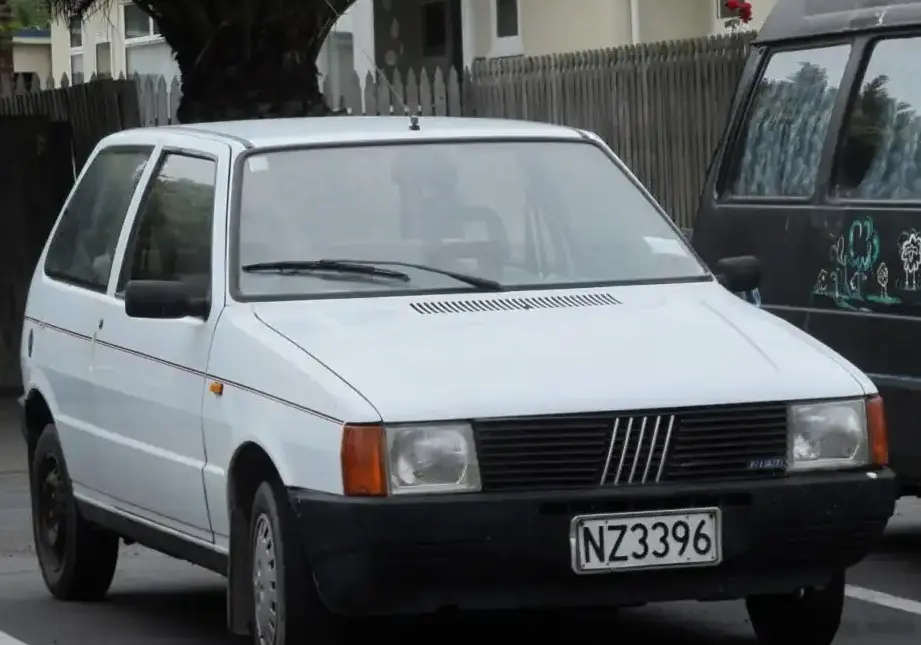
The Fiat Uno 70 1.3, produced between 1983 and 1985, represents the entry-level variant of the 146A series, the first generation of the hugely successful Fiat Uno. Launched as a replacement for the Fiat 127, the Uno was a revolutionary small car designed with a focus on maximizing interior space and fuel efficiency. The 70 1.3 model, designated for its approximate metric horsepower and 1.3-liter engine displacement, served as the foundation of the Uno range, offering affordable transportation to a broad market, particularly in Europe and South America. It was a critical component in Fiat’s strategy to offer a modern, economical car in a rapidly changing automotive landscape.
Technical Specifications
| Brand | Fiat |
| Model | UNO |
| Generation | UNO (146A) |
| Type (Engine) | 70 1.3 (68 Hp) |
| Start of production | 1983 |
| End of production | 1985 |
| Powertrain Architecture | Internal Combustion engine |
| Body type | Hatchback |
| Fuel Type | Petrol (Gasoline) |
| Power | 68 Hp |
| Engine Model/Code | 138 B2.000 |
| Engine aspiration | Naturally aspirated engine |
| Engine oil capacity | 4 l (4.23 US qt | 3.52 UK qt) |
Powertrain & Engine Architecture
The Fiat Uno 70 1.3 was powered by the 138 B2.000 engine, a 1301cc inline-four cylinder petrol engine. This engine was a development of Fiat’s long-running 128 series engine, known for its simplicity and reliability. The 138 B2.000 featured a single overhead camshaft (SOHC) operating two valves per cylinder. Fuel delivery was managed by a Weber 32 ADFA carburetor, a common setup for European cars of this era aiming for cost-effectiveness. The engine produced 68 horsepower (approximately 51 kW) at 6000 rpm and 84 lb-ft (114 Nm) of torque at 3600 rpm. The engine block was cast iron, while the cylinder head was aluminum, contributing to a relatively lightweight design. The transmission was a four-speed manual gearbox, although a three-speed automatic transmission was offered as an option, albeit less common. The automatic transmission was a conventional hydraulic unit, known for its smooth but relatively slow shifts.
Driving Characteristics
The Uno 70 1.3, with its modest power output, was not designed for outright performance. Acceleration was leisurely, taking approximately 14-15 seconds to reach 60 mph. However, the car’s lightweight construction – around 1,700 lbs (770 kg) – meant it felt nimble and responsive in urban driving conditions. The four-speed manual gearbox allowed drivers to make the most of the available power, while the optional automatic transmission prioritized ease of use over performance. The gear ratios were relatively tall, geared towards fuel economy rather than rapid acceleration. Compared to later Uno variants, such as the 1.4-liter models or the more powerful 1.6-liter versions, the 70 1.3 felt significantly slower. However, it offered a more forgiving driving experience, particularly for novice drivers. The automatic version, while convenient, further reduced performance and increased fuel consumption compared to the manual.
Equipment & Trim Levels
The Uno 70 1.3 was the base model, and as such, it featured a relatively sparse equipment list. Standard features included cloth upholstery, vinyl floor covering, and basic instrumentation consisting of a speedometer, fuel gauge, and temperature gauge. The steering wheel was a simple two-spoke design. Heating and ventilation were standard, but air conditioning was not available on this trim level. Optional extras included a radio, upgraded upholstery, and rear window wiper. The interior was designed with practicality in mind, offering a surprising amount of space for a car of its size. The rear seats could be folded down to increase luggage capacity. The exterior trim was minimal, with black plastic bumpers and steel wheels with hubcaps.
Chassis & Braking
The Fiat Uno 146A featured a front-engine, front-wheel-drive layout. The suspension consisted of independent front suspension with MacPherson struts and a twist-beam rear axle. This setup provided a comfortable ride, although handling was not particularly sporty. The steering was rack and pinion, offering reasonable precision. The braking system was initially equipped with front disc brakes and rear drum brakes. Later models saw the introduction of rear disc brakes on some variants, but the 70 1.3 typically retained the drum brake setup. The brakes were adequate for the car’s performance, but lacked the stopping power of more modern systems. Stabilizer bars were not standard on the base model, contributing to a slightly increased degree of body roll in corners.
Market Reception & Comparison
The Fiat Uno 70 1.3 was well-received in its target market as an affordable and economical city car. Critics praised its spacious interior, fuel efficiency, and ease of driving. However, the car’s lack of power and basic equipment levels were also noted. Compared to its rivals, such as the Renault 5 and the Citroën 2CV, the Uno offered a more modern design and a more comfortable driving experience. The 70 1.3 was significantly cheaper to purchase and operate than the higher-spec Uno variants, such as the 1.4-liter or 1.6-liter models. Fuel economy was a key selling point, with the Uno 70 1.3 achieving around 45-50 mpg in real-world driving conditions. Reliability was generally good, although the carburetor required periodic adjustment and maintenance. The automatic transmission, while convenient, was less fuel-efficient and potentially less reliable than the manual gearbox.
Legacy
The Fiat Uno 70 1.3 played a significant role in establishing the Uno as one of the most popular small cars in Europe and South America. The 146A platform proved to be remarkably durable, with production continuing for many years. The 70 1.3, as the entry-level model, introduced a generation of drivers to the Fiat brand. Today, the Uno 70 1.3 is a relatively rare sight on the roads, but it remains a popular choice among classic car enthusiasts. The 138 B2.000 engine is known for its simplicity and ease of maintenance, making it a relatively affordable classic to own and restore. While not a performance icon, the Uno 70 1.3 represents a significant chapter in Fiat’s history and a testament to the enduring appeal of affordable, practical transportation.

