
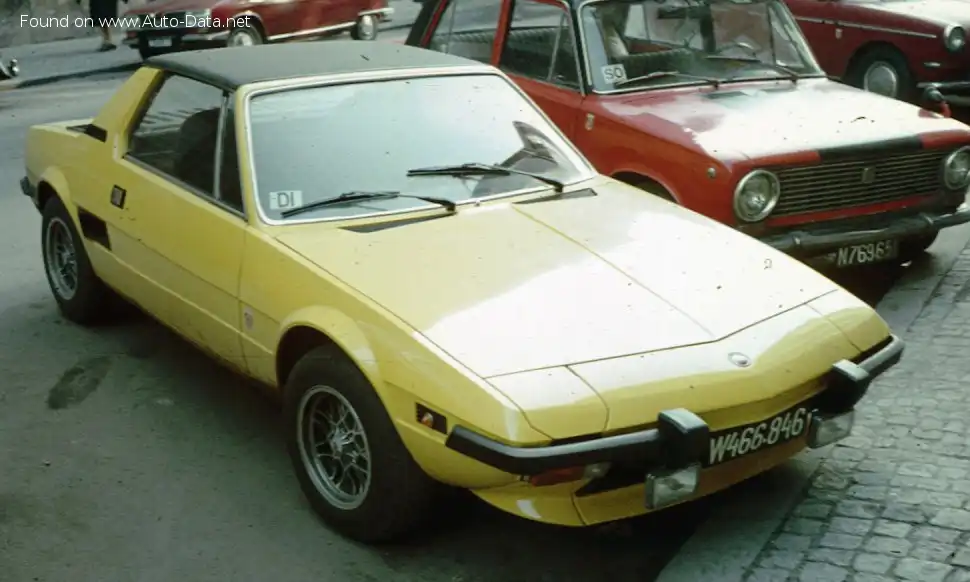
The Fiat X 1/9 (128 AS) 1.3 Exclusiv Serie, produced between 1973 and 1979, represents a unique chapter in Fiat’s history. This mid-engined, two-seater sports car was designed to offer an accessible and stylish entry into the world of performance motoring. The 1.3 Exclusiv Serie, powered by a 75 horsepower engine, served as a key variant within the X 1/9 range, appealing to drivers seeking a blend of sporty handling and everyday usability. It was a significant departure from Fiat’s traditionally front-engined designs, and its targa top configuration added to its appeal in the burgeoning sports car market of the 1970s.
Technical Specifications
| Brand | Fiat |
| Model | X 1/9 |
| Generation | X 1/9 (128 AS) |
| Type (Engine) | 1.3 Exclusiv Serie (75 Hp) |
| Start of production | 1973 |
| End of production | 1979 |
| Powertrain Architecture | Internal Combustion engine |
| Body type | Targa |
| Seats | 2 |
| Doors | 2 |
| Fuel consumption (combined) | 6.2 l/100 km (37.9 US mpg, 45.6 UK mpg, 16.1 km/l) |
| Maximum speed | 150 km/h (93.21 mph) |
| Power | 75 Hp |
| Power per litre | 57.6 Hp/l |
| Engine layout | Middle, Transverse |
| Engine Model/Code | 128 AS.000 |
| Engine displacement | 1301 cm3 (79.39 cu. in.) |
| Number of cylinders | 4 |
| Engine configuration | Inline |
| Number of valves per cylinder | 2 |
| Fuel injection system | Multi-port manifold injection |
| Engine aspiration | Naturally aspirated engine |
| Engine oil capacity | 4.1 l (4.33 US qt, 3.61 UK qt) |
| Coolant capacity | 11.6 l (12.26 US qt, 10.21 UK qt) |
| Length | 3970 mm (156.3 in.) |
| Width | 1570 mm (61.81 in.) |
| Height | 1180 mm (46.46 in.) |
| Wheelbase | 2200 mm (86.61 in.) |
| Front track | 1350 mm (53.15 in.) |
| Rear track | 1335 mm (52.56 in.) |
| Ride height (ground clearance) | 125 mm (4.92 in.) |
| Drivetrain | Rear wheel drive |
| Number of gears & gearbox type | 4 gears, manual transmission |
| Front suspension | Independent coil spring |
| Front brakes | Ventilated discs |
| Rear brakes | Disc |
Powertrain & Engine Architecture
The heart of the X 1/9 1.3 Exclusiv Serie is the Fiat 128 AS.000 engine, a 1301cc inline-four cylinder unit. This engine featured a cast iron block and an aluminum cylinder head, employing a belt-driven single overhead camshaft operating two valves per cylinder. The fuel system utilized a multi-port manifold injection system, a relatively advanced feature for its time, contributing to improved fuel efficiency and smoother power delivery compared to carbureted engines. The engine produced 75 horsepower at a reported 6000 rpm and 88 lb-ft of torque. The engine’s transverse mid-engine layout, coupled with rear-wheel drive, was a defining characteristic of the X 1/9, providing a balanced weight distribution and contributing to its nimble handling. The 4-speed manual transmission was the only option available for this variant, offering a direct connection between the engine and the rear wheels.
Driving Characteristics
The X 1/9 1.3 Exclusiv Serie offered a surprisingly engaging driving experience for a relatively small and affordable sports car. While not overwhelmingly powerful, the 75 horsepower engine provided adequate acceleration for spirited driving on winding roads. The mid-engine layout contributed to neutral handling characteristics, with minimal understeer or oversteer. The 4-speed manual transmission offered precise shifts, allowing drivers to keep the engine in its optimal power band. Compared to later, larger-engined X 1/9 variants, the 1.3 felt more nimble and responsive, though it lacked the outright acceleration of its more powerful siblings. The gear ratios were relatively closely spaced, encouraging frequent shifting to maintain momentum. The car’s light weight (around 780 kg or 1720 lbs) further enhanced its agility.
Equipment & Trim Levels
The “Exclusiv Serie” trim level denoted a slightly more refined specification compared to the base X 1/9. Standard features included comfortable bucket seats, a wood-rimmed steering wheel, and a comprehensive instrument panel with gauges for speed, tachometer, oil pressure, coolant temperature, and fuel level. The interior trim was generally simple but functional, with a focus on durability. Optional extras included a radio, leather upholstery, and a limited-slip differential. The targa top, a defining feature of the X 1/9, came with a removable roof panel that could be stored in a dedicated compartment behind the seats. Exterior styling was characterized by clean lines and a wedge-shaped profile, typical of 1970s sports car design.
Chassis & Braking
The X 1/9 featured an independent coil spring suspension at all four wheels, providing a comfortable ride and good handling characteristics. The front suspension utilized MacPherson struts, while the rear employed a semi-trailing arm setup. Braking duties were handled by ventilated discs at the front and solid discs at the rear, providing adequate stopping power for the car’s weight and performance. The steering was a rack-and-pinion system, offering precise and responsive control. The relatively narrow track width contributed to the car’s nimble handling, but also meant that it could feel slightly unstable at very high speeds.
Market Reception & Comparison
The Fiat X 1/9 1.3 Exclusiv Serie was generally well-received by automotive critics, who praised its stylish design, engaging handling, and affordable price. It was often compared to other small sports cars of the era, such as the MG Midget and the Triumph Spitfire. While the X 1/9 offered a more sophisticated and modern driving experience than its British competitors, it was sometimes criticized for its relatively low power output and occasional reliability issues. Fuel economy was respectable for a sports car of the time, averaging around 38 mpg. Compared to the later 1.5-liter and 1.6-liter X 1/9 variants, the 1.3 offered a more balanced and accessible driving experience, appealing to drivers who prioritized handling and fuel efficiency over outright performance.
Legacy
The Fiat X 1/9, particularly the early 1.3 variants, has developed a loyal following among classic car enthusiasts. While not without its flaws, the X 1/9 remains a charming and distinctive sports car that offers a unique driving experience. The 128 AS engine, while not known for its exceptional durability, is relatively straightforward to maintain and repair. Parts availability can be a challenge, but a dedicated network of suppliers and enthusiasts helps to keep these cars on the road. Today, well-maintained X 1/9s are increasingly sought after by collectors, representing a piece of automotive history and a testament to Fiat’s innovative design and engineering.
