
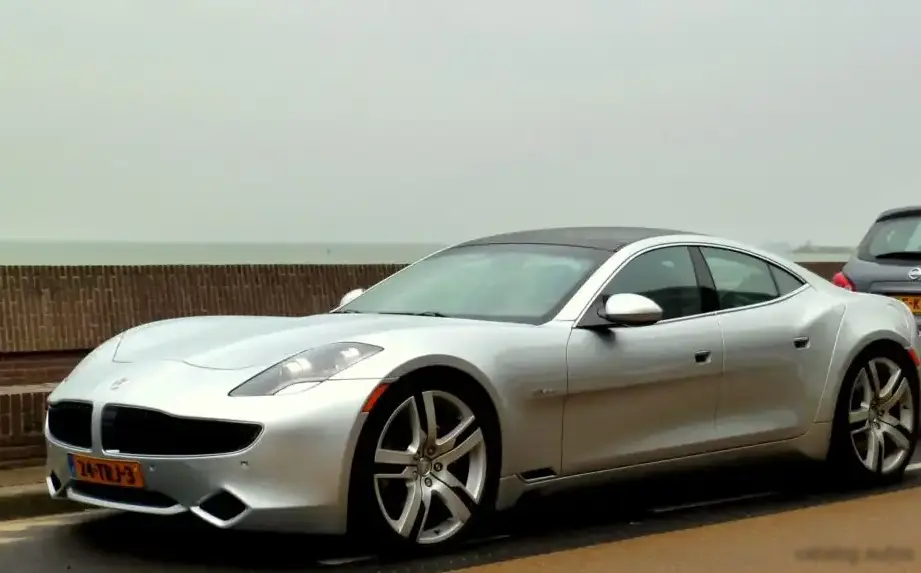
The Fisker Karma 2.0 (408 Hp) was a plug-in hybrid luxury sedan produced by Fisker Automotive from June 2011 to November 2012. Representing the initial offering from the fledgling American automaker, the Karma aimed to blend environmental consciousness with high-end performance and styling. It was positioned as a direct competitor to established luxury brands like Porsche and BMW, offering a unique extended-range electric vehicle (EREV) powertrain. The 2.0 variant, producing 408 horsepower, was the primary configuration offered during the car’s limited production run, utilizing a sophisticated series hybrid system. The Karma was built on a steel space frame with aluminum body panels, and its design, penned by Henrik Fisker, garnered significant attention for its dramatic, sculpted appearance.
Technical Specifications
| Brand | Fisker |
| Model | Karma |
| Generation | Karma |
| Type (Engine) | 2.0 (408 Hp) Plug-in Hybrid |
| Start of production | June, 2011 |
| End of production | November, 2012 |
| Powertrain Architecture | PHEV (Plug-in Hybrid Electric Vehicle) |
| Body type | Sedan |
| Seats | 4 |
| Doors | 4 |
| Fuel Type | Petrol / electricity |
| Acceleration 0 – 60 mph | 5.9 sec |
| Maximum speed | 200 km/h (124.27 mph) |
| Weight-to-power ratio | 6.1 kg/Hp, 162.9 Hp/tonne |
| Weight-to-torque ratio | 1.9 kg/Nm, 519 Nm/tonne |
| Gross battery capacity | 20 kWh |
| All-electric range | 80 km (49.71 mi) |
| Max speed (electric) | 153 km/h (95.07 mph) |
| Electric motor power | 204 Hp (x2) |
| Electric motor Torque | 650 Nm (479.42 lb.-ft.) (x2) |
| Electric motor location | Rear axle, Longitudinal (x2) |
| System power | 408 Hp |
| System torque | 1300 Nm (958.83 lb.-ft.) |
| Power | 260 Hp @ 5300 rpm |
| Power per litre | 130.1 Hp/l |
| Torque | 353 Nm @ 2000 rpm (260.36 lb.-ft. @ 2000 rpm) |
| Engine layout | Front, Longitudinal |
| Engine Model/Code | LNF |
| Engine displacement | 1998 cm3 (121.93 cu. in.) |
| Number of cylinders | 4 |
| Engine configuration | Inline |
| Cylinder Bore | 86 mm (3.39 in.) |
| Piston Stroke | 86 mm (3.39 in.) |
| Number of valves per cylinder | 4 |
| Fuel injection system | Direct injection |
| Engine aspiration | Turbocharger, Intercooler |
| Valvetrain | DOHC |
| Engine oil capacity | 4.7 l (4.97 US qt | 4.14 UK qt) |
| Coolant | 12 l (12.68 US qt | 10.56 UK qt) |
| Kerb Weight | 2505 kg (5522.58 lbs.) |
| Max. weight | 2767 kg (6100.19 lbs.) |
| Max load | 262 kg (577.61 lbs.) |
| Trunk (boot) space – minimum | 195 l (6.89 cu. ft.) |
| Length | 4996 mm (196.69 in.) |
| Width | 1984 mm (78.11 in.) |
| Height | 1330 mm (52.36 in.) |
| Wheelbase | 3160 mm (124.41 in.) |
| Front track | 1692 mm (66.61 in.) |
| Rear (Back) track | 1701 mm (66.97 in.) |
| Front overhang | 913 mm (35.94 in.) |
| Rear overhang | 923 mm (36.34 in.) |
| Ride height (ground clearance) | 138 mm (5.43 in.) |
| Minimum turning circle (turning diameter) | 12.5 m (41.01 ft.) |
| Drivetrain Architecture | Two electric motors drive the rear wheels. The Internal combustion engine (ICE) drives the generator only, with no mechanical connection to the drive. |
| Drive wheel | Rear wheel drive |
| Number of gears and type of gearbox | automatic transmission CVT |
| Front suspension | Double wishbone, Transverse stabilizer |
| Rear suspension | Double wishbone |
| Front brakes | Ventilated discs, 370 mm |
| Rear brakes | Ventilated discs, 370 mm |
| Assisting systems | ABS (Anti-lock braking system) |
| Steering type | Steering rack and pinion |
| Power steering | Hydraulic Steering |
| Tires size | Front wheel tires: 255/35 R22Rear wheel tires: 285/35 R22 |
Powertrain & Engine Architecture
The Karma 2.0 employed a unique series hybrid powertrain. At its heart was a 2.0-liter turbocharged inline-four cylinder engine, designated LNF, sourced from General Motors. This engine, producing 260 horsepower and 260 lb-ft of torque, did *not* directly drive the wheels. Instead, it functioned solely as a generator, powering two electric motors located on the rear axle. Each electric motor produced 204 horsepower and 479 lb-ft of torque, resulting in a combined system output of 408 horsepower and a substantial 958 lb-ft of torque. The 20 kWh battery pack allowed for an all-electric range of approximately 50 miles. The transmission was a continuously variable transmission (CVT) specifically designed for the electric drive system. The engine featured direct injection and a DOHC valvetrain, maximizing efficiency and power output for its role as a generator.
Driving Characteristics
The driving experience in the Karma 2.0 was markedly different from traditional internal combustion vehicles. In electric mode, the car offered near-silent acceleration and instant torque, providing a smooth and refined experience. When the gasoline engine engaged to act as a generator, it did so seamlessly, maintaining a consistent level of power to the electric motors. The CVT transmission, while efficient, lacked the responsiveness of a traditional multi-gear automatic. Compared to a potential higher-output gasoline-powered variant (which never materialized), the 2.0 prioritized efficiency and electric range over outright performance. The substantial weight of the vehicle (over 5,500 lbs) was noticeable, but the high torque output from the electric motors provided brisk acceleration – 0-60 mph in around 5.9 seconds.
Equipment & Trim Levels
The Karma 2.0 was positioned as a luxury vehicle and included a comprehensive list of standard features. Interior appointments included premium leather upholstery, wood trim, and a touchscreen infotainment system. Standard equipment also included features like a rearview camera, parking sensors, and a premium audio system. Optional extras included a solar roof (designed to supplement battery charging), upgraded interior materials, and various customization options. The trim levels were relatively limited, with most customization occurring through individual options rather than distinct packages.
Chassis & Braking
The Karma 2.0 featured a steel space frame chassis with aluminum body panels, designed to provide a balance of rigidity and lightweight construction. The suspension utilized a double wishbone setup at both the front and rear, with a transverse stabilizer bar to reduce body roll. Braking duties were handled by ventilated discs on all four wheels, measuring 370mm in diameter. An anti-lock braking system (ABS) was standard. The steering system was a hydraulic rack and pinion setup, providing a reasonably direct and responsive feel.
Market Reception & Comparison
The Fisker Karma received mixed reviews upon its release. Critics praised its striking design, innovative powertrain, and luxurious interior. However, concerns were raised regarding its reliability, build quality, and the complexity of its hybrid system. Compared to other luxury sedans in its price range, the Karma offered a unique proposition with its plug-in hybrid technology. Fuel economy in hybrid mode was competitive, but the all-electric range was a key selling point. Reliability proved to be a significant issue, with numerous reports of battery and cooling system failures. This ultimately contributed to Fisker Automotive’s financial difficulties and eventual bankruptcy.
Legacy
Despite its short production run and subsequent financial woes, the Fisker Karma left a lasting impact on the automotive industry. It demonstrated the potential of extended-range electric vehicles and helped pave the way for future plug-in hybrids. The powertrain, while complex, showcased a novel approach to hybrid technology. On the used car market, the Karma 2.0 remains a relatively rare and sought-after vehicle, particularly among enthusiasts interested in innovative automotive technology. However, potential buyers should be aware of the potential for ongoing maintenance issues and the limited availability of parts and service. The car’s legacy is a cautionary tale of ambition, innovation, and the challenges of bringing a new automotive brand to market.
