
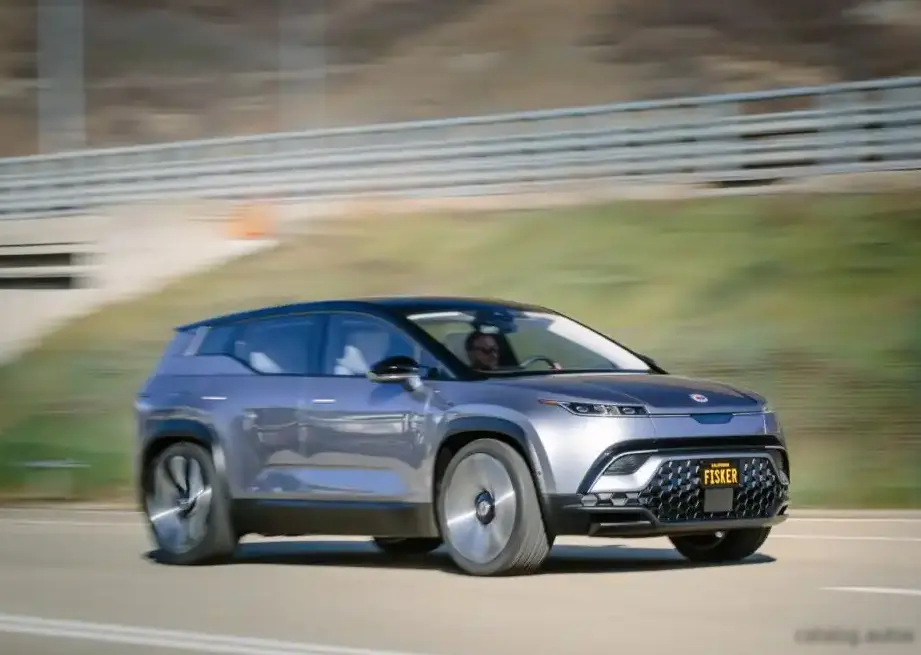
The Fisker Ocean Ultra 100 kWh Hyper Range, a variant of the all-electric Fisker Ocean SUV, was produced from February 2022 through 2024. Positioned as a high-performance, long-range model within the Ocean lineup, it aimed to compete with established electric SUVs like the Tesla Model Y and Ford Mustang Mach-E. The “Ultra” designation signified a step up in features and performance compared to the base “Sport” trim, while the “Hyper Range” denoted the larger 100 kWh battery pack offering extended driving range. This particular configuration, boasting 544 horsepower and all-wheel drive, represented a significant offering in Fisker’s initial foray into the electric vehicle market.
Technical Specifications
| Brand | Fisker |
| Model | Ocean |
| Generation | Ocean |
| Type (Engine) | Ultra 100 kWh Hyper Range (544 Hp) AWD |
| Start of production | February, 2022 |
| End of production | 2024 |
| Powertrain Architecture | BEV (Electric Vehicle) |
| Body type | SUV |
| Seats | 5 |
| Doors | 5 |
| Fuel Type | Electricity |
| Acceleration 0 – 100 km/h | 4.2 sec |
| Acceleration 0 – 62 mph | 4.2 sec |
| Acceleration 0 – 60 mph | 3.9 sec |
| Gross battery capacity | 100 kWh |
| Battery technology | Lithium nickel manganese cobalt oxides (Li-NMC) |
| Battery location | Below the floor |
| All-electric range (WLTP) | 610 km (379.04 mi) |
| All-electric range (EPA) | 611.6 km (380.03 mi) |
| Electric motor 1 location | Front axle, Transverse |
| Electric motor 2 location | Rear axle, Transverse |
| System power | 544 Hp |
| Permitted trailer load with brakes (12%) | 1815 kg (4001.39 lbs) |
| Length | 4775 mm (187.99 in) |
| Width | 1994 mm (78.5 in) |
| Height | 1631 mm (64.21 in) |
| Wheelbase | 2921 mm (115 in) |
| Drivetrain Architecture | One electric motor drives the front wheels, one electric motor drives the rear wheels. |
| Drive wheel | All wheel drive (4×4) |
| Number of gears and type of gearbox | 1 gears, automatic transmission |
| Front suspension | Independent type McPherson |
| Rear suspension | Independent multi-link suspension |
| Front brakes | Ventilated discs |
| Rear brakes | Ventilated discs |
| Assisting systems | ABS (Anti-lock braking system) |
| Steering type | Steering rack and pinion |
| Power steering | Electric Steering |
| Tires size | 255/50 R20; 255/45 R22 |
| Wheel rims size | 7.5J x 20; 8.5J x 22 |
Powertrain & Engine Architecture
The Fisker Ocean Ultra Hyper Range utilizes a dual-motor, all-wheel-drive (AWD) powertrain. Each axle is powered by an independently controlled electric motor. The system delivers a combined output of 544 horsepower. The heart of this variant is the 100 kWh lithium-nickel-manganese-cobalt oxide (Li-NMC) battery pack, positioned low in the vehicle’s chassis to enhance stability and lower the center of gravity. The battery supports fast charging capabilities, allowing for significant range replenishment in relatively short periods. The single-speed automatic transmission is inherent to electric vehicle architecture, providing seamless acceleration and eliminating the need for traditional gear changes. The electric motors themselves employ advanced cooling systems to maintain optimal operating temperatures during demanding driving conditions.
Driving Characteristics
The Ocean Ultra Hyper Range delivers brisk acceleration, achieving 0-60 mph in approximately 3.9 seconds. The dual-motor AWD system provides excellent traction and stability, particularly in adverse weather conditions. The instant torque characteristic of electric motors results in responsive and effortless acceleration. Compared to the base Ocean Sport model, the Ultra offers a noticeably more engaging driving experience due to its increased power output. While not as overtly sporty as some performance-focused EVs, the Ocean Ultra strikes a balance between performance and comfort. The single-speed transmission provides linear power delivery, and the regenerative braking system allows for one-pedal driving in many situations.
Equipment & Trim Levels
The Ultra trim level included a comprehensive suite of standard features. Interior appointments included premium vegan leather upholstery, a large central touchscreen infotainment system, and a digital instrument cluster. Standard safety features encompassed advanced driver-assistance systems (ADAS) such as adaptive cruise control, lane keeping assist, and automatic emergency braking. Optional extras included a panoramic sunroof, premium audio system, and various interior trim upgrades. The Ocean Ultra aimed to provide a luxurious and technologically advanced experience, positioning itself as a premium offering within the EV segment. Fisker also offered a “Solar Roof” option, which could add a small amount of range through integrated solar panels.
Chassis & Braking
The Fisker Ocean utilizes an independent suspension system at all four corners, featuring McPherson struts at the front and a multi-link setup at the rear. This configuration provides a comfortable ride quality while maintaining good handling characteristics. Ventilated disc brakes are employed on all wheels, providing ample stopping power. The electronic stability control (ESC) system works in conjunction with the ABS (Anti-lock Braking System) to enhance safety and control. The steering system is an electric power-assisted rack and pinion, offering precise and responsive steering feel. The vehicle’s relatively low center of gravity, thanks to the underfloor battery pack, contributes to its stability and cornering ability.
Market Reception & Comparison
Initial reviews of the Fisker Ocean Ultra Hyper Range were generally positive, with critics praising its stylish design, long range, and impressive performance. However, some concerns were raised regarding build quality and the relatively unproven nature of the Fisker brand. Compared to competitors like the Tesla Model Y, the Ocean offered a unique design aesthetic and a focus on sustainable materials. The Ocean’s range was competitive, and its acceleration was comparable to other high-performance EVs. Fuel economy, being an electric vehicle, is measured in MPGe (miles per gallon equivalent), and the Ocean Ultra achieved competitive figures within its class. Reliability data is still emerging, given the relatively short production run and the novelty of the brand.
Legacy
The Fisker Ocean Ultra 100 kWh Hyper Range represents an ambitious attempt by Fisker to disrupt the electric vehicle market. While the company faced financial difficulties and ultimately ceased production, the Ocean demonstrated a commitment to innovative design and sustainable manufacturing practices. On the used car market, the Ocean Ultra is likely to hold its value reasonably well, particularly among enthusiasts seeking a unique and technologically advanced EV. The long-term reliability of the powertrain remains to be fully assessed, but the use of established battery technology and robust electric motors suggests a reasonable expectation of durability. The Ocean’s impact lies in its contribution to the growing acceptance of electric vehicles and its demonstration of the potential for sustainable automotive design.
