
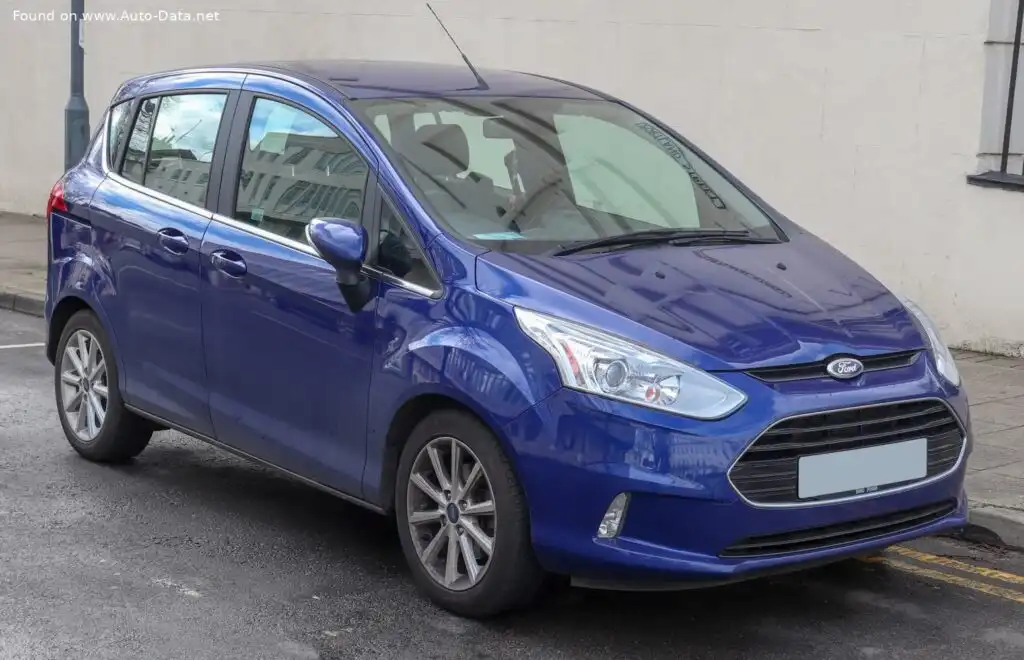
Ford B-MAX 1.0 EcoBoost (140 Hp)
The Ford B-MAX 1.0 EcoBoost (140 Hp) represents the most powerful iteration of Ford’s innovative mini multi-purpose vehicle (MPV). Produced for a brief period between 2016 and 2017, this specific model combined the B-MAX’s renowned practicality and unique Easy Access Door System with the highest-output version of the acclaimed 1.0-litre, three-cylinder EcoBoost engine. Aimed at drivers seeking a compact, family-friendly vehicle without sacrificing spirited performance, this variant offered a compelling blend of efficiency, power, and clever design. It stood as a testament to Ford’s engineering prowess, fitting a remarkably potent engine into a versatile and accessible hatchback body, making it a distinctive choice in the competitive B-segment market before the industry’s widespread shift towards crossover SUVs.
History and Development
The Ford B-MAX was first unveiled as a concept car at the 2011 Geneva Motor Show, showcasing Ford’s vision for a compact MPV built on its global B-platform, which it shared with the highly successful Ford Fiesta. Production began in 2012, with the vehicle positioned as a successor to the Ford Fusion in Europe. The B-MAX’s defining feature was its B-pillarless design. By integrating the central structural pillars into the front-hinged and rear-sliding doors, Ford created an exceptionally wide, 1.5-meter unobstructed aperture, vastly improving access to the rear seats—a feature particularly beneficial for families with young children or those requiring easier cabin entry and exit.
Throughout its production life, the B-MAX was available with a range of petrol and diesel engines. However, the introduction of the 140 horsepower version of the 1.0-litre EcoBoost engine in 2016 marked a significant performance upgrade. This engine, which had already won multiple International Engine of the Year awards in its lower-powered forms, was tuned to deliver a driving experience more akin to a warm hatchback than a typical mini MPV. This late-cycle addition catered to a niche market of buyers who appreciated the B-MAX’s functionality but desired more dynamic performance and driver engagement, effectively creating a Sport version of the practical people carrier. Production of the entire B-MAX range, including this powerful EcoBoost model, ceased in 2017 as Ford realigned its product strategy to focus on the growing demand for SUVs like the EcoSport and the subsequently released Puma.
Engine Specifications of the Ford B-MAX 1.0 EcoBoost (140 Hp)
At the heart of this vehicle is the technologically advanced YYJC EcoBoost engine. Despite its small displacement of just 998 cm³ (1.0 litre), this inline three-cylinder powerhouse is a marvel of modern engineering, delivering performance figures that rival much larger, naturally aspirated engines.
The engine employs a combination of direct fuel injection, turbocharging, and a sophisticated intercooler system to maximize power and efficiency. Its Dual Overhead Camshaft (DOHC) valvetrain with four valves per cylinder allows for optimal airflow and combustion. This configuration enables the engine to produce a peak power output of 140 horsepower (Hp) at 6000 rpm and a substantial torque figure of 180 Newton-metres (Nm), available from a very low 1400 rpm. This low-end torque is crucial for providing responsive acceleration and drivability in urban environments, minimizing the need for frequent gear changes.
The specific power output of 140.3 Hp per litre is an exceptionally high figure, highlighting the efficiency of the EcoBoost design. The engine is also equipped with a Start-Stop system, which automatically shuts down the engine when the vehicle is stationary (for example, at traffic lights) to reduce fuel consumption and emissions, restarting it instantly when the clutch is depressed.
Performance, Fuel Economy, and Emissions
The performance of the Ford B-MAX 1.0 EcoBoost (140 Hp) elevated it beyond its utilitarian roots. The vehicle could accelerate from 0 to 100 km/h (0 to 62 mph) in a respectable 10.3 seconds, with its 0-60 mph time calculated at approximately 9.8 seconds. This acceleration, combined with a top speed of 196 km/h (121.8 mph), provided ample capability for confident motorway cruising and overtaking.
Despite its performance credentials, the model remained impressively fuel-efficient. According to the New European Driving Cycle (NEDC) standards, its fuel consumption figures were:
Urban: 6.2 l/100 km (37.9 US mpg / 45.6 UK mpg)
Extra-urban: 4.4 l/100 km (53.5 US mpg / 64.2 UK mpg)
* Combined: 5.0 l/100 km (47 US mpg / 56.5 UK mpg)
These figures demonstrate the engine’s ability to balance power on demand with economical cruising. In terms of environmental impact, the vehicle complied with the stringent Euro 6 emissions standard. Its CO2 emissions were rated at 116 g/km, placing it in a favourable tax bracket in many European countries at the time of its release.
Chassis, Drivetrain, and Handling
The B-MAX is built on a front-wheel-drive architecture, with the transversely mounted internal combustion engine driving the front wheels. This layout is standard for the segment and contributes to efficient packaging and predictable handling characteristics. For the 140 Hp EcoBoost variant, power is managed through a 5-speed manual transmission, offering direct driver engagement.
The suspension system is engineered to provide a balance between comfort for family duties and agility for a more spirited driving style. The front features an independent MacPherson strut setup with a coil spring and anti-roll bar, a common and effective design for maintaining front-end grip and stability. The rear suspension is a semi-independent torsion beam with a coil spring, a space-efficient design that helps maximize rear passenger and cargo room without overly compromising handling dynamics.
Braking is handled by ventilated discs at the front for effective heat dissipation during repeated use and conventional drum brakes at the rear. An Anti-lock Braking System (ABS) was standard. The vehicle utilizes an electric power steering system, which provides light and easy steering at low parking speeds while firming up for better feedback and stability at higher speeds. The B-MAX was typically fitted with 195/55 R16 or optional 205/45 R17 tires, with the larger wheels enhancing the vehicle’s sporty appearance and improving road-holding.
Exterior Design and Dimensions
The Ford B-MAX’s defining feature remains its B-pillarless design and sliding rear doors, marketed as the Ford Easy Access Door System. This innovative solution provides an exceptionally large opening for passengers and for loading bulky items, setting it apart from all competitors in its class. In terms of dimensions, the vehicle is a quintessential compact MPV. It measures 4077 mm in length, 1751 mm in width (excluding mirrors), and 1604 mm in height. Its relatively long wheelbase of 2489 mm helps to maximize interior space within its compact footprint. The minimum turning circle of 10.45 meters ensures good maneuverability in tight urban spaces.
Interior, Practicality, and Load Capacity
Inside, the B-MAX offers seating for five in a versatile and highly practical cabin. The driver-focused dashboard and controls were borrowed from the contemporary Ford Fiesta, providing a familiar and ergonomic environment. The high roofline and large windows create an airy and spacious feel.
The vehicle’s MPV nature is most evident in its load-carrying capabilities. The trunk offers a minimum of 318 litres of space with the rear seats in place, which is competitive for its class. However, by folding the rear seats flat, the cargo capacity expands dramatically to a maximum of 1386 litres. This flexibility makes the B-MAX suitable for everything from daily school runs to trips to the hardware store.
The kerb weight of the vehicle is 1204 kg, with a maximum permissible gross weight of 1750 kg, allowing for a substantial payload of 546 kg. It also has a modest towing capacity, rated at 750 kg for a braked trailer and 635 kg for an unbraked trailer.
Full Technical Specifications
| Category | Specification |
| ————————— | ——————————————————————————————————— |
| General Information | |
| Brand | Ford |
| Model | B-MAX |
| Generation | B-MAX |
| Engine | 1.0 EcoBoost (140 Hp) |
| Production Years | 2016 – 2017 |
| Body Type | Hatchback / Mini MPV |
| Seats | 5 |
| Doors | 5 (including rear sliding doors) |
| Performance | |
| Acceleration 0-100 km/h | 10.3 seconds |
| Maximum Speed | 196 km/h (121.8 mph) |
| Fuel Type | Petrol (Gasoline) |
| Fuel Consumption (Combined) | 5.0 l/100 km (47 US mpg / 56.5 UK mpg) |
| CO2 Emissions (NEDC) | 116 g/km
