
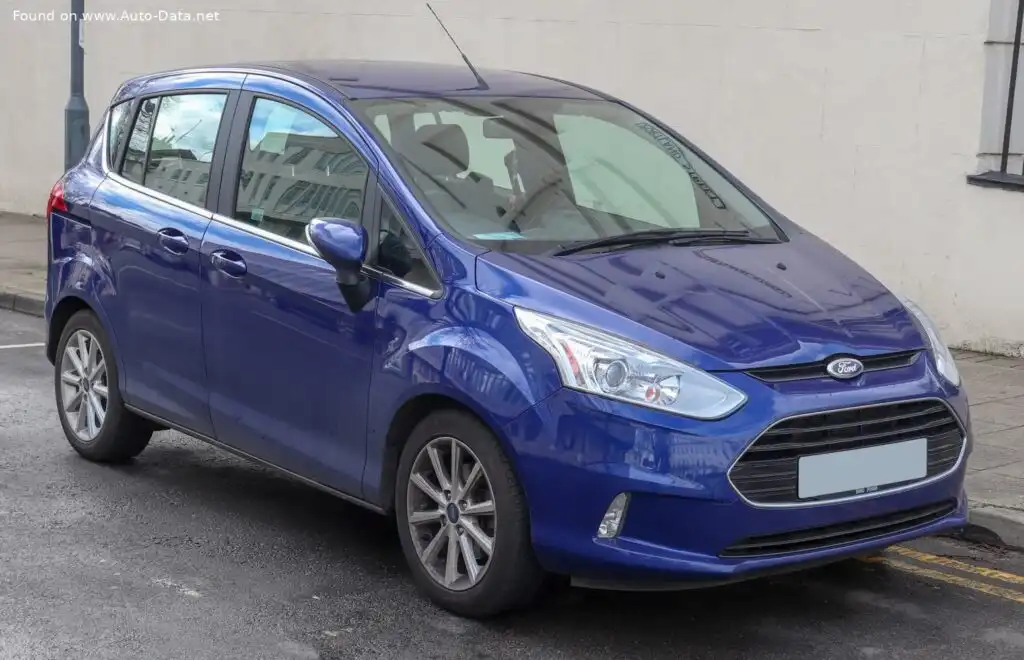
The Ford B-MAX 1.4 Duratec (90 Hp) is a variant of the B-MAX mini Multi-Purpose Vehicle (MPV) produced by the Ford Motor Company. Manufactured between 2012 and 2017, this specific model featured a naturally aspirated 1.4-litre petrol engine, positioning it as an accessible and reliable option within the B-MAX lineup. The vehicle was primarily designed for the European market, offering a unique combination of compact exterior dimensions, a highly versatile interior, and an innovative door system aimed at maximizing accessibility for families in urban environments. Based on the acclaimed Ford Fiesta platform, the B-MAX sought to blend the practicality of an MPV with the engaging driving dynamics characteristic of Ford’s smaller vehicles.
History and Development
The Ford B-MAX was first previewed as a concept car at the 2011 Geneva Motor Show. The production version was unveiled a year later at the 2012 Geneva Motor Show, entering production at Ford’s facility in Craiova, Romania. The vehicle was developed to compete in the growing B-segment MPV market, challenging rivals such as the Opel/Vauxhall Meriva, Citroën C3 Picasso, and Fiat 500L.
The core of the B-MAX’s design philosophy was to provide maximum interior space and unparalleled access within a small footprint. Its most significant innovation was the Ford Easy Access Door System, which integrated the central B-pillars into the sliding rear doors. This created an unobstructed 1.5-metre wide aperture when both the front and rear doors were open, greatly simplifying the process of loading cargo, securing children in car seats, or allowing passengers to enter and exit in tight parking spaces.
The powertrain lineup for the B-MAX included a range of petrol and diesel engines. Alongside the award-winning 1.0-litre EcoBoost turbocharged engines, Ford offered naturally aspirated options for buyers seeking a simpler, more traditional powertrain. The Ford B-MAX 1.4 Duratec (90 Hp) served as a key entry-level petrol model, offering a balance of adequate performance for city driving and proven Duratec engine technology.
Production of the B-MAX ceased in September 2017. The model was discontinued without a direct successor, as market trends showed a significant shift in consumer preference away from mini MPVs and towards B-segment crossover SUVs, such as the Ford EcoSport, which was produced at the same Craiova plant.
Design and Features
Exterior
The exterior design of the Ford B-MAX follows Ford’s Kinetic Design language, which was prevalent across its model range during the 2010s. It features a prominent trapezoidal front grille, swept-back headlights, and dynamic character lines along the bodywork that give it a sense of motion even when stationary. Despite its tall, van-like profile designed to maximize headroom, the styling cues help to give it a more car-like and less utilitarian appearance than some of its rivals.
Its compact dimensions—4,077 mm in length and 1,751 mm in width—made it well-suited for navigating congested city streets and fitting into small parking spots. The most defining exterior feature, however, remains the Easy Access Door System. The front doors are conventionally hinged, while the rear doors slide backward along a track. The absence of a fixed central pillar was a significant engineering challenge, which Ford addressed by extensively reinforcing the door frames and roof structure with high-strength and ultra-high-strength boron steel. This allowed the vehicle to meet stringent safety standards while delivering on its primary promise of superior accessibility.
Interior
Inside, the B-MAX offers a surprisingly spacious and airy cabin for a vehicle of its size. The high roofline and large glasshouse contribute to excellent visibility and a feeling of openness. The dashboard layout is closely related to that of the contemporary Ford Fiesta, featuring a similar instrument cluster and a centre console with controls for the infotainment and climate systems. Material quality is generally good for the class, with a mix of soft-touch plastics on upper surfaces and more durable materials elsewhere.
The elevated seating position provides a commanding view of the road, a feature appreciated by many drivers. The interior’s true strength lies in its flexibility. The rear seats can be split-folded 60/40, and the front passenger seat can also be folded completely flat. This creates a long, continuous load floor capable of accommodating items up to 2.34 metres in length. With the rear seats in place, boot capacity is 318 litres, which expands to a generous 1,386 litres with the rear seats folded down, making the B-MAX a highly practical load-carrier for its size.
Powertrain: Ford B-MAX 1.4 Duratec (90 Hp) Specifications
The heart of this particular B-MAX model is the 1.4-litre Duratec petrol engine. As a member of Ford’s Duratec family, it is a naturally aspirated, four-cylinder engine known for its reliability and smooth operation.
Engine and Performance
The engine has a displacement of 1388 cm³ (1.4 litres) with a DOHC (Double Overhead Camshaft) valvetrain and four valves per cylinder. This configuration, combined with multi-port fuel injection, allows for efficient engine breathing and fuel delivery. It produces a maximum power output of 90 horsepower (66 kW) at 5,750 rpm and a peak torque of 125 Newton-metres (92.2 lb-ft) at a relatively high 4,000 rpm.
These figures translate into modest but adequate performance for the vehicle’s intended purpose. The Ford B-MAX 1.4 Duratec (90 Hp) accelerates from 0 to 100 km/h (0 to 62 mph) in 13.8 seconds and can reach a top speed of 171 km/h (106 mph). The power delivery is linear and predictable, but it requires the driver to use the higher rev range to access peak power and torque, typical of smaller naturally aspirated engines. While not as punchy as the turbocharged EcoBoost variants, the 1.4 Duratec is well-suited for urban commuting and relaxed cruising, where its smoothness and simplicity are valued.
The engine is paired exclusively with a 5-speed manual transmission that sends power to the front wheels. The gearbox is noted for its precise and light shifting action, making it easy to use in stop-and-go city traffic.
Fuel Economy and Emissions
In terms of efficiency, the 1.4 Duratec engine offered reasonable running costs for its time. According to official figures, its fuel consumption is rated at:
7.9 L/100 km in the urban cycle.
4.9 L/100 km in the extra-urban cycle.
* 6.0 L/100 km in the combined cycle.
The vehicle emits 139 g/km of CO₂, which allowed it to meet the Euro 6 emission standard. This compliance was important for taxation and access to low-emission zones in many European countries during its production run.
Chassis, Handling, and Safety
The Ford B-MAX is built on Ford’s global B-car platform, which it shares with the highly regarded seventh-generation Fiesta. This platform is renowned for providing a sophisticated balance between ride comfort and agile handling, and the B-MAX inherits many of these positive traits.
The suspension setup consists of MacPherson struts at the front and a torsion beam axle at the rear—a common and effective configuration for front-wheel-drive cars in this segment. Ford’s engineers tuned the suspension to provide a comfortable ride over most road surfaces while still maintaining good body control through corners. The electric power-assisted steering (EPAS) is light at low speeds for easy manoeuvring and weights up progressively as speed increases to provide more confidence on highways. The result is a car that is surprisingly enjoyable and easy to drive, feeling more like a compact hatchback than a tall MPV.
Safety was a paramount concern during the B-MAX’s development, especially given its unconventional pillar-less design. To ensure structural rigidity and crash protection, the integrated B-pillars within the doors contain five different types of ultra-high-strength steel, including boron steel. When the doors are closed, they an interlock firmly with the roof rail and floor pan, creating a robust safety cell. This innovative engineering allowed the B-MAX to achieve a maximum five-star safety rating from Euro NCAP in 2012, with high scores for adult and child occupant protection. Standard safety equipment included seven airbags (including a driver’s knee airbag), Anti-lock Braking System (ABS), and Electronic Stability Control (ESC).
Conclusion
The Ford B-MAX 1.4 Duratec (90 Hp) represented a compelling proposition in the mini MPV segment, combining clever design with proven, straightforward mechanicals. Its standout feature, the Easy Access Door System, offered a level of practicality and convenience that was unmatched by its rivals. While the performance of the 1.4 Duratec engine was geared more towards efficiency and urban utility than outright speed, it provided a reliable and cost-effective entry point to the B-MAX range. Supported by the excellent driving dynamics of its Fiesta-based chassis and a top-tier safety rating, this model was a well-rounded vehicle for young families and those requiring easy access and interior versatility in a compact package. Although the market eventually shifted away from this vehicle class, the Ford B-MAX remains a noteworthy example of innovative automotive engineering focused on solving everyday problems.
Full Technical Specifications Table
| Specification | Value |
| —————————- | —————————————————————— |
| General Information | |
| Brand | Ford |
| Model | B-MAX |
| Generation | B-MAX |
| Engine Type | 1.4 Duratec (90 Hp) |
| Production Years | 2012 – 2017 |
| Powertrain Architecture | Internal Combustion Engine (ICE) |
| Body Type | Mini MPV / Hatchback |
| Seats | 5 |
| Doors | 5 (2 hinged front, 2 sliding rear) |
| Performance | |
| Fuel Type | Petrol (Gasoline) |
| Acceleration (0 – 100 km/h) | 13.8 seconds |
| Maximum Speed | 171 km/h (106 mph) |
| Fuel Consumption (Urban) | 7.9 L/100 km |
| Fuel Consumption (Extra-Urban) | 4.9 L/100 km
