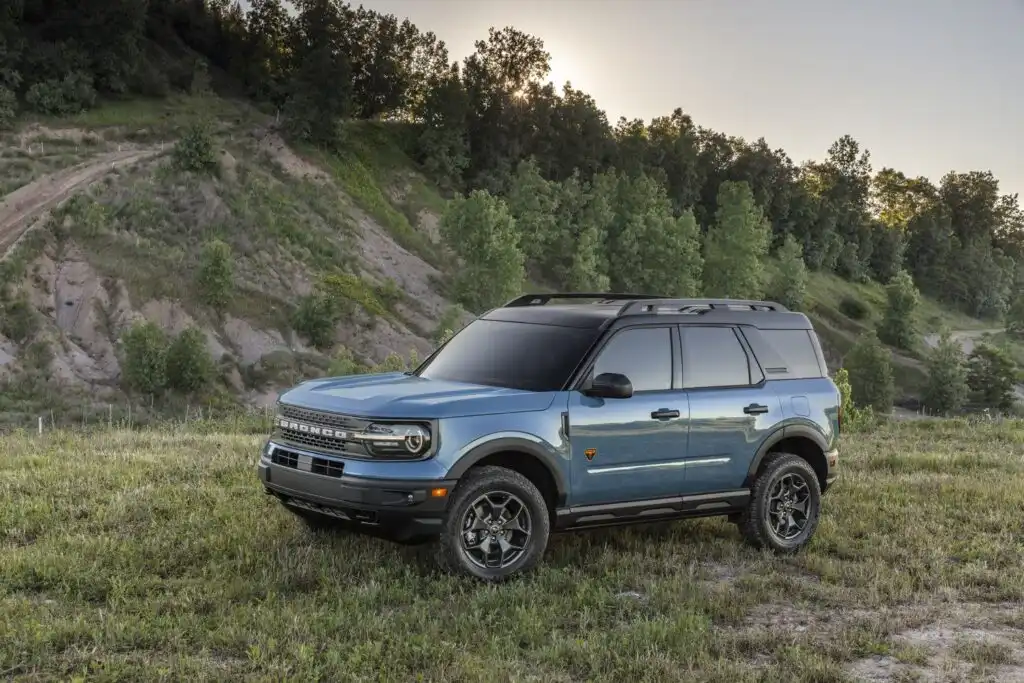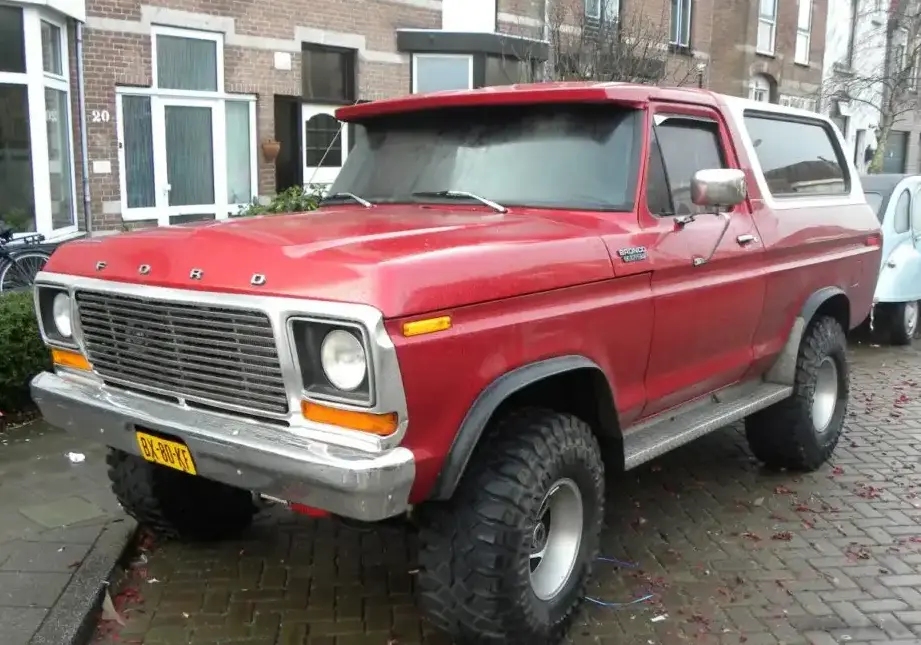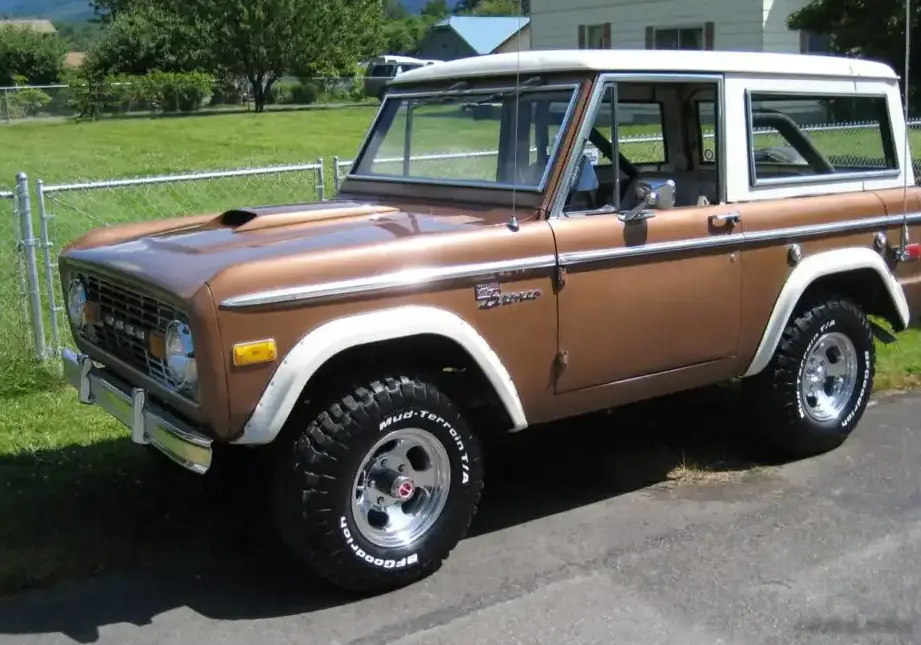
The Ford Bronco I 2.8, producing 90 horsepower, with all-wheel drive (AWD) represents a foundational variant of the iconic first-generation Bronco. Produced from 1966 through 1977, this model served as an entry point into the Bronco lineup, offering a rugged, capable vehicle at a more accessible price point. It was built upon the 1HX0 chassis, shared with early Ford Mustangs and Falcons, and played a significant role in establishing the Bronco’s reputation as a versatile off-road vehicle in the American market. This particular configuration, with its 2.8-liter inline-six engine and three-speed manual transmission, was aimed at buyers prioritizing utility and affordability over outright performance.
Technical Specifications
| Brand | Ford |
| Model | Bronco |
| Generation | Bronco I |
| Type (Engine) | 2.8 (90 Hp) AWD |
| Start of production | 1966 |
| End of production | 1977 |
| Powertrain Architecture | Internal Combustion engine |
| Body type | SUV |
| Seats | 5 |
| Doors | 3 |
| Fuel consumption (economy) – combined | 16.8 l/100 km |
| Fuel consumption (economy) – combined | 14 US mpg |
| Fuel consumption (economy) – combined | 16.8 UK mpg |
| Fuel consumption (economy) – combined | 6 km/l |
| Fuel Type | Petrol (Gasoline) |
| Acceleration 0 – 100 km/h | 20 sec |
| Acceleration 0 – 62 mph | 20 sec |
| Acceleration 0 – 60 mph | 19 sec |
| Maximum speed | 129 km/h |
| Maximum speed | 80.16 mph |
| Weight-to-power ratio | 16.1 kg/Hp |
| Weight-to-power ratio | 62.1 Hp/tonne |
| Weight-to-torque ratio | 7.3 kg/Nm |
| Weight-to-torque ratio | 136.6 Nm/tonne |
| Power | 90 Hp @ 3800 rpm |
| Power per litre | 32.4 Hp/l |
| Torque | 198 Nm @ 2400 rpm |
| Torque | 146.04 lb.-ft. @ 2400 rpm |
| Engine layout | Front, Longitudinal |
| Engine displacement | 2781 cm3 |
| Engine displacement | 169.71 cu. in. |
| Number of cylinders | 6 |
| Engine configuration | Inline |
| Cylinder Bore | 88.9 mm |
| Cylinder Bore | 3.5 in. |
| Piston Stroke | 74.68 mm |
| Piston Stroke | 2.94 in. |
| Compression ratio | 9.1:1 |
| Number of valves per cylinder | 2 |
| Fuel injection system | Carburettor |
| Engine aspiration | Naturally aspirated engine |
| Valvetrain | OHV |
| Kerb Weight | 1450 kg |
| Kerb Weight | 3196.7 lbs |
| Max. weight | 1770 kg |
| Max. weight | 3902.18 lbs |
| Max load | 320 kg |
| Max load | 705.48 lbs |
| Length | 3863 mm |
| Length | 152.09 in |
| Width | 1748 mm |
| Width | 68.82 in |
| Height | 1814 mm |
| Height | 71.42 in |
| Wheelbase | 2337 mm |
| Wheelbase | 92.01 in |
| Front track | 1453 mm |
| Front track | 57.2 in |
| Rear (Back) track | 1453 mm |
| Rear (Back) track | 57.2 in |
| Ride height (ground clearance) | 198 mm |
| Ride height (ground clearance) | 7.8 in |
| Drag coefficient (Cd) | 0.65 |
| Minimum turning circle (turning diameter) | 10.2 m |
| Minimum turning circle (turning diameter) | 33.46 ft |
| Drive wheel | All wheel drive (4×4) |
| Number of gears and type of gearbox | 3 gears, manual transmission |
| Front brakes | Ventilated discs |
| Rear brakes | Drum |
| Tires size | 215/60 R15; 195/70 R15; 185/80 R15 |
| Wheel rims size | 15 |
Powertrain & Engine Architecture
The heart of the Bronco I 2.8 was the 2.8-liter (169.7 cu in) inline-six cylinder engine. This engine, designated as the 302 cubic inch V8’s smaller sibling, was a relatively simple design featuring a cast iron block and cylinder head. It utilized an overhead valve (OHV) valvetrain with two valves per cylinder. Fuel delivery was managed by a single-barrel carburetor, a common setup for the era, prioritizing simplicity and cost-effectiveness over advanced fuel management. The engine produced 90 horsepower at 3800 rpm and 198 Nm (146 lb-ft) of torque at 2400 rpm. This power was then sent to all four wheels through a three-speed manual transmission. The transmission was a robust unit, designed to handle the demands of off-road driving, but its limited number of gears meant that acceleration was leisurely.
Driving Characteristics
The 2.8-liter Bronco, with its 90 horsepower and three-speed manual transmission, offered a driving experience focused on capability rather than speed. Acceleration was slow, taking approximately 20 seconds to reach 60 mph. However, the engine’s torque output at lower RPMs provided adequate power for navigating challenging terrain. The three-speed transmission, while simple, required frequent shifting to maintain momentum, especially when climbing hills or towing. The all-wheel-drive system, featuring a two-speed transfer case, provided excellent traction in off-road conditions. The Bronco’s relatively short wheelbase and solid axles contributed to its impressive off-road prowess, allowing it to tackle obstacles that larger, more powerful SUVs struggled with. Compared to the later V8-powered Broncos, the 2.8-liter model was significantly slower and less refined, but it offered a more economical and accessible entry point into the Bronco world.
Equipment & Trim Levels
The base Bronco I 2.8 was fairly spartan in terms of standard equipment. It typically included basic features such as a vinyl interior, a simple dashboard with minimal instrumentation, and a heater. Power steering and power brakes were often optional extras. The interior was designed for durability and ease of cleaning, reflecting the Bronco’s intended use as a rugged utility vehicle. Optional extras included a radio, upgraded upholstery, and various off-road accessories such as a winch and auxiliary lighting. The trim levels were relatively basic, with the primary differentiation being the addition of optional equipment. The focus was on providing a functional and reliable vehicle rather than luxurious amenities.
Chassis & Braking
The Bronco I utilized a body-on-frame construction, providing a robust and durable chassis. The suspension consisted of leaf springs in the front and rear, offering a comfortable ride on paved roads while maintaining sufficient articulation for off-road use. The front brakes were ventilated discs, providing adequate stopping power, while the rear brakes were drums. This combination was typical for vehicles of this era and weight class. The steering was a recirculating ball system, which provided a solid feel but lacked the precision of more modern steering technologies. The Bronco’s relatively high ground clearance (198 mm or 7.8 inches) and short wheelbase contributed to its excellent off-road capability.
Market Reception & Comparison
The Ford Bronco I 2.8 was generally well-received by critics and buyers who prioritized affordability and off-road capability. While its performance was not exceptional, it offered a compelling value proposition for those seeking a rugged and versatile vehicle. Compared to the V8-powered Broncos, the 2.8-liter model was significantly more fuel-efficient, although fuel economy was still relatively poor by modern standards (around 14 mpg). The 2.8-liter engine was also known for its reliability, although maintenance costs could be higher due to the carburetor and older engine technology. The 2.8L Bronco was often compared to the Jeep CJ-5, offering a similar level of off-road capability at a competitive price point.
Legacy
The Ford Bronco I 2.8, while often overshadowed by its more powerful V8 siblings, remains a significant part of the Bronco’s legacy. Its affordability and reliability made it a popular choice for buyers who needed a capable and durable vehicle. Today, these early Broncos are highly sought after by collectors and enthusiasts, particularly those who appreciate their simplicity and rugged charm. The 2.8-liter engine, while not known for its performance, is generally considered to be a reliable powerplant, and parts availability is still relatively good. The Bronco I 2.8 represents a foundational chapter in the Bronco story, establishing the model as a true icon of American automotive history.