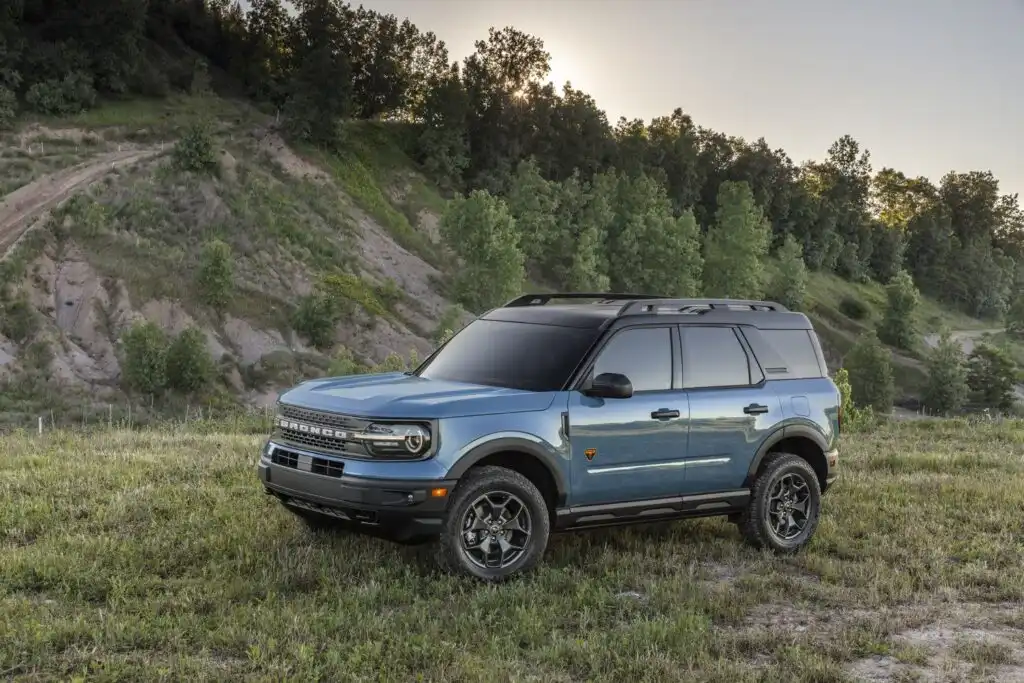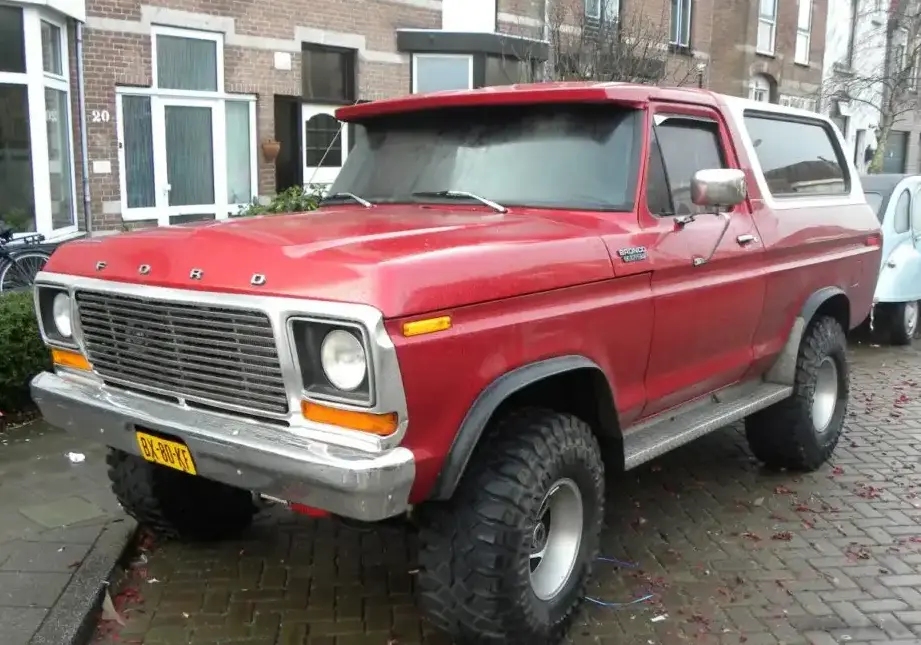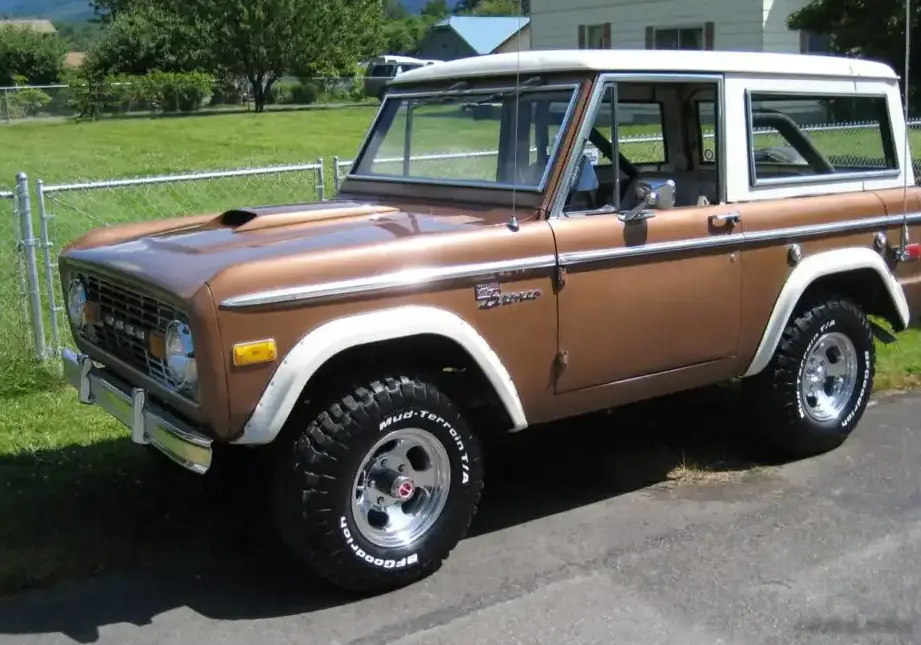
The Ford Bronco I, specifically the variant equipped with the 4.9-liter V8 engine producing 139 horsepower and featuring all-wheel drive, represents a pivotal entry point into the first generation of this iconic American SUV. Produced from 1966 to 1977, this configuration occupied a significant space in the Bronco lineup, offering a balance between affordability and capability. It was positioned as a step up from the base inline-six engine options, appealing to buyers who desired more power for towing, off-road adventures, and general usability. The Bronco I, built on a shortened Ford F-100 chassis, was Ford’s direct response to the growing popularity of the Jeep CJ series, aiming to provide a more comfortable and versatile off-road vehicle.
Technical Specifications
| Brand | Ford |
| Model | Bronco |
| Generation | Bronco I |
| Type (Engine) | 4.9 V8 (139 Hp) AWD |
| Start of production | 1966 year |
| End of production | 1977 year |
| Powertrain Architecture | Internal Combustion engine |
| Body type | SUV |
| Seats | 5 |
| Doors | 3 |
| Fuel consumption (economy) – combined | 19 l/100 km |
| Fuel consumption (economy) – combined | 12.4 US mpg |
| Fuel consumption (economy) – combined | 14.9 UK mpg |
| Fuel consumption (economy) – combined | 5.3 km/l |
| Fuel Type | Petrol (Gasoline) |
| Acceleration 0 – 100 km/h | 12.5 sec |
| Acceleration 0 – 62 mph | 12.5 sec |
| Acceleration 0 – 60 mph | 11.9 sec |
| Maximum speed | 150 km/h |
| Maximum speed | 93.21 mph |
| Weight-to-power ratio | 11.6 kg/Hp |
| Weight-to-power ratio | 86.1 Hp/tonne |
| Weight-to-torque ratio | 5.2 kg/Nm |
| Weight-to-torque ratio | 193.2 Nm/tonne |
| Power | 139 Hp @ 4200 rpm |
| Power per litre | 28.1 Hp/l |
| Torque | 312 Nm @ 2200 rpm |
| Torque | 230.12 lb.-ft. @ 2200 rpm |
| Engine layout | Front, Longitudinal |
| Engine displacement | 4942 cm3 |
| Engine displacement | 301.58 cu. in. |
| Number of cylinders | 8 |
| Engine configuration | V-engine |
| Cylinder Bore | 101.6 mm |
| Cylinder Bore | 4 in. |
| Piston Stroke | 76.2 mm |
| Piston Stroke | 3 in. |
| Compression ratio | 8:1 |
| Number of valves per cylinder | 2 |
| Fuel injection system | Carburettor |
| Engine aspiration | Naturally aspirated engine |
| Kerb Weight | 1615 kg |
| Kerb Weight | 3560.47 lbs. |
| Max. weight | 2223 kg |
| Max. weight | 4900.88 lbs. |
| Max load | 608 kg |
| Max load | 1340.41 lbs. |
| Length | 3863 mm |
| Length | 152.09 in. |
| Width | 1748 mm |
| Width | 68.82 in. |
| Height | 1859 mm |
| Height | 73.19 in. |
| Wheelbase | 2337 mm |
| Wheelbase | 92.01 in. |
| Front track | 1453 mm |
| Front track | 57.2 in. |
| Rear (Back) track | 1453 mm |
| Rear (Back) track | 57.2 in. |
| Ride height (ground clearance) | 201 mm |
| Ride height (ground clearance) | 7.91 in. |
| Drag coefficient (Cd) | 0.65 |
| Minimum turning circle (turning diameter) | 10.2 m |
| Minimum turning circle (turning diameter) | 33.46 ft. |
| Drive wheel | All wheel drive (4×4) |
| Number of gears and type of gearbox | 3 gears, manual transmission |
| Front brakes | Ventilated discs |
| Rear brakes | Drum |
| Tires size | 165/75 R16 |
| Wheel rims size | 16 |
Powertrain & Engine Architecture
The heart of this Bronco variant is the 4.9-liter (302 cubic inch) Ford Windsor V8 engine. This engine, designated as the 302, was a mainstay of Ford’s lineup for decades, known for its durability and relatively simple design. The 139 horsepower output was achieved through a two-barrel carburetor fuel system, a relatively conservative setup compared to the four-barrel carburetors found on higher-performance versions. The engine featured a cast iron block and cylinder heads, with a pushrod valvetrain operating two valves per cylinder. The 8:1 compression ratio was a compromise between power and the ability to run on regular gasoline. The engine’s longitudinal front-engine layout contributed to the Bronco’s balanced handling. The standard transmission was a three-speed manual, although a three-speed automatic transmission (C4) was also available as an option, though less common with this engine.
Driving Characteristics
The 4.9-liter V8, paired with the three-speed manual transmission, provided adequate, though not exhilarating, performance. Acceleration to 60 mph took around 11.9 seconds, which was competitive for the era, especially considering the Bronco’s weight and off-road focus. The engine delivered its peak torque of 312 Nm (230 lb-ft) at a relatively low 2200 rpm, making it suitable for low-speed crawling and towing. The three-speed gearbox offered widely spaced ratios, prioritizing low-end grunt over high-speed cruising. Compared to the inline-six engine options, the V8 provided noticeably more power and responsiveness, particularly when climbing hills or navigating challenging terrain. However, it wasn’t as nimble or fuel-efficient as the smaller engines.
Equipment & Trim Levels
The 4.9-liter V8 Bronco I typically came with a fairly basic level of equipment. Standard features included a heater and defroster, a basic instrument cluster, and vinyl upholstery. Options included a radio, a rear seat, and various off-road packages. The interior was utilitarian, designed for durability and ease of cleaning. The dashboard was typically finished in a durable plastic, and the floor was covered in rubber matting. Trim levels were relatively limited; buyers could choose from a range of exterior colors and optional accessories, but the core features remained consistent.
Chassis & Braking
The Bronco I utilized a body-on-frame construction, providing a robust and durable platform for off-road use. The front suspension consisted of a solid axle with leaf springs, while the rear suspension also featured a solid axle with leaf springs. The braking system employed ventilated discs at the front and drum brakes at the rear. The steering was a recirculating ball system, providing a direct but somewhat heavy feel. The 4×4 system was typically a part-time system, allowing the driver to switch between two-wheel drive and four-wheel drive as needed. The relatively simple suspension and braking systems were reliable and easy to maintain, but they didn’t offer the refinement of more modern vehicles.
Market Reception & Comparison
The 4.9-liter V8 Bronco I was generally well-received by buyers who needed a capable and affordable off-road vehicle. Critics praised its ruggedness and simplicity, but noted its lack of refinement compared to some competitors. Fuel economy, at around 12.4 US mpg, was typical for a V8-powered vehicle of the era, but it was a significant drawback for some buyers. Compared to the inline-six versions, the V8 Bronco commanded a higher price but offered a noticeable performance advantage. It was often seen as a good compromise between the base models and the more expensive, fully-equipped Broncos.
Legacy
The 4.9-liter V8 Bronco I has become a highly sought-after classic vehicle, particularly among enthusiasts who appreciate its simplicity and ruggedness. The Windsor V8 engine is known for its durability and ease of maintenance, making it a relatively reliable powertrain even after decades of use. While fuel economy is poor by modern standards, the Bronco’s iconic status and off-road capability continue to attract buyers. Well-maintained examples command strong prices in the used car market, and the Bronco remains a popular choice for restoration projects and off-road adventures. The 4.9L V8 variant is often considered a sweet spot in the first-generation Bronco lineup, offering a good balance of power, reliability, and affordability.