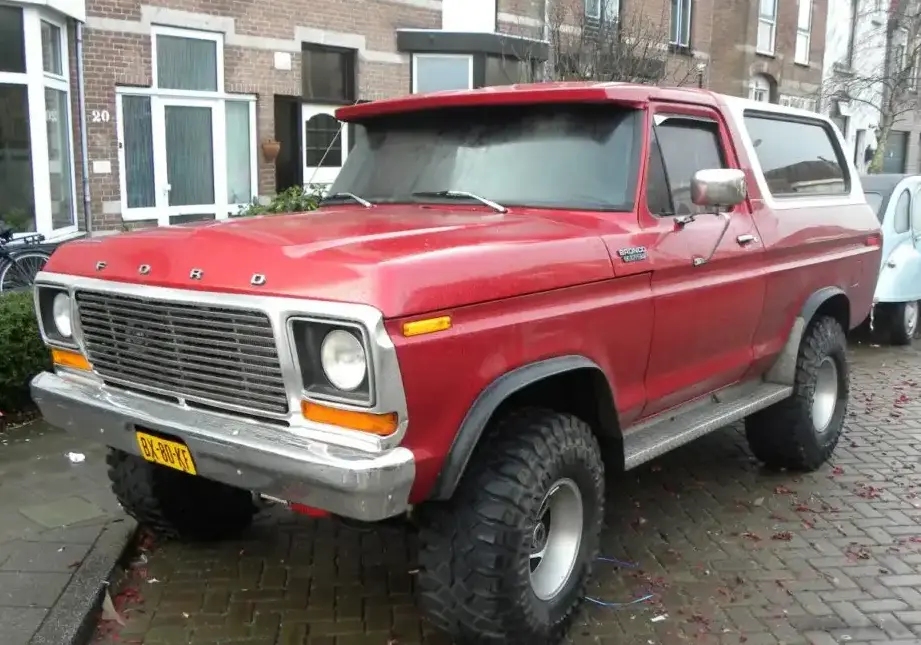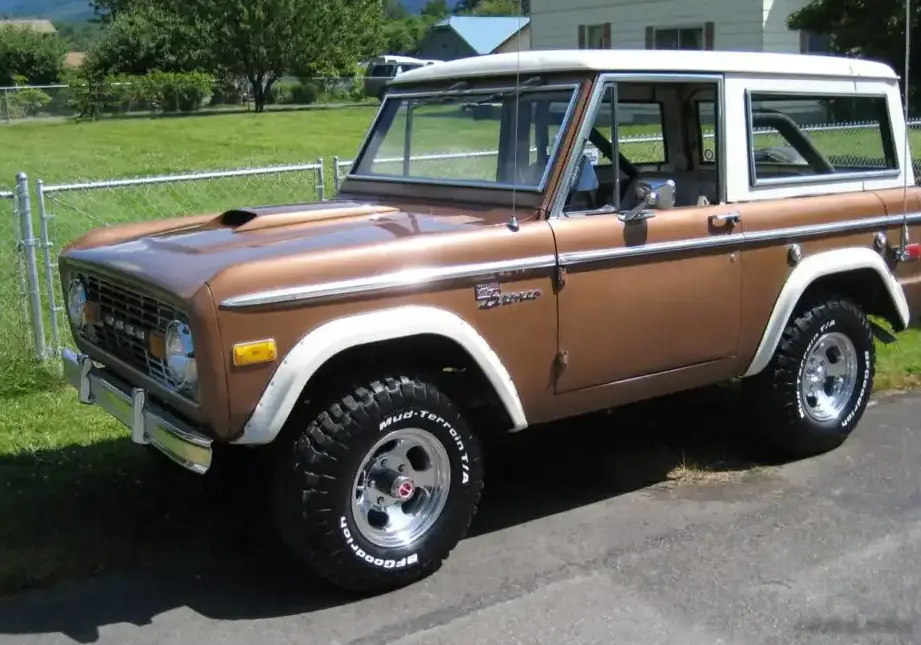
The Ford Bronco I, specifically the variant equipped with the 4.9-liter V8 engine producing 139 horsepower and paired with a three-speed automatic transmission and all-wheel drive, represents a significant entry point into the first generation of this iconic American SUV. Produced from 1966 to 1977, this configuration offered a blend of off-road capability and relative affordability, making it a popular choice for recreational drivers and those needing a rugged utility vehicle. It occupied the lower-mid range of the Bronco lineup, positioned below the more powerful 302 cubic inch (5.0L) V8 options, but above the base inline-six cylinder engines.
Technical Specifications
| Brand | Ford |
| Model | Bronco |
| Generation | Bronco I |
| Type (Engine) | 4.9 V8 (139 Hp) AWD Automatic |
| Start of production | 1966 year |
| End of production | 1977 year |
| Powertrain Architecture | Internal Combustion engine |
| Body type | SUV |
| Seats | 5 |
| Doors | 3 |
| Fuel consumption (economy) – combined | 19.6 l/100 km |
| Fuel consumption (economy) – combined | 12 US mpg |
| Fuel consumption (economy) – combined | 14.4 UK mpg |
| Fuel consumption (economy) – combined | 5.1 km/l |
| Fuel Type | Petrol (Gasoline) |
| Acceleration 0 – 100 km/h | 12.5 sec |
| Acceleration 0 – 62 mph | 12.5 sec |
| Acceleration 0 – 60 mph | 11.9 sec |
| Maximum speed | 150 km/h |
| Maximum speed | 93.21 mph |
| Weight-to-power ratio | 11.7 kg/Hp |
| Weight-to-power ratio | 85.3 Hp/tonne |
| Weight-to-torque ratio | 5.2 kg/Nm |
| Weight-to-torque ratio | 191.4 Nm/tonne |
| Power | 139 Hp @ 4200 rpm |
| Power per litre | 28.1 Hp/l |
| Torque | 312 Nm @ 2200 rpm |
| Torque | 230.12 lb.-ft. @ 2200 rpm |
| Engine layout | Front, Longitudinal |
| Engine displacement | 4942 cm3 |
| Engine displacement | 301.58 cu. in. |
| Number of cylinders | 8 |
| Engine configuration | V-engine |
| Cylinder Bore | 101.6 mm |
| Cylinder Bore | 4 in. |
| Piston Stroke | 76.2 mm |
| Piston Stroke | 3 in. |
| Compression ratio | 8:1 |
| Number of valves per cylinder | 2 |
| Fuel injection system | Carburettor |
| Engine aspiration | Naturally aspirated engine |
| Kerb Weight | 1630 kg |
| Kerb Weight | 3593.53 lbs. |
| Max. weight | 2223 kg |
| Max. weight | 4900.88 lbs. |
| Max load | 593 kg |
| Max load | 1307.34 lbs. |
| Length | 3863 mm |
| Length | 152.09 in. |
| Width | 1748 mm |
| Width | 68.82 in. |
| Height | 1859 mm |
| Height | 73.19 in. |
| Wheelbase | 2337 mm |
| Wheelbase | 92.01 in. |
| Front track | 1453 mm |
| Front track | 57.2 in. |
| Rear (Back) track | 1453 mm |
| Rear (Back) track | 57.2 in. |
| Ride height (ground clearance) | 201 mm |
| Ride height (ground clearance) | 7.91 in. |
| Drag coefficient (Cd) | 0.65 |
| Minimum turning circle (turning diameter) | 10.2 m |
| Minimum turning circle (turning diameter) | 33.46 ft. |
| Drive wheel | All wheel drive (4×4) |
| Number of gears and type of gearbox | 3 gears, automatic transmission |
| Front brakes | Ventilated discs |
| Rear brakes | Drum |
| Tires size | 165/75 R16 |
| Wheel rims size | 16 |
Powertrain & Engine Architecture
The heart of this Bronco variant is the 4.9-liter (302 cubic inch) Ford Windsor V8 engine. This engine, designated with various codes throughout its production run, is a pushrod engine featuring a cast iron block and cast iron cylinder heads. It utilizes a two-valve per cylinder configuration and a single carburetor for fuel delivery. The 139 horsepower output, while modest by modern standards, was considered adequate for the vehicle’s intended purpose. The engine’s torque peak of 312 Nm (230 lb-ft) at 2200 rpm provided reasonable low-end grunt, essential for off-road driving and towing. The three-speed C4 automatic transmission was the standard pairing for this engine, offering relatively smooth shifts but lacking the efficiency of more modern automatics. This transmission was known for its durability, but could be prone to overheating under strenuous conditions.
Driving Characteristics
The 4.9L V8 with the automatic transmission delivered a driving experience focused on usability rather than outright performance. Acceleration to 60 mph took around 11.9 seconds, and top speed was limited to approximately 93 mph. The automatic transmission’s gear ratios were optimized for torque multiplication, making it capable in off-road situations and when hauling loads. However, this came at the expense of responsiveness and fuel economy. Compared to the manual transmission equipped Broncos, the automatic version felt noticeably slower and less engaging. The higher-output 302 V8 models offered significantly more power and quicker acceleration, appealing to drivers prioritizing performance. The 4.9L automatic Bronco was more suited to drivers who valued ease of use and convenience over sporty driving dynamics.
Equipment & Trim Levels
The 4.9L automatic Bronco typically came with a fairly basic level of equipment. Standard features included a heater and defroster, a basic instrument cluster, and vinyl upholstery. Options included a radio, a rear seat, and various trim packages that added features like carpeting, upgraded upholstery, and chrome exterior accents. The interior was functional and durable, designed to withstand the rigors of off-road use. The dashboard layout was simple and straightforward, with easy-to-read gauges. The Bronco’s trim levels were relatively limited, with the 4.9L automatic often serving as a mid-range offering.
Chassis & Braking
The Bronco I utilized a body-on-frame construction, providing a robust and durable platform. The suspension consisted of coil springs in the front and leaf springs in the rear. The front suspension incorporated a stabilizer bar to reduce body roll. Braking duties were handled by ventilated discs in the front and drum brakes in the rear. While adequate for the vehicle’s weight and intended use, the braking system lacked the stopping power of more modern vehicles. The 4.9L automatic Bronco’s weight of approximately 3594 lbs was relatively manageable, contributing to its off-road capability. The relatively short wheelbase of 92 inches enhanced maneuverability in tight spaces.
Market Reception & Comparison
The 4.9L automatic Bronco was generally well-received by consumers seeking a versatile and affordable SUV. Critics praised its off-road capability and rugged construction, but noted its relatively slow acceleration and poor fuel economy (around 12 mpg). Compared to the inline-six cylinder models, the 4.9L V8 offered a significant performance upgrade. However, the 302 V8 models provided even more power and were favored by those who prioritized performance. The automatic transmission was seen as a convenient feature, but some reviewers preferred the greater control offered by the manual transmission.
Legacy
The 4.9L V8-powered Bronco I, particularly the automatic transmission variant, has become a popular choice among classic car enthusiasts and collectors. The Windsor V8 engine is known for its reliability and ease of maintenance, making it a relatively affordable engine to keep running. While fuel economy is poor by modern standards, the Bronco’s iconic styling and off-road capability continue to attract buyers. Today, well-maintained examples of this Bronco variant command respectable prices in the used car market, reflecting its enduring appeal and historical significance. The simplicity of the powertrain makes it a favorite for restoration projects and modifications, ensuring that these classic Broncos will continue to be enjoyed for years to come.