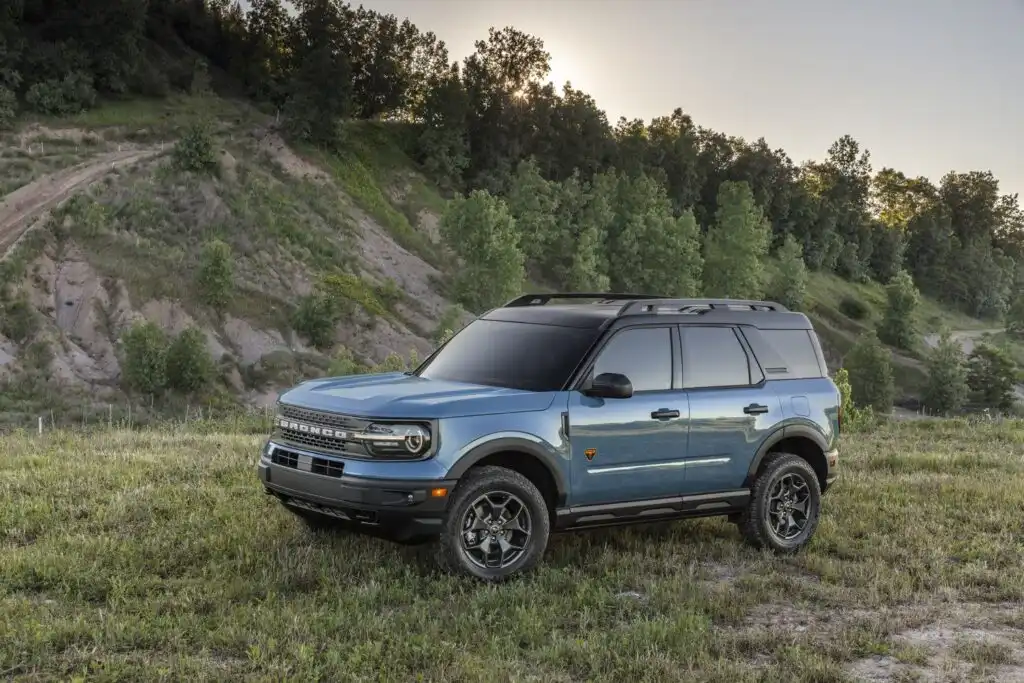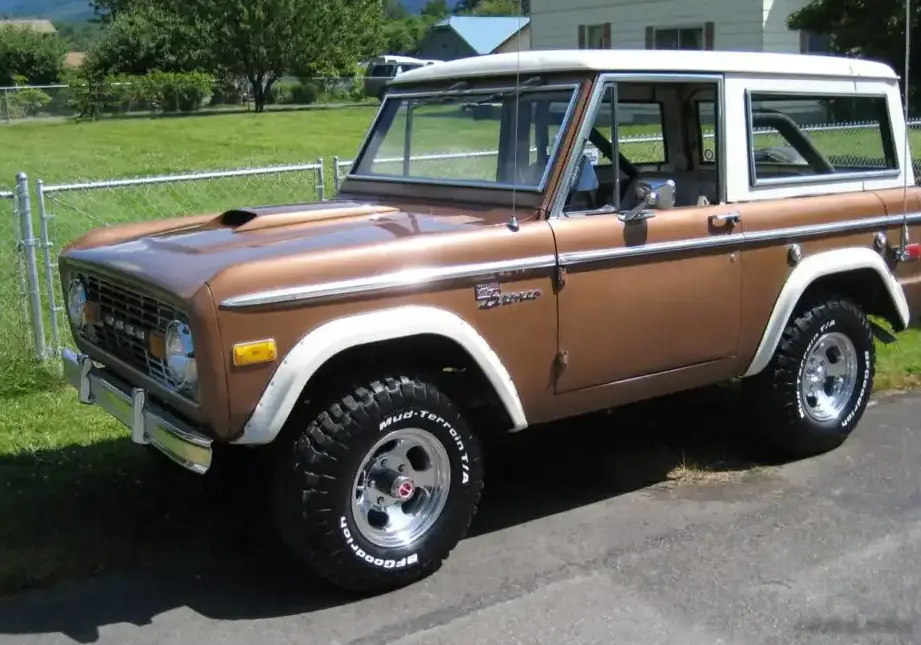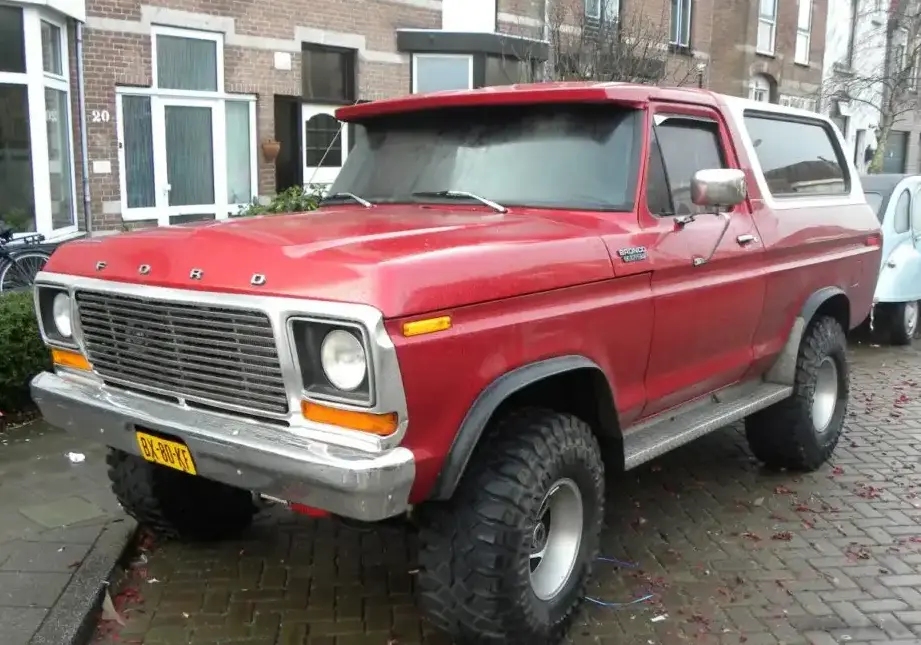
The Ford Bronco II 6.6 V8, produced for a limited run between 1978 and 1979, represents a unique and powerful iteration of the first-generation Bronco family. Positioned as a more compact and potentially more versatile alternative to the full-size Bronco, the Bronco II aimed to capture a segment of the growing SUV market. This particular variant, equipped with the 400 cubic inch (6.6 liter) V8 engine and a four-speed manual transmission, offered a substantial power upgrade over the smaller engine options available, making it a relatively rare and sought-after model today. It was built on a shortened Ford F-150 chassis, offering a blend of truck-based durability and more manageable dimensions.
Technical Specifications
| Brand | Ford |
| Model | Bronco |
| Generation | Bronco II |
| Type (Engine) | 6.6 V8 (158 Hp) AWD |
| Start of production | 1978 |
| End of production | 1979 |
| Powertrain Architecture | Internal Combustion engine |
| Body type | SUV |
| Seats | 5 |
| Doors | 3 |
| Fuel Type | Petrol (Gasoline) |
| Weight-to-power ratio | 13.5 kg/Hp |
| Weight-to-torque ratio | 5.7 kg/Nm |
| Power | 158 Hp @ 4000 rpm |
| Power per litre | 24 Hp/l |
| Torque | 375 Nm @ 2000 rpm (276.59 lb.-ft. @ 2000 rpm) |
| Engine layout | Front, Longitudinal |
| Engine Model/Code | 400 |
| Engine displacement | 6590 cm3 (402.15 cu. in.) |
| Number of cylinders | 8 |
| Engine configuration | V-engine |
| Cylinder Bore | 101.6 mm (4 in.) |
| Piston Stroke | 101.6 mm (4 in.) |
| Compression ratio | 8:1 |
| Number of valves per cylinder | 2 |
| Fuel injection system | Carburettor |
| Engine aspiration | Naturally aspirated engine |
| Valvetrain | OHV |
| Kerb Weight | 2140 kg (4717.89 lbs.) |
| Max. weight | 2720 kg (5996.57 lbs.) |
| Max load | 580 kg (1278.68 lbs.) |
| Length | 4580 mm (180.31 in.) |
| Width | 2014 mm (79.29 in.) |
| Height | 1918 mm (75.51 in.) |
| Wheelbase | 2642 mm (104.02 in.) |
| Front track | 1630 mm (64.17 in.) |
| Rear (Back) track | 1640 mm (64.57 in.) |
| Ride height (ground clearance) | 198 mm (7.8 in.) |
| Drag coefficient (Cd) | 0.65 |
| Minimum turning circle (turning diameter) | 10.8 m (35.43 ft.) |
| Drive wheel | All wheel drive (4×4) |
| Number of gears and type of gearbox | 4 gears, manual transmission |
| Front brakes | Disc |
| Rear brakes | Drum |
| Tires size | 235/75 R15 |
| Wheel rims size | 15 |
Powertrain & Engine Architecture
The heart of this Bronco II variant is the Ford 400 cubic inch (6.6 liter) V8 engine. This engine, designated as the 400, is a robust and relatively simple design, utilizing a cast iron block and cylinder heads. It featured a 8:1 compression ratio and a two-valve per cylinder OHV (Overhead Valve) valvetrain. Fuel delivery was handled by a carburetor, typical for the era. While not known for its fuel efficiency, the 400 V8 provided substantial low-end torque, making it well-suited for off-road driving and towing. The engine’s longitudinal front-engine layout contributed to a balanced weight distribution. The four-speed manual transmission provided direct control over the engine’s power, offering a more engaging driving experience than the available automatic options.
Driving Characteristics
The combination of the 158 horsepower V8 and the four-speed manual transmission gave the Bronco II a distinct character. Acceleration was brisk for the time, and the engine’s torque allowed for confident climbing and towing. Compared to the smaller six-cylinder engines offered in the Bronco II, the V8 provided a noticeable performance advantage. However, the Bronco II’s relatively high weight (2140 kg / 4717.89 lbs) meant it wasn’t a particularly nimble vehicle. The manual transmission required more driver involvement than the automatic, but it also allowed for greater control and responsiveness. The four-speed gearbox’s ratios were geared towards providing strong low-end torque for off-road use, potentially sacrificing some top-end speed.
Equipment & Trim Levels
The Bronco II 6.6 V8 was generally equipped with a fairly basic level of trim, reflecting its positioning as a more utilitarian vehicle. Standard features typically included a vinyl interior, basic instrumentation, and a heater. Air conditioning, power steering, and upgraded upholstery were often available as optional extras. The interior design was functional rather than luxurious, prioritizing durability and ease of cleaning. The exterior typically featured minimal chrome trim and a rugged appearance. The Bronco II’s relatively simple construction meant that it was often used as a base for customization and modification.
Chassis & Braking
The Bronco II utilized a body-on-frame construction, providing a robust and durable chassis. The front suspension consisted of independent coil springs, while the rear suspension employed leaf springs. This setup provided a reasonable balance between ride comfort and off-road capability. Braking duties were handled by disc brakes at the front and drum brakes at the rear. While adequate for the time, the braking system wasn’t particularly powerful by modern standards. The Bronco II’s relatively narrow track width and high center of gravity contributed to a tendency towards body roll in corners.
Market Reception & Comparison
The Bronco II 6.6 V8 was not a high-volume seller, due in part to its relatively high price and the fuel crisis of the late 1970s. Critics generally praised the V8 engine’s power and torque, but also noted the Bronco II’s relatively crude ride quality and handling. Compared to the smaller-engined Bronco II models, the V8 offered a significant performance upgrade, but at the cost of increased fuel consumption. It also differed significantly from the six-cylinder models in terms of maintenance requirements, with the V8 engine requiring more frequent servicing.
Legacy
Today, the Ford Bronco II 6.6 V8 is a relatively rare and collectible vehicle. Its limited production run and powerful engine have made it a favorite among enthusiasts. While the 400 V8 engine is known for its durability, it can be prone to oil leaks and overheating if not properly maintained. Parts availability can be a challenge, but a dedicated aftermarket exists to support these vehicles. The Bronco II 6.6 V8 represents a unique chapter in Ford’s SUV history, offering a blend of rugged capability and V8 power that is rarely found in such a compact package. Its enduring appeal lies in its simplicity, durability, and the distinctive character of its powerful engine.