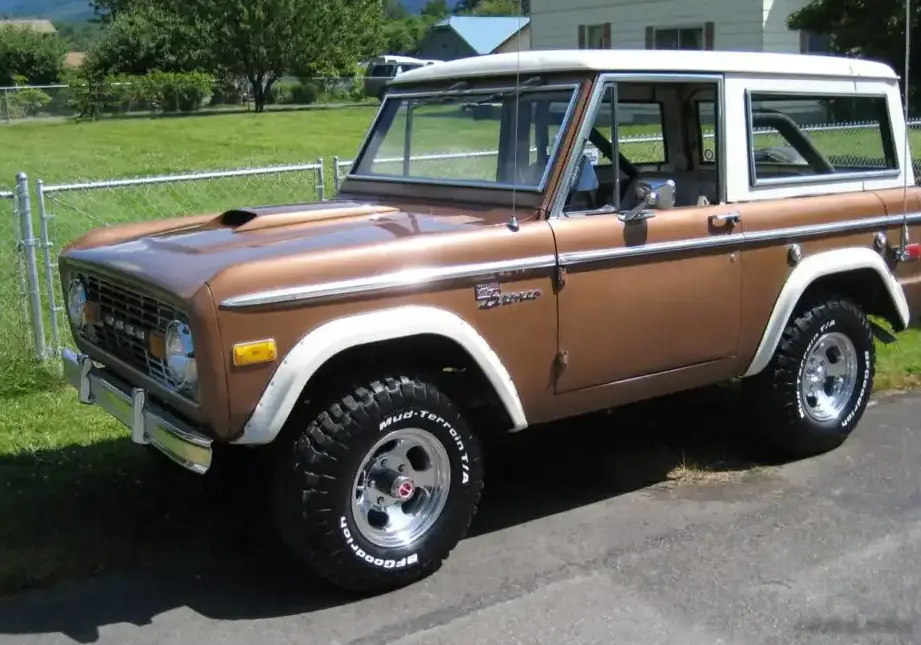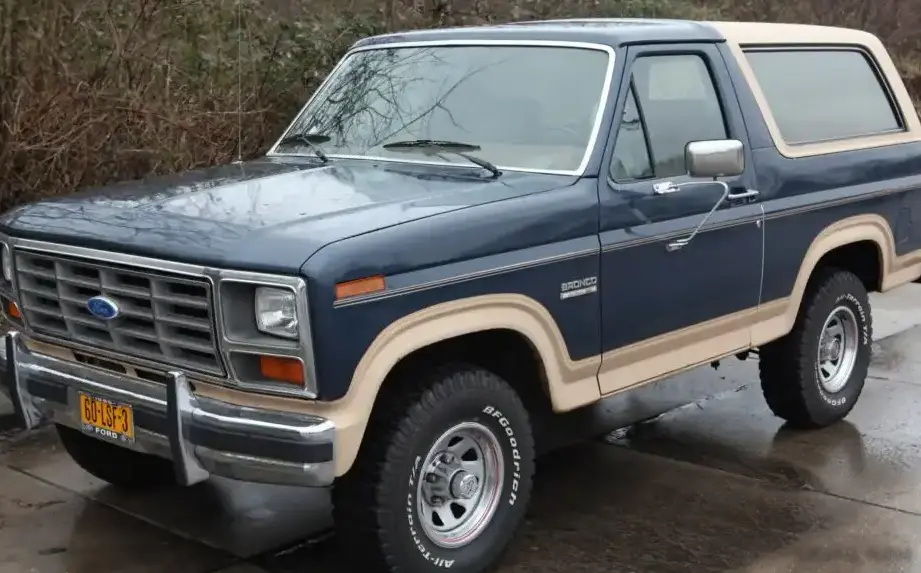
The Ford Bronco III, produced between 1980 and 1986, represented a significant downsizing and repositioning of the Bronco model line. Following the larger, full-size Bronco, the Bronco III was designed to compete in the burgeoning compact SUV market, offering a more fuel-efficient and maneuverable alternative. The 4.9-liter (300 cubic inch) inline-six engine paired with an automatic transmission and all-wheel drive was a popular configuration during its production run, aiming to balance capability with everyday usability. This variant occupied a middle ground in the Bronco III lineup, offering more power than the base four-cylinder options but remaining more affordable and accessible than potential future, higher-performance trims.
Technical Specifications
| Brand | Ford |
| Model | Bronco |
| Generation | Bronco III |
| Type (Engine) | 4.9 (122 Hp) AWD Automatic |
| Start of production | 1980 year |
| End of production | 1986 year |
| Powertrain Architecture | Internal Combustion engine |
| Body type | SUV |
| Seats | 5 |
| Doors | 3 |
| Fuel Type | Petrol (Gasoline) |
| Power | 122 Hp @ 3600 rpm |
| Power per litre | 24.8 Hp/l |
| Torque | 339 Nm @ 2000 rpm / 250.03 lb.-ft. @ 2000 rpm |
| Engine layout | Front, Longitudinal |
| Engine displacement | 4917 cm3 / 300.05 cu. in. |
| Number of cylinders | 6 |
| Engine configuration | Inline |
| Cylinder Bore | 101.6 mm / 4 in. |
| Piston Stroke | 101.09 mm / 3.98 in. |
| Compression ratio | 8.5:1 |
| Number of valves per cylinder | 2 |
| Fuel injection system | Carburettor |
| Engine aspiration | Naturally aspirated engine |
| Valvetrain | OHV |
| Max. weight | 1985 kg / 4376.18 lbs |
| Length | 4511 mm / 177.6 in. |
| Width | 1961 mm / 77.2 in. |
| Height | 1852 mm / 72.91 in. |
| Wheelbase | 2659 mm / 104.69 in. |
| Front track | 1654 mm / 65.12 in. |
| Rear (Back) track | 1636 mm / 64.41 in. |
| Ride height (ground clearance) | 234 mm / 9.21 in. |
| Drag coefficient (Cd) | 0.65 |
| Minimum turning circle (turning diameter) | 11.13 m / 36.52 ft. |
| Drive wheel | All wheel drive (4×4) |
| Number of gears and type of gearbox | 3 gears, automatic transmission |
| Front brakes | Disc |
| Rear brakes | Drum |
| Tires size | 235/75 R15 |
| Wheel rims size | 15 |
Powertrain & Engine Architecture
The heart of this Bronco III variant is Ford’s 4.9-liter (300 cubic inch) inline-six engine. This engine, designated within Ford as the 300 I6, is a long-stroke design known for its durability and low-end torque. The engine utilizes a cast iron block and cylinder head, contributing to its robust nature. Fuel delivery is managed by a two-barrel carburetor, a common setup for the era, rather than fuel injection. The overhead valve (OHV) valvetrain, with two valves per cylinder, is a relatively simple design that prioritized reliability over high-revving performance. The 4.9L engine produces 122 horsepower at 3600 rpm and 339 Nm (250 lb-ft) of torque at 2000 rpm. The automatic transmission is a three-speed unit, designed to provide smooth shifts and ease of operation. While not a particularly advanced transmission by modern standards, it was well-suited to the engine’s torque characteristics and the intended use of the vehicle.
Driving Characteristics
The Bronco III 4.9L with automatic transmission offered a comfortable and capable driving experience, particularly for those unfamiliar with manual transmissions. The automatic transmission’s gear ratios were optimized for everyday driving and moderate off-road conditions. Acceleration was adequate, but not particularly brisk, with the focus being on usable torque for climbing hills or navigating rough terrain. The 3-speed automatic, while providing convenience, did result in slightly lower fuel economy compared to the available manual transmission. The all-wheel-drive system, engaged via a transfer case, provided enhanced traction in slippery conditions, making the Bronco III a capable vehicle for inclement weather and light off-roading. Compared to the four-cylinder Bronco III models, the 4.9L offered a noticeable improvement in power and responsiveness, while remaining more affordable and easier to drive than any potential future V6 or V8 powered options.
Equipment & Trim Levels
The 4.9L automatic Bronco III typically came with a fairly basic level of equipment, reflecting its positioning as a value-oriented SUV. Standard features generally included a vinyl interior, basic instrumentation, and manual windows and locks. Options included upgraded upholstery, a radio, and potentially air conditioning. The trim level often dictated the exterior paint options and the availability of certain convenience features. While not a luxury vehicle, the Bronco III offered a practical and functional interior designed to withstand the rigors of outdoor use. The interior was generally spartan, with a focus on durability rather than aesthetics.
Chassis & Braking
The Bronco III utilized a body-on-frame construction, providing a robust and durable chassis. The front suspension consisted of independent coil springs, while the rear suspension employed leaf springs. This setup provided a reasonable balance between ride comfort and load-carrying capacity. The braking system featured disc brakes on the front wheels and drum brakes on the rear. While adequate for the vehicle’s weight and intended use, the drum brakes on the rear were a less sophisticated setup compared to all-disc brakes. The relatively narrow track width and high center of gravity contributed to a noticeable degree of body roll during cornering.
Market Reception & Comparison
The Bronco III 4.9L automatic was generally well-received by consumers seeking a capable and affordable SUV. Critics praised its durability and off-road capability, but noted its relatively basic interior and somewhat dated technology. Compared to the four-cylinder Bronco III models, the 4.9L offered a significant improvement in performance, making it a more appealing option for those who frequently towed or drove in challenging conditions. Fuel economy was a concern for some, as the 4.9L engine was not particularly fuel-efficient. However, the Bronco III’s overall value proposition and ruggedness helped it to maintain a loyal following.
Legacy
The Ford Bronco III, particularly the 4.9L inline-six engine, has developed a reputation for reliability and longevity. The 300 I6 engine is known for its ability to withstand high mileage and minimal maintenance. Today, well-maintained Bronco IIIs are sought after by collectors and enthusiasts. The simplicity of the engine and transmission makes it relatively easy to repair and maintain. While not a high-performance vehicle, the Bronco III 4.9L automatic remains a capable and enjoyable SUV, offering a glimpse into a bygone era of rugged and practical automotive design. The used car market reflects this, with prices for well-preserved examples steadily increasing as demand grows.