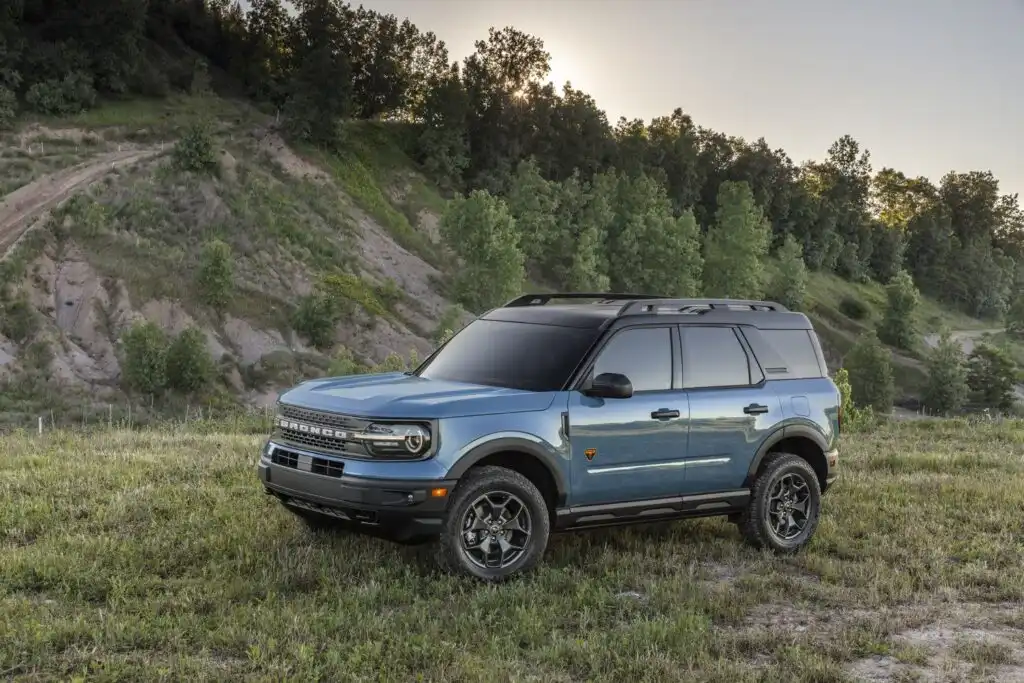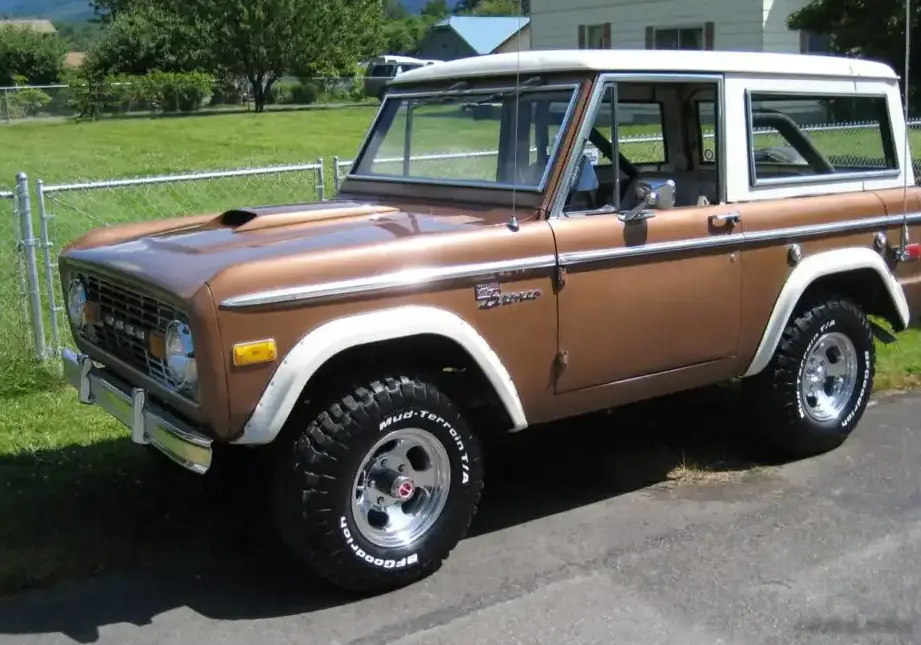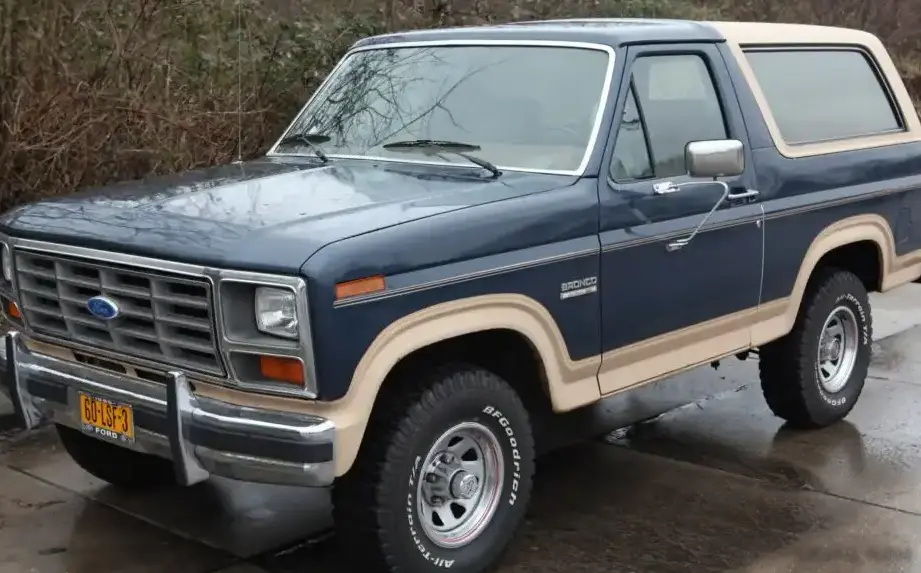
The Ford Bronco III, specifically the variant equipped with the 5.8-liter V8 engine producing 213 horsepower and paired with an automatic transmission and all-wheel drive, was a significant offering in the third generation of the Bronco line. Produced from 1980 to 1986, this model represented a blend of rugged capability and, for the time, relatively accessible power. It occupied a position as the top-tier performance option within the Bronco III range, appealing to buyers who desired more than the base inline-six cylinder engines offered. The Bronco III itself was a downsized version of the original Bronco, built on a shortened Ford F-150 chassis, aiming to compete in a growing market segment of compact and mid-size SUVs.
Technical Specifications
| Brand | Ford |
| Model | Bronco |
| Generation | Bronco III |
| Type (Engine) | 5.8 V8 (213 Hp) AWD Automatic |
| Start of production | 1980 |
| End of production | 1986 |
| Powertrain Architecture | Internal Combustion engine |
| Body type | SUV |
| Seats | 5 |
| Doors | 3 |
| Fuel consumption (urban) | 19.6 l/100 km (12 US mpg, 14.4 UK mpg, 5.1 km/l) |
| Fuel consumption (extra urban) | 14.7 l/100 km (16 US mpg, 19.2 UK mpg, 6.8 km/l) |
| Fuel consumption (combined) | 16.8 l/100 km (14 US mpg, 16.8 UK mpg, 6 km/l) |
| Fuel Type | Petrol (Gasoline) |
| Power | 213 Hp @ 4000 rpm |
| Power per litre | 36.9 Hp/l |
| Torque | 414 Nm @ 2800 rpm (305.35 lb.-ft. @ 2800 rpm) |
| Engine layout | Front, Longitudinal |
| Engine Model/Code | 351M |
| Engine displacement | 5766 cm3 (351.86 cu. in.) |
| Number of cylinders | 8 |
| Engine configuration | V-engine |
| Cylinder Bore | 101.6 mm (4 in.) |
| Piston Stroke | 88.9 mm (3.5 in.) |
| Compression ratio | 8.3:1 |
| Number of valves per cylinder | 2 |
| Fuel injection system | Carburettor |
| Engine aspiration | Naturally aspirated engine |
| Max. weight | 2150 kg (4739.94 lbs.) |
| Fuel tank capacity | 95 l (25.1 US gal, 20.9 UK gal) |
| Length | 4511 mm (177.6 in.) |
| Width | 1980 mm (77.95 in.) |
| Height | 1859 mm (73.19 in.) |
| Wheelbase | 2659 mm (104.69 in.) |
| Front track | 1654 mm (65.12 in.) |
| Rear track | 1636 mm (64.41 in.) |
| Ride height (ground clearance) | 234 mm (9.21 in.) |
| Drag coefficient (Cd) | 0.65 |
| Minimum turning circle | 11.13 m (36.52 ft.) |
| Drive wheel | All wheel drive (4×4) |
| Number of gears and type of gearbox | 3 gears, automatic transmission |
| Front brakes | Disc |
| Rear brakes | Drum |
| Tires size | 215/75 R15 |
| Wheel rims size | 15 |
Powertrain & Engine Architecture
The heart of this Bronco III variant was the Ford 351M (Modified) V8 engine. This 5.8-liter engine, while not the most technologically advanced of its time, was known for its robust construction and ample low-end torque. It utilized a cast iron block and heads, and employed a two-barrel carburetor for fuel delivery. The engine featured a relatively low 8.3:1 compression ratio, designed to accommodate the lower octane fuels commonly available. The valvetrain consisted of two valves per cylinder, operated by a hydraulic lifter camshaft. The 351M was a longitudinal front-engine layout, meaning it was mounted lengthwise in the engine bay. The automatic transmission was a Ford C6 three-speed unit, known for its durability. While not offering the fuel efficiency of more modern transmissions, the C6 was well-suited to handle the engine’s torque output and the demands of off-road driving.
Driving Characteristics
The combination of the 5.8L V8 and the automatic transmission gave the Bronco III a distinct driving character. Acceleration was noticeably stronger than the base inline-six models, making highway merging and passing maneuvers considerably easier. However, the automatic transmission’s gear ratios weren’t optimized for fuel economy, and the Bronco III V8 was known for its relatively poor gas mileage. The C6 transmission, while durable, lacked the responsiveness of a manual transmission, resulting in a slightly less engaging driving experience. The all-wheel-drive system provided enhanced traction in slippery conditions, making it a capable off-road vehicle. Compared to the later fuel-injected Bronco models, the carbureted 351M required more frequent tuning and maintenance to maintain optimal performance.
Equipment & Trim Levels
The 5.8L V8 Bronco III typically came with a higher level of standard equipment than the base models. This included features like upgraded interior trim, often featuring cloth or vinyl upholstery, and a more comprehensive gauge package. Power steering and power brakes were commonly included. Optional extras included air conditioning, a tilt steering wheel, and upgraded sound systems. The exterior trim often featured brightwork and distinctive badging to denote the V8 engine. The Bronco III offered various trim packages, but the V8 engine was generally positioned as a step up from the base trims, offering a more comfortable and well-equipped vehicle.
Chassis & Braking
The Bronco III utilized a body-on-frame construction, providing a robust and durable chassis. The front suspension consisted of independent coil springs, while the rear suspension employed leaf springs. This setup provided a reasonable balance between ride comfort and off-road capability. The braking system featured disc brakes on the front wheels and drum brakes on the rear. While adequate for the vehicle’s weight and performance, the drum brakes on the rear were a limitation compared to all-disc brake setups. The Bronco III’s track width was relatively narrow, contributing to its maneuverability in tight spaces but also impacting its stability at higher speeds.
Market Reception & Comparison
The Bronco III 5.8L V8 Automatic received mixed reviews. Critics praised the engine’s power and torque, but often criticized its fuel economy and the relatively unsophisticated automatic transmission. Compared to the inline-six engine options, the V8 offered a significant performance upgrade, but at a considerable cost in terms of fuel consumption. The V8 Bronco III was often seen as a competitor to other compact and mid-size SUVs of the era, such as the Chevrolet Blazer and the Jeep CJ. However, the Bronco III offered a unique combination of ruggedness, affordability, and V8 power that appealed to a specific segment of buyers.
Legacy
Today, the Ford Bronco III 5.8L V8 Automatic is considered a desirable classic SUV, particularly among enthusiasts. The 351M engine, while not known for its longevity in all applications, proved relatively durable in the Bronco III. However, finding well-maintained examples can be challenging, as many have been subjected to years of hard use. Parts availability is generally good, but some components specific to the V8 engine can be difficult to source. The Bronco III V8 holds a special place in automotive history as a representative of the era of large-displacement, carbureted V8 engines, and its enduring popularity reflects its unique blend of power, capability, and classic American styling.