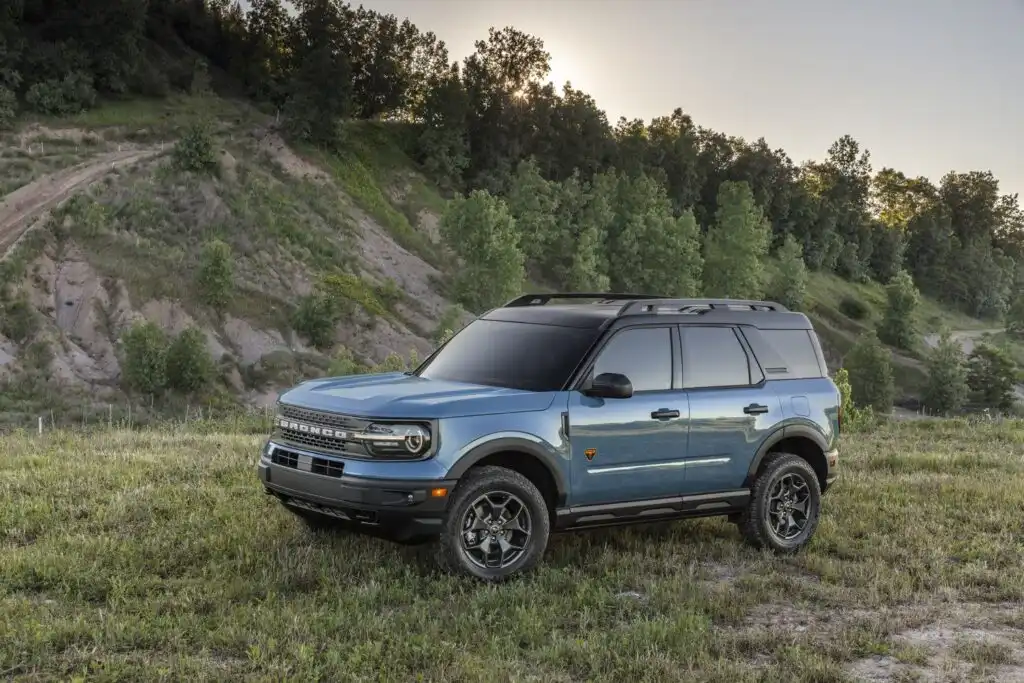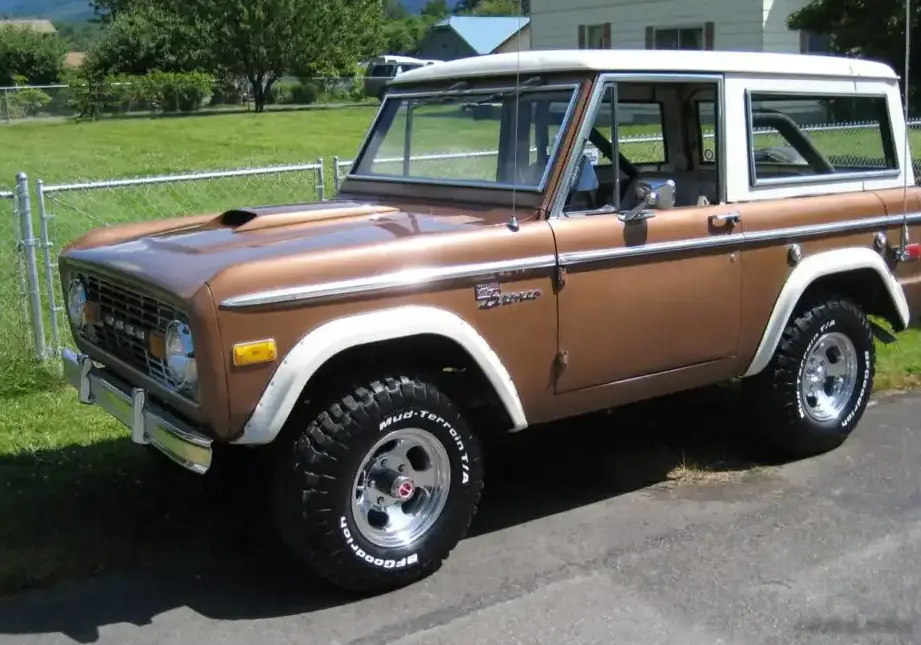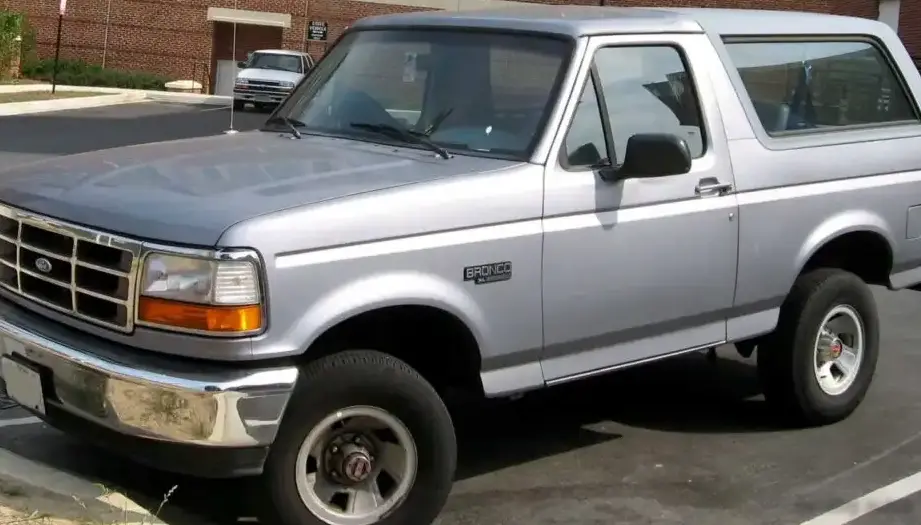
The Ford Bronco V, equipped with the 5.0-liter V8 engine producing 188 horsepower and all-wheel drive (AWD), was a relatively short-lived but significant variant of the second-generation Bronco. Produced from 1992 to 1996, it represented the final iteration of the classic Bronco before its discontinuation and subsequent revival in 2021. This model occupied a unique position in the Bronco lineup, offering a substantial power upgrade over the smaller inline-six engines while remaining a more accessible performance option compared to heavily modified or aftermarket builds. It was positioned as a robust, capable SUV geared towards drivers who desired both on-road comfort and off-road prowess.
Technical Specifications
| Brand | Ford |
| Model | Bronco |
| Generation | Bronco V |
| Type (Engine) | 5.0 V8 (188 Hp) AWD |
| Start of production | 1992 |
| End of production | 1996 |
| Powertrain Architecture | Internal Combustion engine |
| Body type | SUV |
| Seats | 5 |
| Doors | 3 |
| Fuel consumption (economy) – urban | 18.1 l/100 km (13 US mpg, 15.6 UK mpg, 5.5 km/l) |
| Fuel consumption (economy) – extra urban | 14.7 l/100 km (16 US mpg, 19.2 UK mpg, 6.8 km/l) |
| Fuel consumption (economy) – combined | 16.8 l/100 km (14 US mpg, 16.8 UK mpg, 6 km/l) |
| Fuel Type | Petrol (Gasoline) |
| Power | 188 Hp @ 3800 rpm |
| Power per litre | 38 Hp/l |
| Torque | 366 Nm @ 2400 rpm (269.95 lb.-ft. @ 2400 rpm) |
| Engine layout | Front, Longitudinal |
| Engine Model/Code | 302 |
| Engine displacement | 4942 cm3 (301.58 cu. in.) |
| Number of cylinders | 8 |
| Engine configuration | V-engine |
| Cylinder Bore | 101.6 mm (4 in.) |
| Piston Stroke | 76.2 mm (3 in.) |
| Compression ratio | 9:1 |
| Number of valves per cylinder | 2 |
| Fuel injection system | Multi-port manifold injection |
| Engine aspiration | Naturally aspirated engine |
| Valvetrain | OHC |
| Engine oil capacity | 4.7 l (4.97 US qt | 4.14 UK qt) |
| Coolant | 12 l (12.68 US qt | 10.56 UK qt) |
| Max. weight | 2050 kg (4519.48 lbs.) |
| Trunk (boot) space – minimum | 917 l (32.38 cu. ft.) |
| Trunk (boot) space – maximum | 1857 l (65.58 cu. ft.) |
| Fuel tank capacity | 121 l (31.96 US gal | 26.62 UK gal) |
| Length | 4663 mm (183.58 in.) |
| Width | 2009 mm (79.09 in.) |
| Height | 1892 mm (74.49 in.) |
| Wheelbase | 2659 mm (104.69 in.) |
| Front track | 1654 mm (65.12 in.) |
| Rear (Back) track | 1636 mm (64.41 in.) |
| Drag coefficient (Cd) | 0.60 |
| Minimum turning circle (turning diameter) | 11.4 m (37.4 ft.) |
| Drive wheel | All wheel drive (4×4) |
| Number of gears and type of gearbox | 5 gears, manual transmission |
| Front suspension | Several levers and rods |
| Rear suspension | Leaf spring |
| Front brakes | Disc |
| Rear brakes | Drum |
| Assisting systems | ABS (Anti-lock braking system) |
| Tires size | 235/75 R15 |
| Wheel rims size | 15 |
Powertrain & Engine Architecture
The heart of the Bronco V was the Ford 302 cubic inch (4.9 liter) small-block V8 engine. This engine, internally designated as the 302, was a staple of Ford’s powertrain lineup for decades. It featured a cast iron block and cylinder heads, a 9:1 compression ratio, and a multi-port fuel injection system. The overhead camshaft (OHC) valvetrain, while not as sophisticated as later designs, provided reliable performance. The 302 produced 188 horsepower at 3800 rpm and 366 Nm (269.95 lb-ft) of torque at 2400 rpm. This output represented a significant increase over the standard 2.8-liter and 3.8-liter inline-six engines offered in other Bronco trims. The engine was mounted longitudinally in the chassis, and power was delivered to all four wheels through a standard five-speed manual transmission. While an automatic transmission was available on some Bronco models, it was less common with the 5.0L V8.
Driving Characteristics
The 5.0L V8-equipped Bronco offered a markedly different driving experience compared to its six-cylinder counterparts. The increased horsepower and torque provided quicker acceleration and more effortless cruising, especially when towing or navigating challenging terrain. The five-speed manual transmission allowed for precise control over the engine’s powerband. While not a sports car, the Bronco V felt considerably more responsive and capable. The leaf spring rear suspension, while providing good load-carrying capacity, could result in a somewhat firm ride, particularly on rough roads. The all-wheel-drive system, typically part-time, offered enhanced traction in off-road situations, making it a formidable off-roader. Compared to the automatic transmission equipped models, the manual transmission provided a more engaging driving experience and better fuel economy, though still relatively low by modern standards.
Equipment & Trim Levels
The Bronco V trim level generally included features aimed at enhancing comfort and convenience. Standard equipment typically included features like air conditioning, a basic AM/FM radio, and cloth upholstery. Power steering was also a common feature. Optional extras included features like upgraded sound systems, cruise control, and a limited-slip rear differential. Interior appointments were relatively spartan, reflecting the Bronco’s utilitarian origins. The dashboard layout was functional, with clearly marked gauges and controls. The Bronco V did not offer the luxury appointments found in some contemporary SUVs, but it prioritized durability and practicality.
Chassis & Braking
The Bronco V utilized a body-on-frame construction, providing a robust and durable chassis. The front suspension consisted of a multi-link setup with coil springs, while the rear suspension employed leaf springs. This combination offered a good balance of on-road ride quality and off-road capability. The braking system featured disc brakes on the front wheels and drum brakes on the rear. An anti-lock braking system (ABS) was included as standard equipment, enhancing safety and control during emergency braking situations. The tires, typically 235/75 R15, were designed to provide good traction on both paved and unpaved surfaces.
Market Reception & Comparison
The Bronco V with the 5.0L V8 received generally positive reviews from automotive critics. It was praised for its strong performance, off-road capability, and rugged character. However, its fuel economy was often criticized, averaging around 14 mpg in combined driving. Compared to the inline-six Bronco models, the V offered a significant performance advantage but came at a higher price point. It also required more frequent maintenance due to the complexity of the V8 engine. Against competitors like the Jeep Cherokee, the Bronco V offered a more powerful engine option but lacked some of the Cherokee’s refinement and interior features.
Legacy
The 1992-1996 Ford Bronco V with the 5.0L V8 has become a sought-after vehicle among collectors and enthusiasts. The 302 engine is known for its durability and relative ease of maintenance, making it a popular choice for restoration projects. While fuel economy is poor by modern standards, the Bronco V’s robust construction and capable powertrain ensure its continued relevance in the used car market. Well-maintained examples command a premium price, reflecting their rarity and desirability. The Bronco V represents a high point in the second-generation Bronco’s evolution, offering a unique blend of power, capability, and classic American SUV styling.