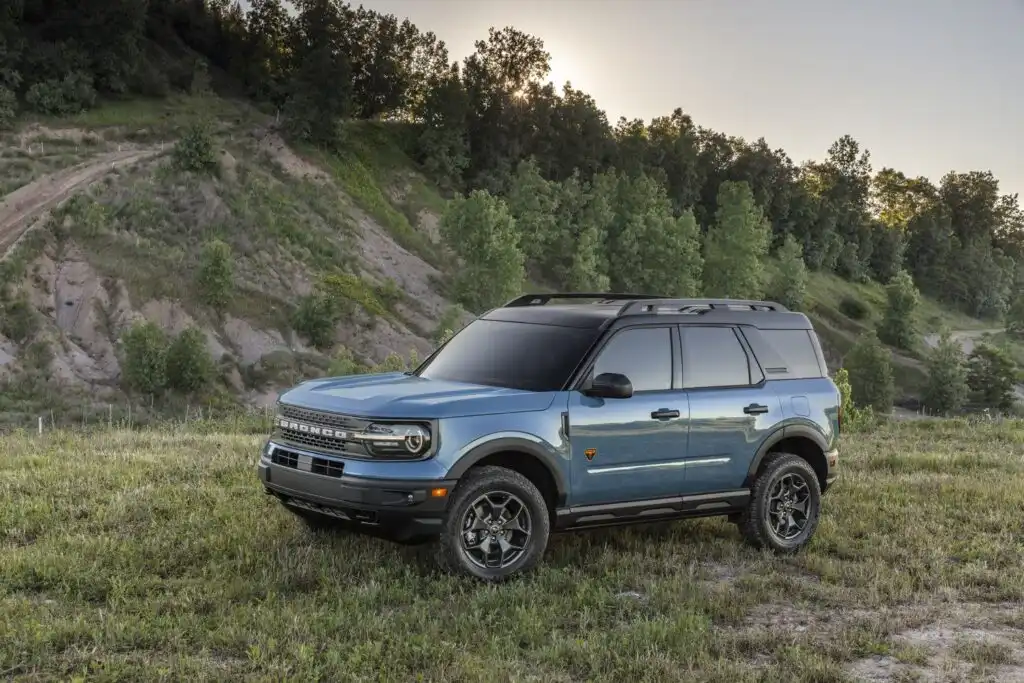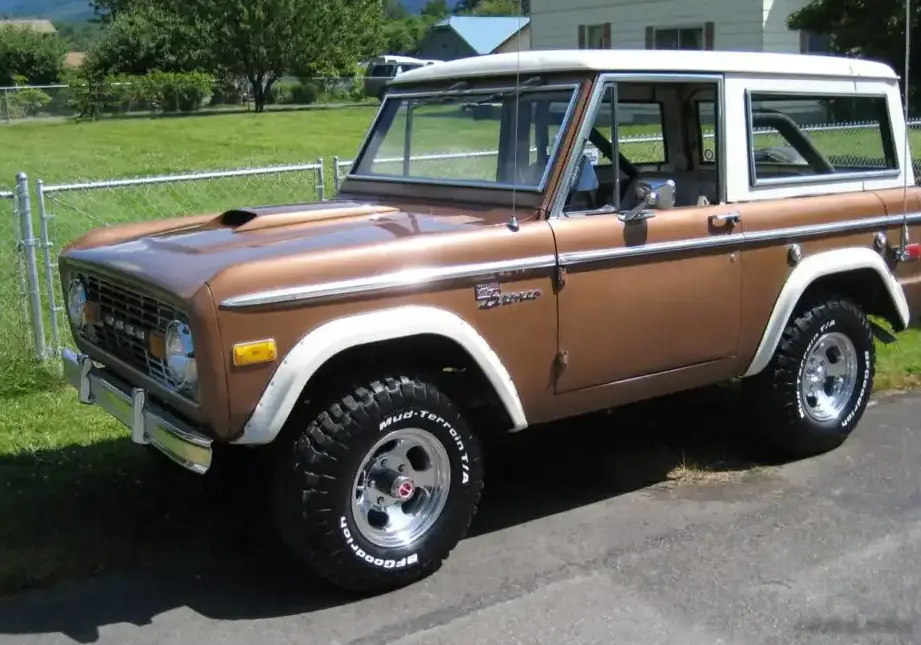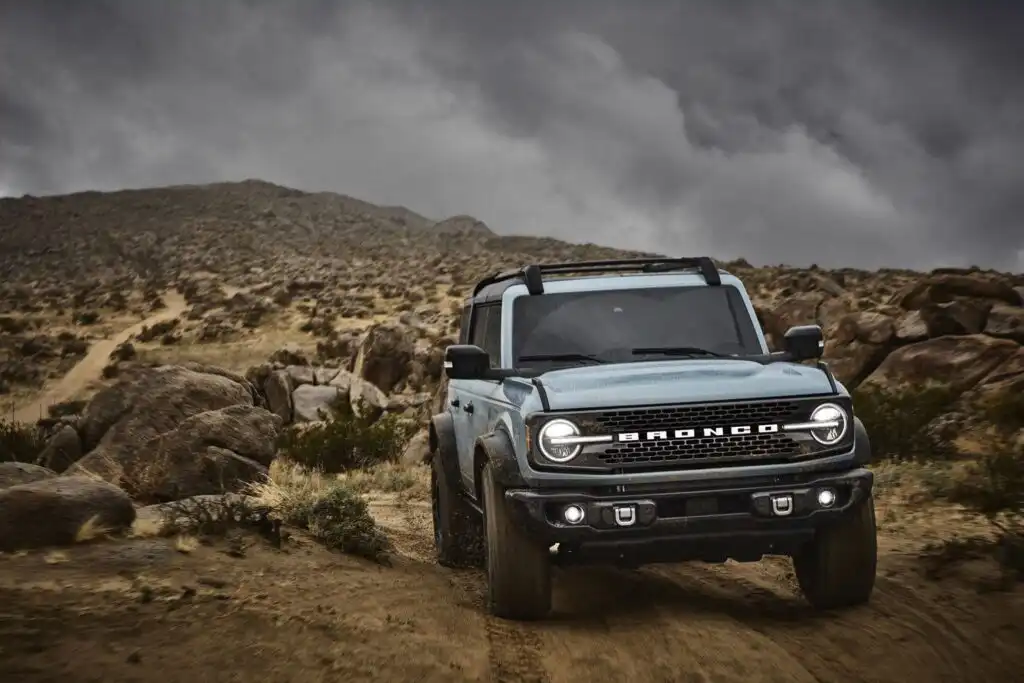
The Ford Bronco VI Four-door, equipped with the 2.7 EcoBoost V6 engine producing 310 horsepower and paired with a 10-speed automatic transmission, represents a significant offering within the sixth generation of the iconic Bronco. Introduced for the 2021 model year (production began in 2020), this variant aimed to balance robust off-road capability with a more refined driving experience compared to the base engine options. Positioned as a mid-to-upper trim level, it catered to buyers seeking substantial power and towing capacity without opting for the range-topping Raptor model. The Bronco VI platform, designated as the J6, marked a return to the body-on-frame construction that defined the original Bronco, prioritizing durability and off-road performance.
Technical Specifications
| Brand | Ford |
| Model | Bronco |
| Generation | Bronco VI Four-door |
| Type (Engine) | 2.7 EcoBoost V6 (310 Hp) 4×4 Automatic |
| Start of production | 2020 year |
| Powertrain Architecture | Internal Combustion engine |
| Body type | Off-road vehicle, Cabriolet, SUV |
| Seats | 5 |
| Doors | 4 |
| Fuel consumption (economy) – urban | 13.1 l/100 km (18 US mpg, 21.6 UK mpg, 7.6 km/l) |
| Fuel consumption (economy) – extra urban | 11.8 l/100 km (19.9 US mpg, 23.9 UK mpg, 8.5 km/l) |
| Fuel consumption (economy) – combined | 11.2 l/100 km (21 US mpg, 25.2 UK mpg, 8.9 km/l) |
| Fuel Type | Petrol (Gasoline) |
| Power | 310 Hp |
| Torque | 542 Nm (399.76 lb.-ft.) |
| Engine layout | Front, Longitudinal |
| Number of cylinders | 6 |
| Engine configuration | V-engine |
| Fuel injection system | Direct injection and Multi-port manifold injection |
| Engine aspiration | Twin-Turbo, Intercooler |
| Valvetrain | DOHC, Ti-VCT |
| Engine oil capacity | 6.6 l (6.97 US qt | 5.81 UK qt) |
| Coolant | 11.7 l (12.36 US qt | 10.29 UK qt) |
| Max. roof load | 204 kg (449.74 lbs.) |
| Permitted trailer load with brakes (12%) | 1588 kg (3500.94 lbs.) |
| Length | 4811-4839 mm (189.41 – 190.51 in.) |
| Width with mirrors folded | 1928-2014 mm (75.91 – 79.29 in.) |
| Height | 1852-1963 mm (72.91 – 77.28 in.) |
| Wheelbase | 2949 mm (116.1 in.) |
| Front track | 1651-1699 mm (65 – 66.89 in.) |
| Rear (Back) track | 1651-1699 mm (65 – 66.89 in.) |
| Ride height (ground clearance) | 211-292 mm (8.31 – 11.5 in.) |
| Approach angle | 35.5-43.2° |
| Departure angle | 29.7-37.0° |
| Ramp-over (brakeover) angle | 20.0-26.3° |
| Wading depth | 851 mm (33.5 in.) |
| Drivetrain Architecture | The Internal combustion engine (ICE) drives the rear wheels permanently, and the front wheels are driven through an electrically or mechanically operated clutch if necessary. |
| Drive wheel | All wheel drive (4×4) |
| Number of gears and type of gearbox | 10 gears, automatic transmission |
| Front suspension | Double wishbone |
| Rear suspension | Dependent spring suspension with transverse stabilizer |
| Assisting systems | ABS (Anti-lock braking system) |
| Steering type | Steering rack and pinion |
| Power steering | Electric Steering |
| Tires size | 255/70 R16; 255/75 R17; 265/70 R17; 285/70 R17; 315/70 R17; 255/70 R18 |
| Wheel rims size | 7J x 16; 7.5J x 17; 8J x 17; 8.5J x 17; 7.5J x 18 |
Powertrain & Engine Architecture
The heart of this Bronco variant is the 2.7-liter EcoBoost V6 engine, internally designated as the “Falcon.” This engine utilizes a compact graphite iron cylinder block and aluminum cylinder heads. It employs both direct injection and multi-port fuel injection, optimizing combustion efficiency and power delivery. The twin-turbocharger setup, featuring low-inertia turbines, minimizes turbo lag and provides a broad torque curve. The engine also incorporates Ford’s Ti-VCT (Twin Independent Variable Camshaft Timing) technology, allowing for precise control of valve timing to maximize performance and fuel economy. The 10-speed automatic transmission, co-developed with General Motors, offers a wide gear ratio spread, enhancing both acceleration and fuel efficiency. This transmission features fully automatic operation with selectable drive modes, including a manual shift mode for greater driver control.
Driving Characteristics
The 2.7 EcoBoost V6 delivers a noticeable performance upgrade over the base 2.3-liter EcoBoost engine. The increased horsepower and torque translate to quicker acceleration and more confident passing maneuvers. The 10-speed automatic transmission is generally smooth and responsive, although some drivers have noted occasional hunting for the optimal gear in certain driving situations. The wide gear ratios allow the engine to operate within its optimal power band more frequently. Off-road, the combination of the engine’s low-end torque and the transmission’s crawl ratio provides excellent control and capability. Compared to the manual transmission options, the automatic offers greater convenience, particularly in challenging terrain, but may slightly diminish driver engagement.
Equipment & Trim Levels
The 2.7 EcoBoost engine was typically offered on higher trim levels such as the Big Bend, Outer Banks, and Badlands. Standard equipment included features like automatic climate control, a touchscreen infotainment system with Apple CarPlay and Android Auto compatibility, and a suite of driver-assistance technologies such as lane-keeping assist and automatic emergency braking. Interior upholstery varied depending on the trim level, ranging from cloth to leather-trimmed seats. Optional extras included a premium sound system, a larger touchscreen display, and various off-road packages that added features like a disconnecting front sway bar and locking differentials. The four-door configuration provided ample passenger space and cargo capacity, making it a practical choice for families and those needing to carry gear.
Chassis & Braking
The Bronco VI utilizes a fully boxed, high-strength steel frame, providing a solid foundation for both on-road and off-road driving. The front suspension features an independent double-wishbone design, while the rear suspension employs a solid axle with coil springs and a transverse stabilizer bar. This setup balances ride comfort with off-road articulation. Braking systems varied slightly depending on the trim level, with base models typically equipped with disc brakes on the front and drum brakes on the rear. Higher trims often featured disc brakes on all four wheels. The anti-lock braking system (ABS) is standard, enhancing braking performance and stability.
Market Reception & Comparison
The 2.7 EcoBoost V6-equipped Bronco received generally positive reviews from automotive critics. The engine was praised for its strong performance and smooth operation. Fuel economy, while not exceptional, was considered acceptable for a vehicle of this size and capability. Compared to the 2.3-liter EcoBoost engine, the 2.7 offered a significant power boost, but at a higher price point. The 2.7L also offered a more competitive towing capacity than the base engine. Compared to the more extreme Raptor model, the 2.7 EcoBoost provided a more balanced blend of performance and practicality.
Legacy
The 2.7 EcoBoost V6 in the Bronco VI has proven to be a relatively reliable powertrain. While some early production models experienced minor software glitches, these were generally addressed through software updates. The engine’s robust construction and well-engineered design contribute to its long-term durability. On the used car market, Broncos equipped with the 2.7 EcoBoost engine tend to command a premium price due to their increased performance and capability. The combination of power, refinement, and off-road prowess has made this variant a popular choice among Bronco enthusiasts.