
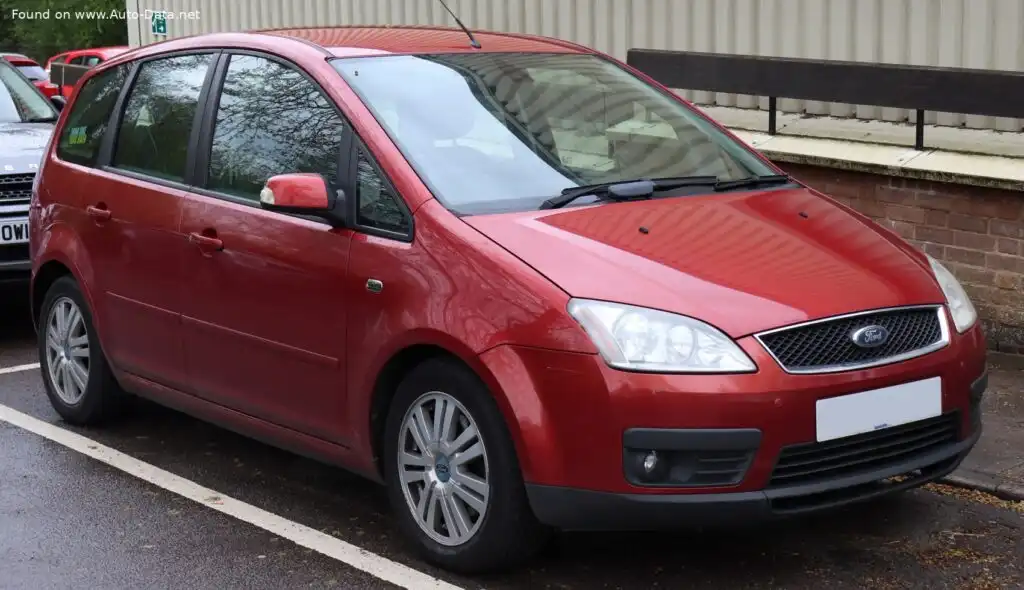
The Ford C-MAX 1.6 TDCi, producing 109 horsepower, was a key variant in the first generation of the C-MAX compact multi-purpose vehicle (MPV), manufactured between 2003 and 2007. Positioned as an entry-to-mid-range offering, it aimed to provide a balance of fuel efficiency and practicality for families. The C-MAX, built on Ford’s C170 platform (shared with the Focus), represented Ford’s attempt to capitalize on the growing popularity of the MPV segment in Europe, offering a more stylish and dynamic alternative to traditional people carriers. This particular diesel variant was especially popular in European markets where fuel costs were high and diesel engines were favored for their economy.
Technical Specifications
| Brand | Ford |
| Model | C-MAX |
| Generation | C-MAX |
| Type (Engine) | 1.6 TDCi (109 Hp) |
| Start of production | 2003 |
| End of production | 2007 |
| Powertrain Architecture | Internal Combustion engine |
| Body type | MPV |
| Seats | 5 |
| Doors | 5 |
| Fuel consumption (urban) | 6.3 l/100 km (37.3 US mpg, 44.8 UK mpg, 15.9 km/l) |
| Fuel consumption (extra urban) | 4.1 l/100 km (57.4 US mpg, 68.9 UK mpg, 24.4 km/l) |
| Fuel consumption (combined) | 4.9 l/100 km (48 US mpg, 57.6 UK mpg, 20.4 km/l) |
| Fuel Type | Diesel |
| Acceleration 0 – 100 km/h | 11.3 sec |
| Acceleration 0 – 62 mph | 11.3 sec |
| Acceleration 0 – 60 mph | 10.7 sec |
| Maximum speed | 185 km/h (114.95 mph) |
| Weight-to-power ratio | 11.9 kg/Hp, 84.4 Hp/tonne |
| Weight-to-torque ratio | 5.4 kg/Nm, 185.8 Nm/tonne |
| Power | 109 Hp @ 4000 rpm |
| Power per litre | 69.9 Hp/l |
| Torque | 240 Nm @ 1750 rpm (177.01 lb.-ft. @ 1750 rpm) |
| Engine layout | Front, Transverse |
| Engine Model/Code | G8DA |
| Engine displacement | 1560 cm3 (95.2 cu. in.) |
| Number of cylinders | 4 |
| Engine configuration | Inline |
| Cylinder Bore | 75 mm (2.95 in.) |
| Piston Stroke | 88.3 mm (3.48 in.) |
| Number of valves per cylinder | 4 |
| Fuel injection system | Diesel Commonrail |
| Engine aspiration | Turbocharger, Intercooler |
| Valvetrain | DOHC |
| Engine oil capacity | 3.8 l (4.02 US qt | 3.34 UK qt) |
| Coolant | 7.3 l (7.71 US qt | 6.42 UK qt) |
| Kerb Weight | 1292 kg (2848.37 lbs.) |
| Fuel tank capacity | 55 l (14.53 US gal | 12.1 UK gal) |
| Length | 4330 mm (170.47 in.) |
| Width | 1820 mm (71.65 in.) |
| Height | 1600 mm (62.99 in.) |
| Wheelbase | 2640 mm (103.94 in.) |
| Minimum turning circle | 10.7 m (35.1 ft.) |
| Drivetrain Architecture | ICE, Front wheel drive |
| Drive wheel | Front wheel drive |
| Number of gears | 5 |
| Gearbox type | Manual transmission |
| Front brakes | Disc |
| Rear brakes | Disc |
| Assisting systems | ABS |
| Steering type | Steering rack and pinion |
| Power steering | Hydraulic |
| Tires size | 205/55 R16 |
| Wheel rims size | 16 |
Powertrain & Engine Architecture
The 1.6 TDCi engine, designated with the code G8DA, was a four-cylinder, inline diesel engine featuring a turbocharger and intercooler. This configuration was designed to maximize efficiency and provide adequate power for everyday driving. The engine utilized a common rail direct injection system, which allowed for precise fuel delivery and improved combustion. The double overhead camshaft (DOHC) valvetrain further enhanced engine breathing and performance. The 5-speed manual transmission was the standard offering for this variant, providing a balance between fuel economy and driver control. The engine’s 1560cc displacement and turbocharging allowed it to produce 109 horsepower at 4000 rpm and 240 Nm (177 lb-ft) of torque at a relatively low 1750 rpm, making it reasonably responsive for daily commutes and family trips.
Driving Characteristics
The C-MAX 1.6 TDCi with a manual transmission offered a practical and economical driving experience. While not particularly sporty, the engine provided sufficient power for most driving situations. Acceleration from 0-60 mph took around 10.7 seconds, and the top speed was approximately 115 mph. The turbocharger provided a noticeable boost in power at lower engine speeds, improving responsiveness. The gear ratios were well-suited for everyday driving, with a focus on fuel efficiency. Compared to the higher-output 1.6 TDCi variants or the petrol-powered versions, this model prioritized fuel economy over outright performance. The manual transmission allowed for greater driver control, but the relatively long gear lever throw and slightly notchy shift quality were common criticisms.
Equipment & Trim Levels
The 1.6 TDCi variant typically came with a reasonable level of standard equipment. This included power steering, ABS brakes, front airbags, and air conditioning. Interior features generally consisted of cloth upholstery, a basic audio system, and manually adjustable windows and mirrors. Higher trim levels, such as the Titanium, offered additional features like alloy wheels, upgraded audio systems, and climate control. Optional extras included parking sensors, a sunroof, and leather upholstery. The C-MAX’s interior was designed with practicality in mind, offering a spacious cabin and a versatile seating arrangement.
Chassis & Braking
The C-MAX featured a MacPherson strut front suspension and a multi-link rear suspension, providing a comfortable ride and decent handling. The front brakes were ventilated discs, while the rear brakes were solid discs. The hydraulic power steering offered a light and responsive feel. The chassis was designed to provide a good balance between ride comfort and handling, making it suitable for both city driving and longer journeys. The relatively lightweight construction of the C-MAX contributed to its agility and fuel efficiency.
Market Reception & Comparison
The Ford C-MAX 1.6 TDCi was generally well-received by critics and consumers alike. It was praised for its fuel efficiency, practicality, and comfortable ride. However, some critics noted that the engine lacked outright power and that the interior materials were somewhat basic. Compared to other MPVs in its class, such as the Renault Scenic and the Opel Zafira, the C-MAX offered a more dynamic driving experience and a more stylish design. In terms of fuel economy, the 1.6 TDCi variant was among the most efficient options in the C-MAX lineup. Reliability was generally good, although some owners reported issues with the turbocharger and the fuel injection system.
Legacy
The Ford C-MAX 1.6 TDCi remains a popular choice in the used car market, particularly for buyers seeking an affordable and economical MPV. The G8DA engine, while not without its potential issues, is generally considered to be reliable if properly maintained. Parts availability is good, and repair costs are relatively low. The C-MAX’s practical design and comfortable ride continue to appeal to families and individuals looking for a versatile and fuel-efficient vehicle. While newer generations of the C-MAX have been introduced, the first generation, and specifically the 1.6 TDCi variant, holds a place as a solid and dependable option in the compact MPV segment.
