
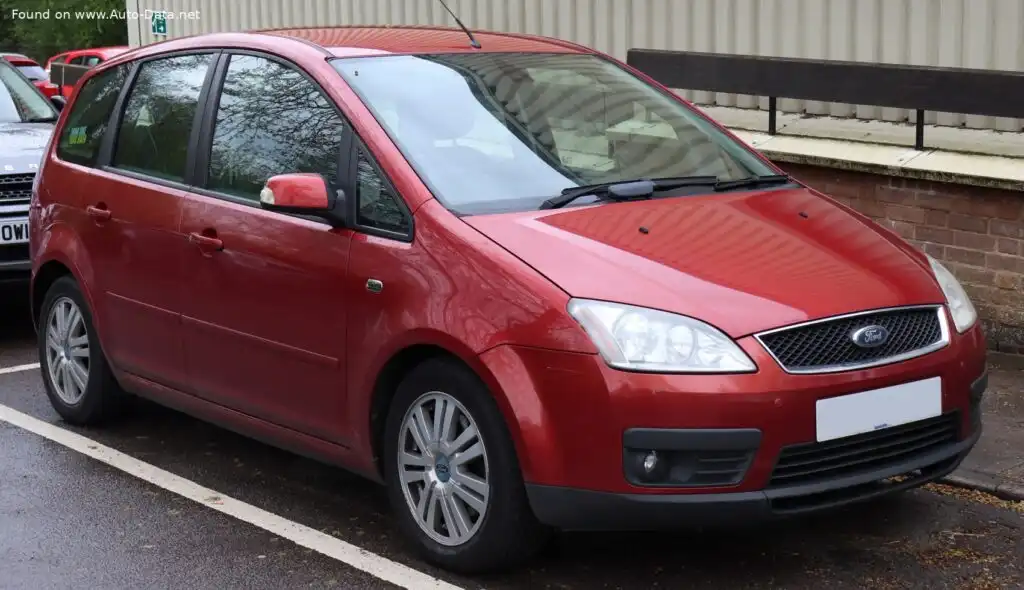
The Ford C-MAX 1.6 TDCi Automatic, produced between 2003 and 2007, represented a key entry point into the first generation of Ford’s compact multi-purpose vehicle (MPV) lineup. Positioned as a practical and fuel-efficient option, this variant aimed to appeal to families and individuals seeking a versatile vehicle for everyday use. It was built on the Ford C170 platform, shared with the Focus of the same era. This model offered a balance between affordability and functionality, making it a popular choice in the European market where the C-MAX was primarily sold. The 1.6 TDCi engine, paired with an automatic transmission, provided a comfortable driving experience, albeit with a focus on economy rather than outright performance.
Technical Specifications
| Brand | Ford |
| Model | C-MAX |
| Generation | C-MAX (First Generation) |
| Type (Engine) | 1.6 TDCi (109 Hp) Automatic |
| Start of production | 2003 |
| End of production | 2007 |
| Powertrain Architecture | Internal Combustion Engine |
| Body type | MPV |
| Seats | 5 |
| Doors | 5 |
| Fuel consumption (urban) | 7.1 l/100 km (33.1 US mpg, 39.8 UK mpg, 14.1 km/l) |
| Fuel consumption (extra urban) | 4.9 l/100 km (48 US mpg, 57.6 UK mpg, 20.4 km/l) |
| Fuel consumption (combined) | 5.7 l/100 km (41.3 US mpg, 49.6 UK mpg, 17.5 km/l) |
| Fuel Type | Diesel |
| Acceleration 0 – 100 km/h | 11.6 sec |
| Acceleration 0 – 62 mph | 11.6 sec |
| Acceleration 0 – 60 mph | 11 sec |
| Maximum speed | 180 km/h (111.85 mph) |
| Weight-to-power ratio | 12.1 kg/Hp, 82.4 Hp/tonne |
| Weight-to-torque ratio | 5.5 kg/Nm, 181.4 Nm/tonne |
| Power | 109 Hp @ 4000 rpm |
| Power per litre | 69.9 Hp/l |
| Torque | 240 Nm @ 1750 rpm (177.01 lb.-ft. @ 1750 rpm) |
| Engine layout | Front, Transverse |
| Engine Model/Code | G8DA |
| Engine displacement | 1560 cm3 (95.2 cu. in.) |
| Number of cylinders | 4 |
| Engine configuration | Inline |
| Cylinder Bore | 75 mm (2.95 in.) |
| Piston Stroke | 88.3 mm (3.48 in.) |
| Number of valves per cylinder | 4 |
| Fuel injection system | Diesel Commonrail |
| Engine aspiration | Turbocharger, Intercooler |
| Valvetrain | DOHC |
| Engine oil capacity | 3.8 l (4.02 US qt | 3.34 UK qt) |
| Coolant capacity | 7.3 l (7.71 US qt | 6.42 UK qt) |
| Kerb Weight | 1323 kg (2916.72 lbs.) |
| Fuel tank capacity | 55 l (14.53 US gal | 12.1 UK gal) |
| Length | 4330 mm (170.47 in.) |
| Width | 1820 mm (71.65 in.) |
| Height | 1600 mm (62.99 in.) |
| Wheelbase | 2640 mm (103.94 in.) |
| Minimum turning circle | 10.7 m (35.1 ft.) |
| Drivetrain | Front wheel drive |
| Front brakes | Disc |
| Rear brakes | Disc |
| Assisting systems | ABS (Anti-lock braking system) |
| Steering type | Steering rack and pinion |
| Power steering | Hydraulic Steering |
| Tires size | 205/55 R16 |
| Wheel rims size | 16 |
Powertrain & Engine Architecture
The heart of the C-MAX 1.6 TDCi Automatic is the G8DA engine, a 1.6-liter inline-four cylinder diesel. This engine utilizes a common rail direct injection system, a technology that significantly improved fuel efficiency and reduced emissions compared to older diesel designs. The common rail system allows for precise control of fuel delivery, optimizing combustion. A turbocharger with an intercooler is employed to boost power output, providing 109 horsepower at 4000 rpm and 240 Nm (177 lb-ft) of torque at a relatively low 1750 rpm. The engine features a double overhead camshaft (DOHC) valvetrain with four valves per cylinder, enhancing breathing and contributing to improved performance. The automatic transmission used in this variant is typically a four-speed unit, chosen for its ease of use and suitability for urban driving. While not known for its sportiness, it provided smooth shifts and adequate performance for everyday commuting.
Driving Characteristics
The 1.6 TDCi Automatic C-MAX delivers a comfortable, if not particularly exhilarating, driving experience. The automatic transmission prioritizes fuel economy and smooth operation over rapid acceleration. The 0-60 mph time of around 11 seconds reflects this focus. The engine’s torque peak at 1750 rpm provides reasonable pulling power for overtaking and merging, but the engine can feel strained at higher speeds. The four-speed automatic transmission’s gear ratios are spaced to maximize fuel efficiency, which can sometimes result in the engine feeling ‘busy’ during acceleration. Compared to the higher-output 1.8-liter petrol versions or the more powerful 2.0-liter TDCi models, the 1.6 TDCi Automatic offers significantly less performance, but it compensates with superior fuel economy.
Equipment & Trim Levels
The C-MAX 1.6 TDCi Automatic typically came equipped with a reasonable level of standard features. These generally included air conditioning, power steering, electric front windows, and a basic audio system. Safety features such as ABS and front airbags were also standard. Interior upholstery was typically cloth, with a functional, if somewhat basic, dashboard layout. Optional extras included alloy wheels, rear parking sensors, upgraded audio systems, and a panoramic sunroof. Trim levels varied slightly depending on the market, but generally, this 1.6 TDCi Automatic represented a mid-range offering, positioned above the base models but below the more luxurious or performance-oriented trims.
Chassis & Braking
The C-MAX utilizes a MacPherson strut front suspension and a twist-beam rear suspension. This setup provides a good balance between ride comfort and handling. The front brakes are disc brakes, while the rear brakes are typically disc brakes as well, offering adequate stopping power for the vehicle’s weight. ABS (Anti-lock Braking System) is standard, enhancing safety during emergency braking situations. The steering is rack and pinion with hydraulic power assistance, providing a reasonably direct and responsive feel. Stabilizer bars are fitted to both the front and rear axles to reduce body roll during cornering.
Market Reception & Comparison
The Ford C-MAX 1.6 TDCi Automatic was generally well-received by critics as a practical and economical family vehicle. Its fuel economy of around 41.3 US mpg combined was a major selling point. However, some reviewers noted the lack of outright performance and the somewhat dated feel of the interior compared to some competitors. Compared to the petrol-powered C-MAX variants, the 1.6 TDCi offered significantly better fuel economy, but at the cost of some performance. Against other diesel MPVs in its class, such as the Renault Scenic or Citroën Xsara Picasso, the C-MAX offered a competitive package in terms of price, fuel efficiency, and practicality.
Legacy
The 1.6 TDCi engine, while generally reliable, has been known to exhibit some issues over time, particularly with the diesel particulate filter (DPF) and the fuel injectors. Regular maintenance and the use of high-quality diesel fuel are crucial for ensuring long-term reliability. Today, the C-MAX 1.6 TDCi Automatic can be found on the used car market at relatively affordable prices. It remains a viable option for buyers seeking a practical and economical MPV, but potential buyers should be aware of the potential maintenance costs associated with the diesel engine and DPF system. The C-MAX, in general, helped establish Ford as a major player in the European MPV segment, and the 1.6 TDCi Automatic variant played a significant role in its success.
