
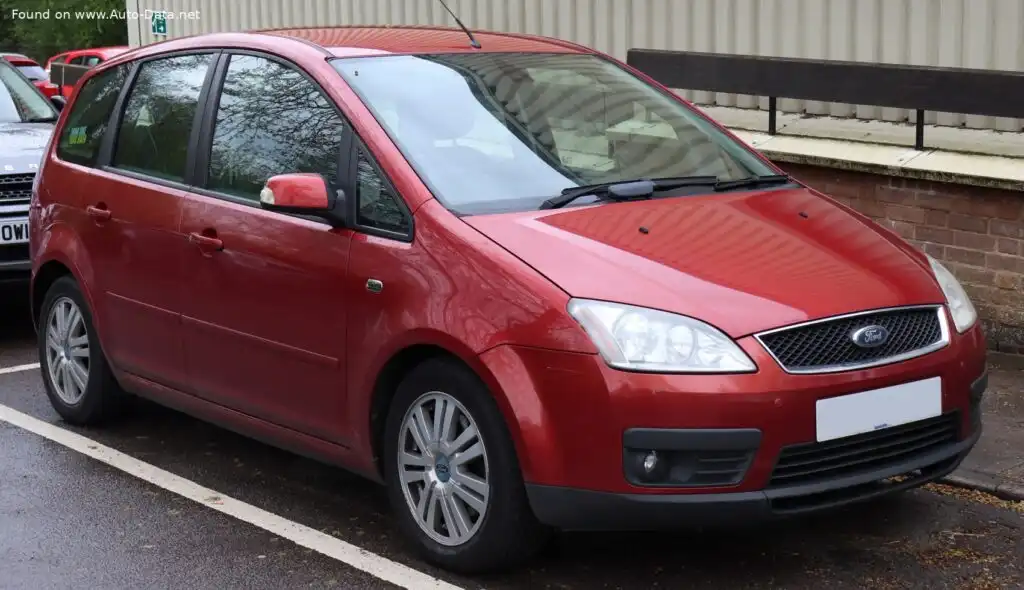
The Ford C-MAX 1.8 TDCi, produced between 2005 and 2007, represented a key variant within the first generation of the C-MAX compact multi-purpose vehicle (MPV). Positioned as a diesel-powered option, it aimed to provide a balance of fuel efficiency and practicality for European families. This model, built on the Ford Focus C-MAX platform (based on the Ford C170), offered a five-seat configuration and a versatile interior. The 1.8 TDCi engine was a popular choice in Europe, offering a compromise between the lower-powered 1.6 TDCi and the more expensive 2.0 TDCi models. It was designed to appeal to buyers seeking a reasonably economical and capable vehicle for everyday use.
Technical Specifications
| Brand | Ford |
| Model | C-MAX |
| Generation | C-MAX |
| Type (Engine) | 1.8 TDCi (115 Hp) |
| Start of production | 2005 |
| End of production | 2007 |
| Powertrain Architecture | Internal Combustion engine |
| Body type | MPV |
| Seats | 5 |
| Doors | 5 |
| Fuel Type | Diesel |
| Power | 115 Hp @ 3700 rpm |
| Power per litre | 65.6 Hp/l |
| Torque | 280 Nm @ 1900 rpm / 206.52 lb.-ft. @ 1900 rpm |
| Engine layout | Front, Transverse |
| Engine Model/Code | BHPA |
| Engine displacement | 1753 cm3 / 106.97 cu. in. |
| Number of cylinders | 4 |
| Engine configuration | Inline |
| Fuel injection system | Diesel Commonrail |
| Engine aspiration | Turbocharger, Intercooler |
| Engine oil capacity | 5.6 l / 5.92 US qt | 4.93 UK qt |
| Coolant | 8.1 l / 8.56 US qt | 7.13 UK qt |
| Max. weight | 1995 kg / 4398.22 lbs |
| Trunk (boot) space – minimum | 460 l / 16.24 cu. ft |
| Trunk (boot) space – maximum | 1620 l / 57.21 cu. ft |
| Fuel tank capacity | 55 l / 14.53 US gal | 12.1 UK gal |
| Permitted trailer load with brakes (12%) | 1500 kg / 3306.93 lbs |
| Permitted trailer load without brakes | 730 kg / 1609.37 lbs |
| Length | 4333 mm / 170.59 in |
| Width | 1825 mm / 71.85 in |
| Height | 1595-1601 mm / 62.8 – 63.03 in |
| Wheelbase | 2640 mm / 103.94 in |
| Front track | 1535 mm / 60.43 in |
| Rear (Back) track | 1531 mm / 60.28 in |
| Drivetrain Architecture | The Internal combustion engine (ICE) drives the front wheels of the vehicle. |
| Drive wheel | Front wheel drive |
| Number of gears and type of gearbox | 5 gears, manual transmission |
| Front brakes | Disc |
| Rear brakes | Disc |
| Assisting systems | ABS (Anti-lock braking system) |
| Tires size | 205/55 R16 |
| Wheel rims size | 16 |
Powertrain & Engine Architecture
The heart of the C-MAX 1.8 TDCi was the BHPA engine, a 1.8-liter inline-four cylinder diesel engine. This engine utilized a common rail direct injection system, a technology that allowed for precise fuel delivery and improved combustion efficiency. The common rail system, operating at very high pressures, atomized the fuel into a fine mist, promoting a more complete burn. A turbocharger with an intercooler was employed to increase power output by forcing more air into the cylinders. The intercooler cooled the compressed air, further enhancing density and performance. The engine featured four valves per cylinder (DOHC) and a timing belt. The 1.8 TDCi engine was known for its relatively quiet operation compared to some earlier diesel engines, though it wasn’t as refined as later generation common rail diesels. The engine was mated to a five-speed manual transmission, which was the standard offering for this variant.
Driving Characteristics
The 115 horsepower and 280 Nm (206 lb-ft) of torque provided by the 1.8 TDCi engine delivered adequate performance for everyday driving. Acceleration was respectable, though not particularly brisk. The engine felt strongest in the mid-range, making it well-suited for overtaking maneuvers on the highway. Compared to the more powerful 2.0 TDCi versions, the 1.8 TDCi felt less strained during acceleration and offered a more relaxed driving experience. The five-speed manual transmission was well-matched to the engine’s characteristics, providing smooth gear changes. Fuel economy was a significant strength of this variant, typically achieving around 4.5-5.5 liters per 100 kilometers (52-63 mpg) in mixed driving conditions. The suspension provided a comfortable ride, absorbing bumps and imperfections in the road surface effectively.
Equipment & Trim Levels
The C-MAX 1.8 TDCi was typically offered in a mid-range trim level. Standard equipment generally included air conditioning, power windows, power door locks, a CD player, and ABS brakes. Safety features such as front airbags were also standard. Optional extras included alloy wheels, a sunroof, rear parking sensors, and upgraded audio systems. Interior upholstery was typically cloth, with a dark color scheme. The dashboard layout was functional and straightforward, with easy-to-read gauges and controls. The C-MAX’s interior was praised for its spaciousness and practicality, offering ample room for passengers and cargo.
Chassis & Braking
The C-MAX utilized a MacPherson strut front suspension and a multi-link rear suspension. This setup provided a good balance of ride comfort and handling. The front brakes were ventilated discs, while the rear brakes were solid discs. ABS (Anti-lock Braking System) was standard, enhancing braking performance and stability, particularly on slippery surfaces. The steering was power-assisted, providing light and precise control. The C-MAX’s chassis was relatively lightweight, contributing to its fuel efficiency and agility. Stabilizer bars were fitted to both the front and rear axles to reduce body roll during cornering.
Market Reception & Comparison
The Ford C-MAX 1.8 TDCi was generally well-received by automotive critics. It was praised for its fuel efficiency, practicality, and comfortable ride. However, some critics noted that the engine could feel a bit underpowered when fully loaded or driving uphill. Compared to the 2.0 TDCi models, the 1.8 TDCi offered a lower purchase price and better fuel economy, but at the expense of performance. The 1.6 TDCi, while even more economical, was often considered too slow for many drivers. The C-MAX competed with other compact MPVs such as the Renault Scenic, Opel/Vauxhall Zafira, and Citroën Xsara Picasso.
Legacy
The Ford C-MAX 1.8 TDCi has proven to be a relatively reliable vehicle, with the BHPA engine generally considered durable. Common issues include wear and tear on the turbocharger and potential problems with the fuel injectors. Regular maintenance, including oil changes and filter replacements, is crucial for ensuring long-term reliability. In the used car market, the C-MAX 1.8 TDCi remains a popular choice for buyers seeking an affordable and practical MPV. Its fuel efficiency and spacious interior continue to appeal to families and individuals alike. While newer models offer more advanced technology and features, the first-generation C-MAX 1.8 TDCi represents a solid and dependable option for those seeking a value-for-money vehicle.
