
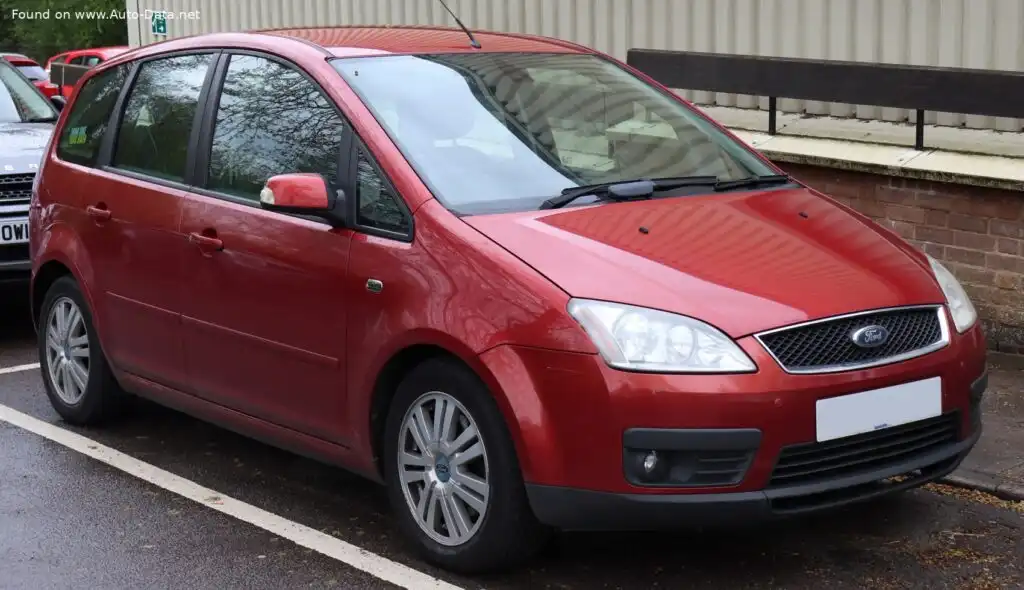
The Ford C-MAX 2.0 16V, produced between 2003 and 2007, represented Ford’s entry into the increasingly popular compact multi-purpose vehicle (MPV) segment in Europe. Positioned as a more stylish and driver-focused alternative to traditional boxy MPVs, the C-MAX aimed to appeal to families seeking practicality without sacrificing driving enjoyment. This particular variant, equipped with the 2.0-liter 16-valve engine producing 145 horsepower, served as a mid-range offering within the C-MAX lineup, slotting between the base 1.6-liter engine and the more performance-oriented versions. It was primarily sold in the European market, where the compact MPV class was particularly strong.
Technical Specifications
| Brand | Ford |
| Model | C-MAX |
| Generation | C-MAX |
| Type (Engine) | 2.0 16V (145 Hp) |
| Start of production | 2003 |
| End of production | 2007 |
| Powertrain Architecture | Internal Combustion engine |
| Body type | MPV |
| Seats | 5 |
| Doors | 5 |
| Fuel consumption (urban) | 10 l/100 km (23.5 US mpg) |
| Fuel consumption (extra urban) | 5.6 l/100 km (42 US mpg) |
| Fuel consumption (combined) | 7.3 l/100 km (32.2 US mpg) |
| Fuel Type | Petrol (Gasoline) |
| Acceleration 0 – 100 km/h | 9.8 sec |
| Acceleration 0 – 62 mph | 9.8 sec |
| Acceleration 0 – 60 mph | 9.3 sec |
| Maximum speed | 203 km/h (126.14 mph) |
| Weight-to-power ratio | 8.9 kg/Hp |
| Weight-to-torque ratio | 7 kg/Nm |
| Power | 145 Hp @ 6000 rpm |
| Torque | 185 Nm @ 4500 rpm (136.45 lb.-ft. @ 4500 rpm) |
| Engine layout | Front, Longitudinal |
| Engine Model/Code | AODA |
| Engine displacement | 1999 cm3 (121.99 cu. in.) |
| Number of cylinders | 4 |
| Engine configuration | Inline |
| Cylinder Bore | 87.5 mm (3.44 in.) |
| Piston Stroke | 83.1 mm (3.27 in.) |
| Compression ratio | 10.8:1 |
| Number of valves per cylinder | 4 |
| Fuel injection system | Multi-port manifold injection |
| Engine aspiration | Naturally aspirated |
| Valvetrain | DOHC |
| Engine oil capacity | 4.3 l (4.54 US qt | 3.78 UK qt) |
| Coolant | 6.3 l (6.66 US qt | 5.54 UK qt) |
| Kerb Weight | 1294 kg (2852.78 lbs.) |
| Fuel tank capacity | 55 l (14.53 US gal | 12.1 UK gal) |
| Length | 4330 mm (170.47 in.) |
| Width | 1820 mm (71.65 in.) |
| Height | 1600 mm (62.99 in.) |
| Wheelbase | 2640 mm (103.94 in.) |
| Minimum turning circle | 10.7 m (35.1 ft.) |
| Drivetrain Architecture | Front wheel drive |
| Number of gears | 5 |
| Gearbox type | Manual transmission |
| Front brakes | Disc |
| Rear brakes | Disc |
| Assisting systems | ABS (Anti-lock braking system) |
| Steering type | Steering rack and pinion |
| Power steering | Hydraulic |
| Tires size | 205/55 R16 |
| Wheel rims size | 16 |
Powertrain & Engine Architecture
The heart of the C-MAX 2.0 16V is the AODA engine, a naturally aspirated 2.0-liter inline-four cylinder gasoline engine. This engine was part of Ford’s Duratec family, known for its relatively simple design and durability. The AODA features a double overhead camshaft (DOHC) valvetrain with four valves per cylinder, contributing to its respectable power output. Fuel delivery is managed by a multi-port fuel injection system, providing precise fuel metering for optimal combustion. The engine’s 145 horsepower peak is achieved at 6000 rpm, while its 185 Nm (136 lb-ft) of torque is available at 4500 rpm. The engine is longitudinally mounted, driving the front wheels. The standard transmission for this variant was a five-speed manual gearbox, although a four-speed automatic transmission was also offered as an option, albeit less common.
Driving Characteristics
The 2.0-liter engine provided a noticeable step up in performance compared to the base 1.6-liter C-MAX. While not a sports car, the 2.0-liter version offered adequate acceleration for everyday driving and highway cruising. The 0-60 mph time of around 9.3 seconds (with the manual transmission) was competitive for its class. The five-speed manual transmission allowed drivers to keep the engine in its optimal power band, while the optional automatic, though convenient, resulted in some power loss and a less engaging driving experience. The gear ratios were fairly well-spaced, providing decent in-gear acceleration. Compared to the higher-output versions of the C-MAX, the 2.0-liter felt less eager to rev, but offered a more relaxed and fuel-efficient driving experience.
Equipment & Trim Levels
The C-MAX 2.0 16V typically came equipped with features such as air conditioning, power windows, power door locks, and a basic audio system. Higher trim levels added options like alloy wheels, upgraded upholstery, a multi-disc CD changer, and even features like rain-sensing wipers and automatic headlights. Interior upholstery was generally cloth, with options for upgraded materials on higher trims. The dashboard layout was functional and straightforward, prioritizing ease of use. Safety features included dual front airbags and ABS brakes as standard equipment.
Chassis & Braking
The C-MAX utilized a MacPherson strut front suspension and a multi-link rear suspension, providing a good balance between ride comfort and handling. The suspension was tuned for a comfortable ride, but still offered reasonable body control in corners. Brakes were disc brakes all around, providing adequate stopping power for the vehicle’s weight. ABS (Anti-lock Braking System) was standard, enhancing safety during emergency braking situations. The steering was a hydraulic power steering system, offering a good level of assistance without feeling overly artificial.
Market Reception & Comparison
The Ford C-MAX 2.0 16V was generally well-received by automotive critics. It was praised for its spacious interior, comfortable ride, and relatively engaging handling. The 2.0-liter engine was considered a good compromise between performance and fuel economy. Compared to other compact MPVs of the time, such as the Renault Scenic and the Opel/Vauxhall Zafira, the C-MAX stood out for its more dynamic driving characteristics. Fuel economy was respectable, averaging around 32.2 US mpg in combined driving. Reliability was generally good, although some owners reported minor issues with the electronic systems.
Legacy
The Ford C-MAX 2.0 16V remains a relatively common sight on European roads today. The AODA engine is known for its durability and relatively low maintenance costs. While not a particularly exciting vehicle, it proved to be a practical and reliable family car. In the used car market, these C-MAX models are often sought after by buyers looking for an affordable and dependable MPV. The C-MAX paved the way for future generations of Ford’s compact MPV offerings, establishing a reputation for practicality and driver engagement within the segment.
