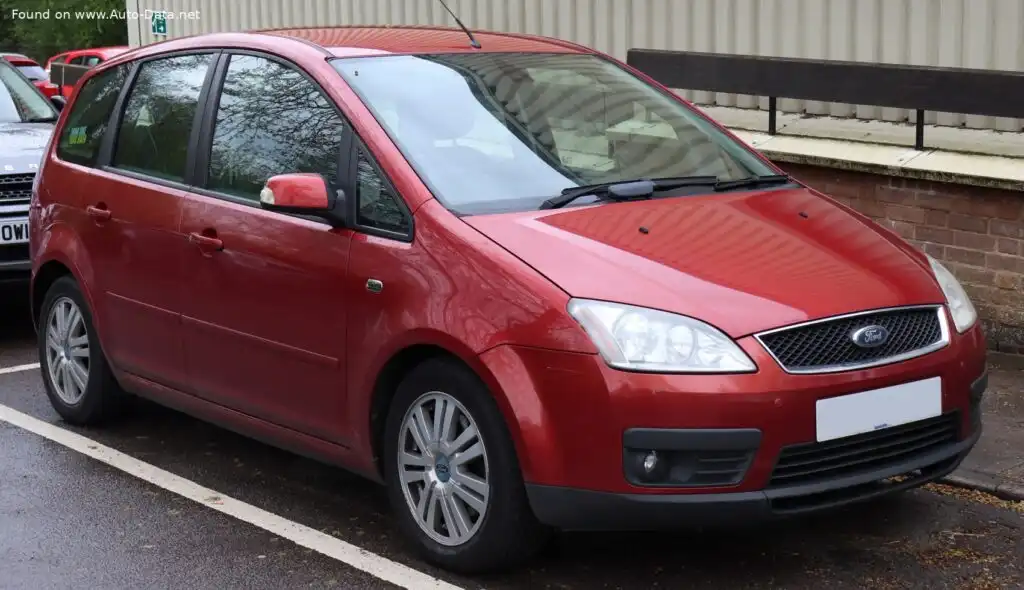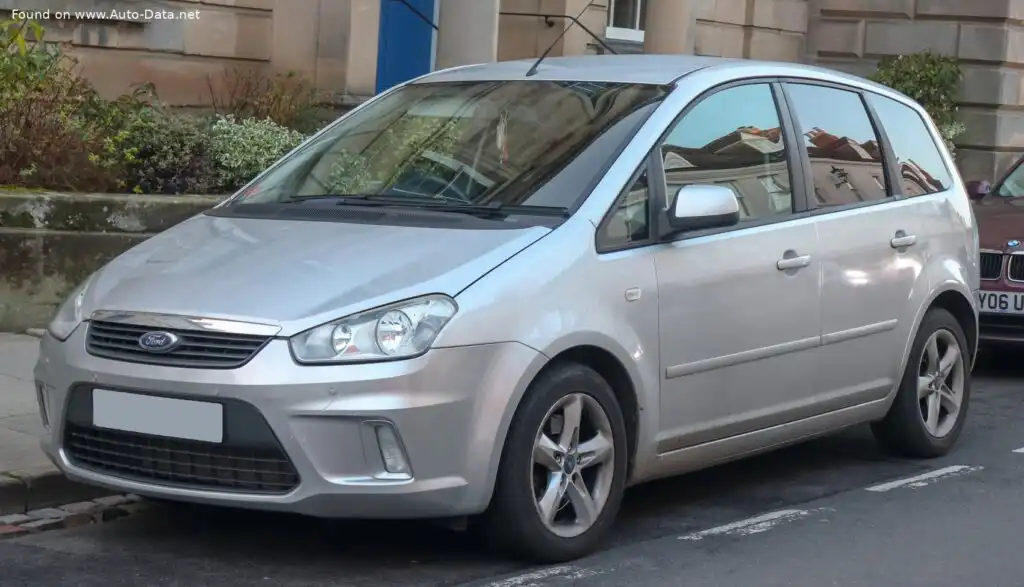
The Ford C-MAX 1.8 16V (125 hp) was a popular variant of Ford’s compact multi-purpose vehicle (MPV), produced from 2007 to 2010 as part of the facelifted first generation (2007-2010). Positioned as a mid-range offering within the C-MAX lineup, it aimed to provide a balance between affordability, fuel efficiency, and practicality for families. This model played a significant role in Ford’s European strategy to offer versatile, space-efficient vehicles in a competitive segment. The C-MAX, in general, was Ford’s response to the growing demand for small, van-like vehicles that offered car-like driving dynamics.
Technical Specifications
| Brand | Ford |
| Model | C-MAX |
| Generation | C-MAX (Facelift 2007) |
| Type (Engine) | 1.8 16V (125 Hp) |
| Start of production | 2007 |
| End of production | 2010 |
| Powertrain Architecture | Internal Combustion engine |
| Body type | MPV |
| Seats | 5 |
| Doors | 5 |
| Fuel consumption (urban) | 9.6 l/100 km (24.5 US mpg) |
| Fuel consumption (extra urban) | 5.6 l/100 km (42 US mpg) |
| Fuel consumption (combined) | 7.1 l/100 km (33.1 US mpg) |
| Fuel Type | Petrol (Gasoline) |
| Acceleration 0 – 100 km/h | 10.8 sec |
| Acceleration 0 – 62 mph | 10.8 sec |
| Acceleration 0 – 60 mph | 10.3 sec |
| Maximum speed | 195 km/h (121.17 mph) |
| Emission standard | Euro 4 |
| Weight-to-power ratio | 11.3 kg/Hp |
| Weight-to-torque ratio | 8.3 kg/Nm |
| Power | 125 Hp @ 6000 rpm |
| Torque | 170 Nm @ 4500 rpm (125.39 lb.-ft. @ 4500 rpm) |
| Engine layout | Front, Transverse |
| Engine Model/Code | QQDB |
| Engine displacement | 1798 cm3 (109.72 cu. in.) |
| Number of cylinders | 4 |
| Engine configuration | Inline |
| Cylinder Bore | 83 mm (3.27 in.) |
| Piston Stroke | 83.1 mm (3.27 in.) |
| Compression ratio | 10.8:1 |
| Number of valves per cylinder | 4 |
| Fuel injection system | Multi-port manifold injection |
| Engine aspiration | Naturally aspirated engine |
| Valvetrain | DOHC |
| Engine oil capacity | 4.3 l (4.54 US qt | 3.78 UK qt) |
| Coolant capacity | 6.5 l (6.87 US qt | 5.72 UK qt) |
| Kerb Weight | 1409 kg (3106.31 lbs.) |
| Max. weight | 1910 kg (4210.83 lbs.) |
| Max load | 501 kg (1104.52 lbs.) |
| Trunk (boot) space – minimum | 550 l (19.42 cu. ft.) |
| Trunk (boot) space – maximum | 1620 l (57.21 cu. ft.) |
| Fuel tank capacity | 55 l (14.53 US gal | 12.1 UK gal) |
| Length | 4372 mm (172.13 in.) |
| Width | 1825 mm (71.85 in.) |
| Height | 1595 mm (62.8 in.) |
| Wheelbase | 2640 mm (103.94 in.) |
| Drivetrain Architecture | The Internal combustion engine (ICE) drives the front wheels of the vehicle. |
| Drive wheel | Front wheel drive |
| Number of gears and type of gearbox | 5 gears, manual transmission |
| Front suspension | Independent, type McPherson with coil spring and anti-roll bar |
| Rear suspension | Independent multi-link spring suspension with stabilizer |
| Front brakes | Ventilated discs |
| Rear brakes | Disc |
| Assisting systems | ABS (Anti-lock braking system) |
INTRODUCTION
The Ford C-MAX 1.8 16V, produced between 2007 and 2010, represented a key offering in Ford of Europe’s compact MPV range. This facelifted version of the original C-MAX (introduced in 2003) benefited from styling updates and refinements to the interior. The 1.8-liter engine, paired with a five-speed manual transmission, was designed to appeal to buyers seeking a practical and reasonably economical family vehicle. It sat in the middle of the C-MAX range, offering a step up in performance from the base 1.6-liter engine, but remaining more affordable than the higher-specification 2.0-liter variants.
Powertrain & Engine Architecture
The heart of the C-MAX 1.8 16V is the Ford QQDB engine, a 1.8-liter inline-four cylinder gasoline engine. This engine utilizes a multi-port fuel injection system, delivering fuel directly into the intake ports. The engine features a double overhead camshaft (DOHC) valvetrain, operating four valves per cylinder, which contributes to improved breathing and power output. The compression ratio is set at 10.8:1. This engine is naturally aspirated, meaning it doesn’t rely on turbocharging or supercharging for increased power. The five-speed manual transmission was the standard offering, providing a balance between fuel efficiency and drivability. Gear ratios were tuned for everyday driving, prioritizing acceleration in the lower gears and comfortable cruising at highway speeds.
Driving Characteristics
The 125 hp output of the 1.8-liter engine, while not exceptionally powerful, provided adequate performance for typical daily driving scenarios. Acceleration from 0-60 mph took around 10.3 seconds, and top speed was approximately 121 mph. Compared to the more powerful 2.0-liter versions, the 1.8 felt less eager to rev, requiring more downshifting for overtaking maneuvers. However, the 170 Nm (125 lb-ft) of torque, available at 4500 rpm, provided sufficient pulling power for most situations. The five-speed manual transmission offered a reasonably precise shift feel, and the gear ratios were well-matched to the engine’s characteristics. The C-MAX’s suspension setup, with McPherson struts at the front and a multi-link system at the rear, delivered a comfortable ride quality, absorbing bumps and imperfections in the road effectively.
Equipment & Trim Levels
The C-MAX 1.8 16V typically came equipped with a respectable level of standard features. These included power windows, power door locks, air conditioning, and an audio system with CD player. Safety features such as ABS (Anti-lock Braking System) and front airbags were also standard. Higher trim levels offered options such as alloy wheels, upgraded audio systems, climate control, and parking sensors. Interior upholstery was typically cloth, with a functional and durable design. The dashboard layout was straightforward and user-friendly, with clearly labeled controls. Optional extras included a panoramic sunroof, leather upholstery, and a trip computer.
Chassis & Braking
The C-MAX 1.8 16V utilized a front-wheel-drive layout. The front suspension featured independent McPherson struts with coil springs and an anti-roll bar, providing good handling and stability. The rear suspension employed an independent multi-link setup, also with coil springs and a stabilizer bar, further enhancing ride comfort and handling. Braking duties were handled by ventilated discs at the front and solid discs at the rear. The ABS system helped to prevent wheel lockup during hard braking, improving stopping performance and control. The steering was power-assisted, providing light and responsive steering feel.
Market Reception & Comparison
The Ford C-MAX 1.8 16V was generally well-received by automotive critics. It was praised for its practicality, spacious interior, and comfortable ride. The 1.8-liter engine was considered adequate for most drivers, offering a good balance between performance and fuel economy. Compared to the 1.6-liter version, the 1.8 provided noticeably more power and responsiveness. However, it wasn’t as refined or powerful as the 2.0-liter models. Fuel economy was a strong point, with combined figures around 33.1 US mpg. Reliability was generally good, although some owners reported minor issues with the electrical system.
Legacy
The Ford C-MAX 1.8 16V remains a relatively common sight on used car markets today. The QQDB engine is known for its durability and relatively low maintenance costs, making it a sensible choice for budget-conscious buyers. While not a performance standout, the C-MAX 1.8 offers a practical and reliable solution for families seeking a versatile and affordable MPV. Its spacious interior, comfortable ride, and reasonable fuel economy continue to appeal to a wide range of buyers. Parts availability is generally good, and the C-MAX benefits from Ford’s extensive dealer network. However, potential buyers should be aware of the possibility of age-related wear and tear, and a thorough inspection is recommended before purchase.