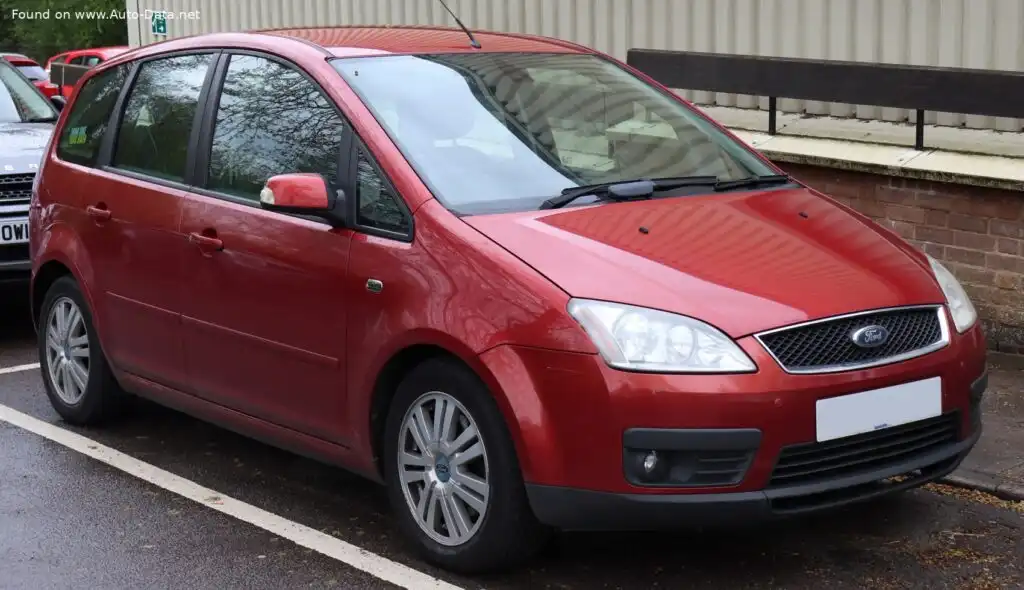
The Ford C-MAX, specifically the facelifted version produced from 2007 to 2010, represented Ford’s entry into the increasingly popular compact multi-purpose vehicle (MPV) segment in Europe. This generation, based on the Ford Focus C-MAX platform, aimed to provide a more spacious and versatile alternative to traditional hatchbacks. The 2.0 TDCI 136 horsepower automatic variant occupied a mid-range position within the C-MAX lineup, offering a balance between fuel efficiency, performance, and convenience. It was designed to appeal to families and individuals seeking a practical and comfortable vehicle for everyday use.
Technical Specifications
| Brand | Ford |
| Model | C-MAX |
| Generation | C-MAX (Facelift 2007) |
| Type (Engine) | 2.0 TDCI (136 Hp) Automatic |
| Start of production | 2007 |
| End of production | 2010 |
| Powertrain Architecture | Internal Combustion engine |
| Body type | MPV |
| Seats | 5 |
| Doors | 5 |
| Fuel Type | Diesel |
| Acceleration 0 – 100 km/h | 11.9 sec |
| Acceleration 0 – 62 mph | 11.9 sec |
| Acceleration 0 – 60 mph | 11.3 sec |
| Maximum speed | 180 km/h (111.85 mph) |
| Emission standard | Euro 4 |
| Power | 136 Hp @ 4000 rpm |
| Power per litre | 68.1 Hp/l |
| Torque | 320 Nm @ 2000 rpm (236.02 lb.-ft. @ 2000 rpm) |
| Engine layout | Front, Transverse |
| Engine Model/Code | G6DA |
| Engine displacement | 1997 cm3 (121.86 cu. in.) |
| Number of cylinders | 4 |
| Engine configuration | Inline |
| Cylinder Bore | 85 mm (3.35 in.) |
| Piston Stroke | 88 mm (3.46 in.) |
| Compression ratio | 18:1 |
| Number of valves per cylinder | 4 |
| Fuel injection system | Diesel Commonrail |
| Engine aspiration | Turbocharger, Intercooler |
| Engine oil capacity | 5.5 l (5.81 US qt | 4.84 UK qt) |
| Coolant | 8.4 l (8.88 US qt | 7.39 UK qt) |
| Length | 4372 mm (172.13 in.) |
| Width | 1825 mm (71.85 in.) |
| Height | 1595 mm (62.8 in.) |
| Wheelbase | 2640 mm (103.94 in.) |
| Drivetrain Architecture | The Internal combustion engine (ICE) drives the front wheels of the vehicle. |
| Drive wheel | Front wheel drive |
| Number of gears and type of gearbox | 6 gears, automatic transmission |
| Front suspension | Independent, type McPherson with coil spring and anti-roll bar |
| Rear suspension | Independent multi-link spring suspension with stabilizer |
| Front brakes | Disc |
| Rear brakes | Disc |
| Assisting systems | ABS (Anti-lock braking system) |
Powertrain & Engine Architecture
The heart of the C-MAX 2.0 TDCI Automatic is the G6DA engine, a 1997cc inline four-cylinder diesel. This engine utilizes a common rail direct injection system, delivering fuel at extremely high pressure for optimized combustion. A turbocharger with an intercooler is employed to increase power output and improve efficiency. The engine produces 136 horsepower at 4000 rpm and a substantial 320 Nm (236 lb-ft) of torque at just 2000 rpm. This torque characteristic is particularly beneficial for everyday driving, providing strong pulling power without the need for frequent downshifts. The engine features a compression ratio of 18:1 and four valves per cylinder, contributing to its efficiency and performance. The automatic transmission is a six-speed unit, designed to provide smooth and efficient gear changes. While not a dual-clutch transmission, it was a reliable and well-regarded unit for its time.
Driving Characteristics
The 2.0 TDCI automatic C-MAX offers a comfortable and relaxed driving experience. The abundance of low-end torque makes it easy to navigate city streets and maintain highway speeds. Acceleration to 60 mph takes around 11.3 seconds, which is respectable for a vehicle of this type. However, it’s not a particularly sporty vehicle; the focus is on practicality and fuel economy. Compared to the manual transmission version of the same engine, the automatic sacrifices a small amount of responsiveness and fuel efficiency. The automatic transmission’s gear ratios are tuned for comfort and efficiency, rather than outright performance. Compared to higher-output versions of the C-MAX, such as those with more powerful diesel engines or the petrol variants, this 136 hp version feels less eager to accelerate, but it provides a more refined and less stressed driving experience.
Equipment & Trim Levels
The 2.0 TDCI Automatic C-MAX typically came equipped with a reasonable level of standard features. These included air conditioning, power windows, power mirrors, a CD player with auxiliary input, and ABS brakes. Higher trim levels, such as the Titanium, added features like alloy wheels, upgraded interior trim, automatic headlights and rain-sensing wipers, and a more advanced audio system. Optional extras included a panoramic sunroof, leather upholstery, and a navigation system. The interior generally featured durable materials and a functional layout, prioritizing practicality over luxury. The seats were comfortable and supportive, and the rear seats could be folded down to increase cargo space.
Chassis & Braking
The C-MAX utilizes a McPherson strut front suspension and a multi-link rear suspension, providing a good balance between ride comfort and handling. The suspension is tuned to prioritize comfort, absorbing bumps and imperfections in the road effectively. Both the front and rear brakes are discs, providing adequate stopping power for a vehicle of this weight class. ABS (Anti-lock Braking System) is standard, enhancing safety during emergency braking situations. The steering is light and precise, making it easy to maneuver in tight spaces. A stabilizer bar is fitted to both the front and rear suspension to reduce body roll during cornering.
Market Reception & Comparison
The Ford C-MAX 2.0 TDCI Automatic was generally well-received by automotive critics. It was praised for its spacious interior, comfortable ride, and fuel efficiency. However, some critics noted that the automatic transmission could feel a little sluggish at times, and the overall driving experience wasn’t particularly engaging. Compared to other MPVs in its class, such as the Renault Scenic and the Volkswagen Touran, the C-MAX offered a competitive package in terms of price, features, and practicality. The 2.0 TDCI engine provided a good balance between performance and fuel economy, making it a popular choice for families and individuals who needed a versatile and efficient vehicle. The automatic transmission appealed to those who preferred the convenience of not having to shift gears manually.
Legacy
The Ford C-MAX 2.0 TDCI Automatic has proven to be a relatively reliable vehicle over the long term. The G6DA engine is known for its durability, and the automatic transmission, while not without its occasional issues, is generally robust. Common maintenance items include regular oil changes, filter replacements, and timing belt replacement (typically every 100,000 miles). In the used car market today, these C-MAX models represent a good value proposition for buyers seeking a practical and affordable MPV. They are often available at relatively low prices, and with proper maintenance, they can provide many years of reliable service. While newer MPVs offer more advanced technology and features, the C-MAX 2.0 TDCI Automatic remains a capable and versatile vehicle for everyday use.