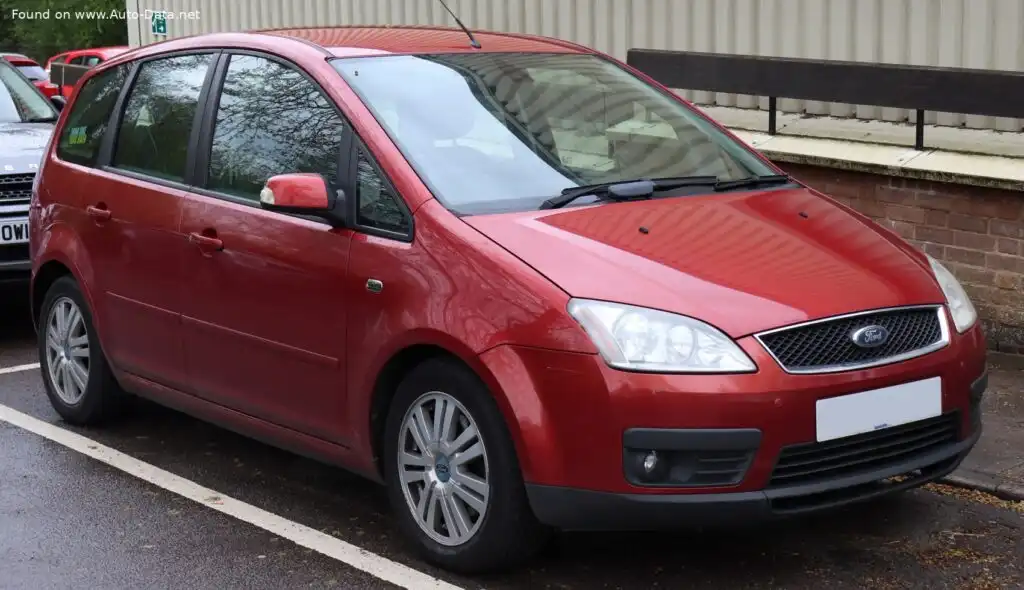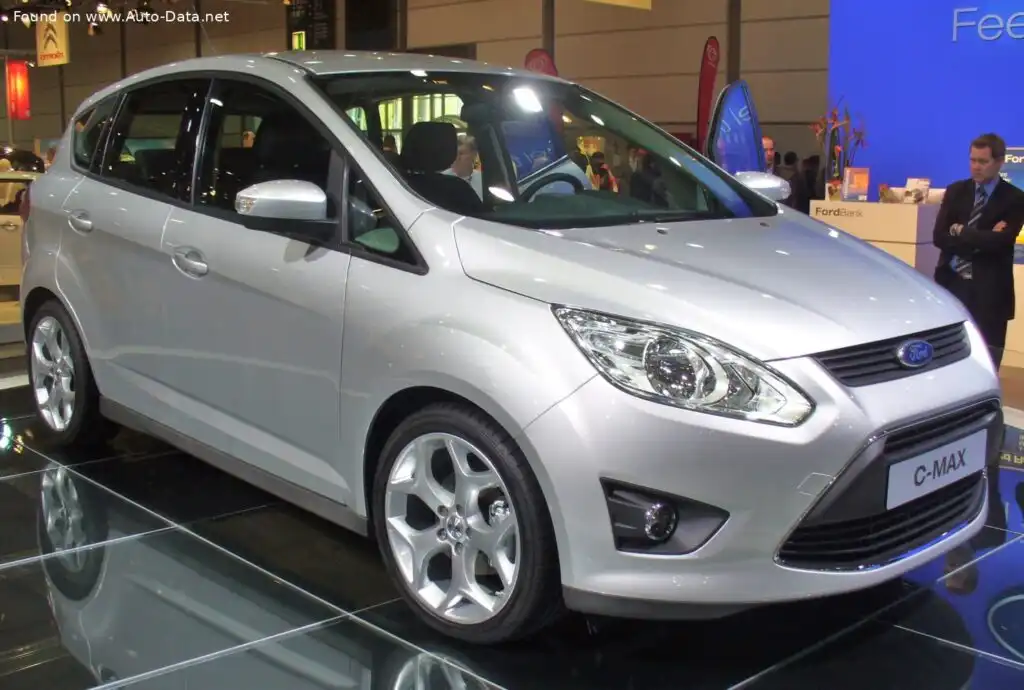
The Ford C-MAX II 1.6 Duratorq TDCi 95 hp, produced from 2010 to 2015, represented an entry-level offering within the second generation C-MAX range. Positioned as a fuel-efficient and practical compact multi-purpose vehicle (MPV), it aimed to provide affordable family transport in the European market. This variant utilized Ford’s 1.6-liter Duratorq diesel engine paired with a six-speed manual transmission, offering a balance between economy and usability. It was a key model in Ford’s strategy to offer a diverse C-MAX lineup catering to a broad spectrum of customer needs, competing with vehicles like the Opel/Vauxhall Meriva, Renault Scenic, and Volkswagen Touran.
Technical Specifications
| Brand | Ford |
| Model | C-MAX |
| Generation | C-MAX II |
| Type (Engine) | 1.6 Duratorq TDCi (95 Hp) DPF S&S |
| Start of production | 2010 |
| End of production | 2015 |
| Powertrain Architecture | Internal Combustion engine |
| Body type | MPV |
| Seats | 5 |
| Doors | 5 |
| Fuel consumption (urban) | 4.9 l/100 km (48 US mpg, 57.6 UK mpg, 20.4 km/l) |
| Fuel consumption (extra urban) | 3.9 l/100 km (60.3 US mpg, 72.4 UK mpg, 25.6 km/l) |
| Fuel consumption (combined) | 4.3 l/100 km (54.7 US mpg, 65.7 UK mpg, 23.3 km/l) |
| CO2 emissions | 112 g/km |
| Fuel Type | Diesel |
| Acceleration 0 – 100 km/h | 13.3 sec |
| Acceleration 0 – 62 mph | 13.3 sec |
| Acceleration 0 – 60 mph | 12.6 sec |
| Maximum speed | 170 km/h (105.63 mph) |
| Emission standard | Euro 5 |
| Weight-to-power ratio | 13.8 kg/Hp, 72.2 Hp/tonne |
| Weight-to-torque ratio | 5.7 kg/Nm, 174.9 Nm/tonne |
| Power | 95 Hp @ 3600 rpm |
| Power per litre | 60.9 Hp/l |
| Torque | 230 Nm @ 1500-2000 rpm (169.64 lb.-ft. @ 1500-2000 rpm) |
| Engine layout | Front, Transverse |
| Engine Model/Code | T3DB |
| Engine displacement | 1560 cm3 (95.2 cu. in.) |
| Number of cylinders | 4 |
| Engine configuration | Inline |
| Cylinder Bore | 75 mm (2.95 in.) |
| Piston Stroke | 88.3 mm (3.48 in.) |
| Compression ratio | 16:1 |
| Number of valves per cylinder | 2 |
| Fuel injection system | Diesel Commonrail |
| Engine aspiration | Turbocharger, Intercooler |
| Valvetrain | SOHC |
| Engine oil capacity | 3.8 l (4.02 US qt | 3.34 UK qt) |
| Coolant | 7.3 l (7.71 US qt | 6.42 UK qt) |
| Kerb Weight | 1315 kg (2899.08 lbs.) |
| Max. weight | 1915 kg (4221.85 lbs.) |
| Max load | 600 kg (1322.77 lbs.) |
| Trunk (boot) space – minimum | 432 l (15.26 cu. ft.) |
| Trunk (boot) space – maximum | 1723 l (60.85 cu. ft.) |
| Fuel tank capacity | 53 l (14 US gal | 11.66 UK gal) |
| Max. roof load | 75 kg (165.35 lbs.) |
| Permitted trailer load with brakes (12%) | 1200 kg (2645.55 lbs.) |
| Permitted trailer load without brakes | 695 kg (1532.21 lbs.) |
| Permitted towbar download | 75 kg (165.35 lbs.) |
| Length | 4380 mm (172.44 in.) |
| Width | 1828 mm (71.97 in.) |
| Width with mirrors folded | 1858 mm (73.15 in.) |
| Width including mirrors | 2067 mm (81.38 in.) |
| Height | 1626 mm (64.02 in.) |
| Wheelbase | 2648 mm (104.25 in.) |
| Front track | 1544-1559 mm (60.79 – 61.38 in.) |
| Rear (Back) track | 1554-1569 mm (61.18 – 61.77 in.) |
| Minimum turning circle (turning diameter) | 10.7 m (35.1 ft.) |
| Drivetrain Architecture | The Internal combustion engine (ICE) drives the front wheels of the vehicle. |
| Drive wheel | Front wheel drive |
| Number of gears and type of gearbox | 6 gears, manual transmission |
| Front suspension | Independent, type McPherson with coil spring and anti-roll bar |
| Rear suspension | Independent multi-link spring suspension with stabilizer |
| Front brakes | Ventilated discs |
| Rear brakes | Disc |
| Assisting systems | ABS (Anti-lock braking system) |
| Steering type | Steering rack and pinion |
| Power steering | Electric Steering |
| Tires size | 205/55 R16; 215/55 R16 |
| Wheel rims size | 6.5 J x 16; 7.0 J x 16 |
Powertrain & Engine Architecture
The heart of this C-MAX variant is the 1.6-liter Duratorq TDCi engine, specifically the T3DB code. This engine is a four-cylinder, inline diesel utilizing a turbocharger with intercooling to boost power and efficiency. It features a common-rail direct fuel injection system, delivering fuel directly into the cylinders at high pressure for optimized combustion. The engine employs a single overhead camshaft (SOHC) valvetrain, operating two valves per cylinder. The Start & Stop system (S&S) was included to further improve fuel economy by automatically shutting off the engine when the vehicle is stationary, such as at traffic lights. The six-speed manual transmission provides a good balance between fuel efficiency and driver control. The gear ratios are tuned for maximizing fuel economy while still providing adequate acceleration.
Driving Characteristics
The 95 hp output and 230 Nm of torque deliver adequate, though not exhilarating, performance. Acceleration from 0-60 mph takes around 12.6 seconds, and top speed is around 105 mph. The engine feels most comfortable in the mid-range, with peak torque available from 1500-2000 rpm, making it suitable for everyday driving and highway cruising. Compared to higher-powered C-MAX variants, such as those with the 2.0-liter TDCi engine, this version feels noticeably slower, especially when fully loaded. However, the manual transmission allows for greater driver engagement and control compared to the optional automatic transmission available on other trims.
Equipment & Trim Levels
The 1.6 Duratorq TDCi 95 hp model typically came with a reasonable level of standard equipment. This included air conditioning, electric front windows, a basic audio system with MP3 compatibility, and ABS brakes. Higher trim levels, such as Titanium, offered additional features like alloy wheels, upgraded interior trim, and a more sophisticated infotainment system. Optional extras included parking sensors, cruise control, and a panoramic sunroof.
Chassis & Braking
The C-MAX II utilizes an independent front suspension with McPherson struts and a multi-link independent rear suspension, providing a comfortable ride and good handling characteristics. Front brakes are ventilated discs, while rear brakes are solid discs. The suspension setup is tuned to prioritize comfort and stability, making it well-suited for family use. The electric power steering provides light and precise steering feel.
Market Reception & Comparison
The 1.6 Duratorq TDCi 95 hp C-MAX was generally well-received by critics as a practical and economical choice. It was praised for its fuel efficiency and comfortable ride. However, some reviewers noted that the engine could feel underpowered, especially when carrying passengers or luggage. Compared to the 1.6-liter petrol version, the diesel offered significantly better fuel economy. Against the more powerful diesel variants, it represented a more affordable entry point into the C-MAX range, appealing to budget-conscious buyers.
Legacy
The 1.6 Duratorq TDCi engine proved to be relatively reliable, although, like all diesel engines, it requires regular maintenance, including oil changes and filter replacements. The diesel particulate filter (DPF) can be a potential issue if the vehicle is primarily used for short journeys, as it may not have enough opportunity to regenerate. In the used car market, this variant offers good value for money, providing a practical and economical MPV for families. Its fuel efficiency and relatively low running costs continue to make it an attractive option for buyers seeking a budget-friendly and reliable vehicle.