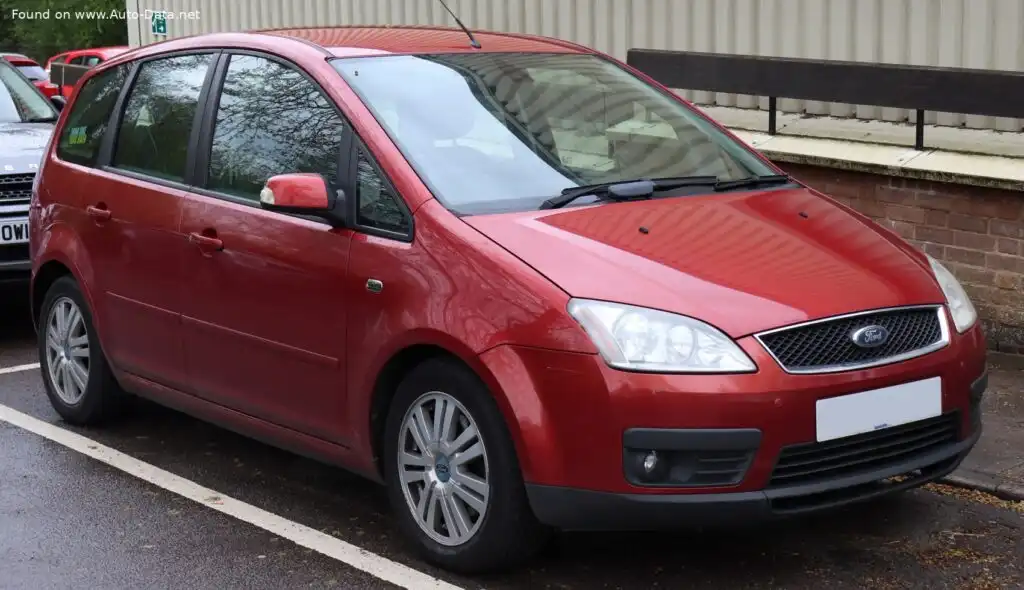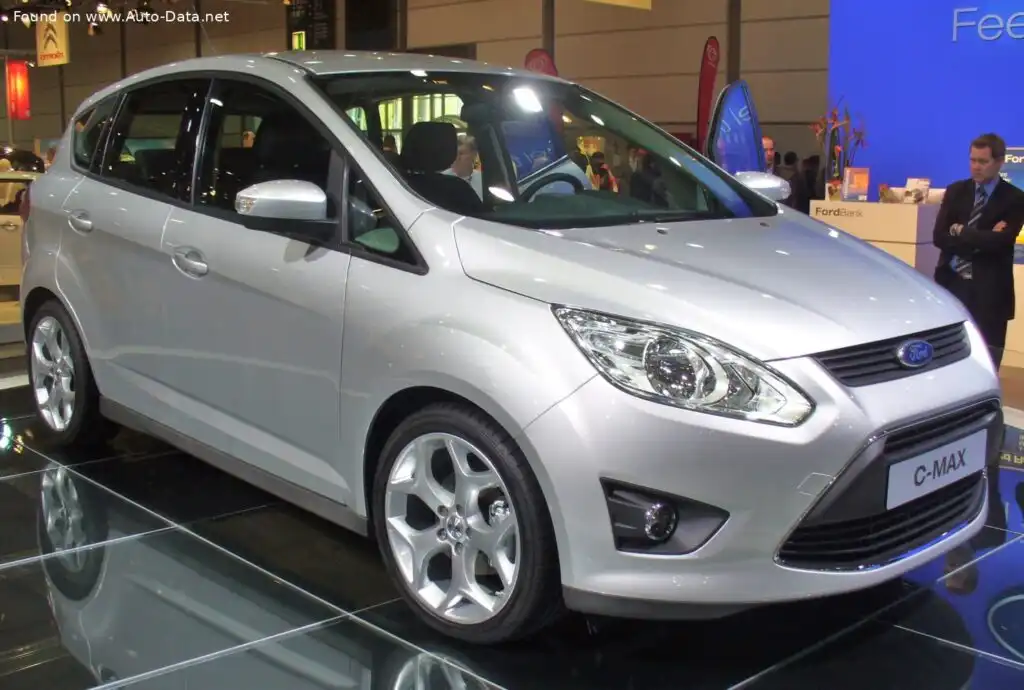
The Ford C-MAX II 1.6 EcoBoost SCTi (150 hp) S&S, produced from 2010 to 2015, represents a significant iteration of Ford’s compact multi-purpose vehicle (MPV) offering in the European market. Positioned as a mid-range trim within the C-MAX II lineup, it aimed to balance fuel efficiency with respectable performance, appealing to families and individuals seeking a practical and modern vehicle. This variant utilized Ford’s EcoBoost engine technology, emphasizing downsizing and turbocharging to deliver improved economy without sacrificing drivability. It was a key competitor to vehicles like the Opel/Vauxhall Meriva, Renault Scenic, and Volkswagen Touran.
Technical Specifications
| Brand | Ford |
| Model | C-MAX |
| Generation | C-MAX II |
| Type (Engine) | 1.6 EcoBoost SCTi (150 Hp) S&S |
| Start of production | 2010 |
| End of production | 2015 |
| Powertrain Architecture | Internal Combustion engine |
| Body type | MPV |
| Seats | 5 |
| Doors | 5 |
| Fuel consumption (urban) | 7.8 l/100 km (30.2 US mpg, 36.2 UK mpg, 12.8 km/l) |
| Fuel consumption (extra urban) | 5.3 l/100 km (44.4 US mpg, 53.3 UK mpg, 18.9 km/l) |
| Fuel consumption (combined) | 6.2 l/100 km (37.9 US mpg, 45.6 UK mpg, 16.1 km/l) |
| CO2 emissions | 144 g/km |
| Fuel Type | Petrol (Gasoline) |
| Acceleration 0 – 100 km/h | 9.4 sec |
| Acceleration 0 – 62 mph | 9.4 sec |
| Acceleration 0 – 60 mph | 8.9 sec |
| Maximum speed | 204 km/h (126.76 mph) |
| Emission standard | Euro 5 |
| Weight-to-power ratio | 8.7 kg/Hp, 114.5 Hp/tonne |
| Weight-to-torque ratio | 5.5 kg/Nm, 183.2 Nm/tonne |
| Power | 150 Hp @ 5700 rpm |
| Power per litre | 94 Hp/l |
| Torque | 240 Nm @ 1600-4000 rpm (177.01 lb.-ft. @ 1600-4000 rpm) |
| Engine layout | Front, Transverse |
| Engine Model/Code | JQDB |
| Engine displacement | 1596 cm3 (97.39 cu. in.) |
| Number of cylinders | 4 |
| Engine configuration | Inline |
| Cylinder Bore | 79 mm (3.11 in.) |
| Piston Stroke | 81.4 mm (3.2 in.) |
| Compression ratio | 10:1 |
| Number of valves per cylinder | 4 |
| Fuel injection system | Direct injection |
| Engine aspiration | Turbocharger, Intercooler |
| Engine oil capacity | 4.1 l (4.33 US qt | 3.61 UK qt) |
| Coolant | 5.5 l (5.81 US qt | 4.84 UK qt) |
| Kerb Weight | 1310 kg (2888.06 lbs.) |
| Max. weight | 1900 kg (4188.78 lbs.) |
| Max load | 590 kg (1300.73 lbs.) |
| Trunk (boot) space – minimum | 432 l (15.26 cu. ft.) |
| Trunk (boot) space – maximum | 1723 l (60.85 cu. ft.) |
| Fuel tank capacity | 55 l (14.53 US gal | 12.1 UK gal) |
| Max. roof load | 75 kg (165.35 lbs.) |
| Permitted trailer load with brakes (12%) | 1500 kg (3306.93 lbs.) |
| Permitted trailer load without brakes | 690 kg (1521.19 lbs.) |
| Permitted towbar download | 75 kg (165.35 lbs.) |
| Length | 4380 mm (172.44 in.) |
| Width | 1828 mm (71.97 in.) |
| Width with mirrors folded | 1858 mm (73.15 in.) |
| Width including mirrors | 2067 mm (81.38 in.) |
| Height | 1626 mm (64.02 in.) |
| Wheelbase | 2648 mm (104.25 in.) |
| Front track | 1544-1559 mm (60.79 – 61.38 in.) |
| Rear (Back) track | 1554-1569 mm (61.18 – 61.77 in.) |
| Minimum turning circle | 10.7 m (35.1 ft.) |
| Drivetrain Architecture | The Internal combustion engine (ICE) drives the front wheels of the vehicle. |
| Drive wheel | Front wheel drive |
| Number of gears and type of gearbox | 6 gears, manual transmission |
| Front suspension | Independent, type McPherson with coil spring and anti-roll bar |
| Rear suspension | Independent multi-link spring suspension with stabilizer |
| Front brakes | Ventilated discs |
| Rear brakes | Disc |
| Assisting systems | ABS (Anti-lock braking system) |
| Steering type | Steering rack and pinion |
| Power steering | Electric Steering |
| Tires size | 205/55 R16; 215/55 R16 |
| Wheel rims size | 6.5J x 16; 7.0J x 16 |
Powertrain & Engine Architecture
The heart of the C-MAX II 1.6 EcoBoost SCTi is the JQDB engine, a 1.6-liter inline-four cylinder gasoline engine. This engine is a key example of Ford’s EcoBoost technology, featuring direct fuel injection and a single turbocharger with an intercooler. Direct injection allows for more precise fuel delivery, improving combustion efficiency and power output. The turbocharger provides a significant boost in power compared to naturally aspirated engines of similar displacement. The engine utilizes a timing chain, contributing to its longevity and reduced maintenance requirements. The Start & Stop system, denoted by the “S&S” in the model name, automatically shuts off the engine when the vehicle is stationary (e.g., at traffic lights) to further improve fuel economy. The engine’s control unit (ECU) manages the fuel injection, ignition timing, and turbocharger boost pressure to optimize performance and efficiency. The 6-speed manual transmission was standard, providing a balance between fuel economy and driver engagement.
Driving Characteristics
The 150 hp EcoBoost engine in the C-MAX II delivered a respectable driving experience. Acceleration from 0-60 mph took approximately 8.9 seconds, making it adequately quick for everyday driving. The turbocharger provides a noticeable boost in power during acceleration, offering a more responsive feel than naturally aspirated engines. The 240 Nm (177 lb-ft) of torque, available from 1600-4000 rpm, provided good low-end grunt, making it easy to navigate city streets and overtake slower traffic. Compared to the higher-output 1.6 EcoBoost variants (available with 182 hp), this version offered a slightly less aggressive driving experience, prioritizing fuel economy over outright performance. The manual transmission’s gear ratios were well-matched to the engine’s powerband, allowing for smooth and efficient gear changes. The C-MAX II’s suspension provided a comfortable ride, absorbing bumps and imperfections in the road surface effectively.
Equipment & Trim Levels
The 1.6 EcoBoost SCTi S&S trim typically included standard features such as air conditioning, power windows, power mirrors, a CD/MP3 stereo system, and alloy wheels. Safety features included ABS, electronic stability control, and multiple airbags. Higher trim levels, such as Titanium, added features like automatic climate control, a touchscreen infotainment system, rear parking sensors, and upgraded interior upholstery. Optional extras included a panoramic sunroof, navigation system, and leather seats. Interior upholstery was typically cloth, with options for partial leather trim on higher-spec models. The dashboard layout was functional and modern, with a clear instrument cluster and intuitive controls.
Chassis & Braking
The C-MAX II utilized an independent McPherson strut suspension at the front and an independent multi-link suspension at the rear. This setup provided a good balance between ride comfort and handling. The front brakes were ventilated discs, providing ample stopping power, while the rear brakes were solid discs. The electric power steering offered a light and precise steering feel. Stabilizer bars were fitted to both the front and rear axles to reduce body roll during cornering. The C-MAX II’s chassis was designed to provide a stable and predictable driving experience, even when fully loaded.
Market Reception & Comparison
The Ford C-MAX II 1.6 EcoBoost SCTi S&S was generally well-received by automotive critics. It was praised for its fuel efficiency, comfortable ride, and spacious interior. However, some critics noted that the engine could feel slightly strained when fully loaded or driving uphill. Compared to the 1.6-liter diesel variants, the EcoBoost offered a more responsive driving experience but slightly lower fuel economy. Against competitors like the Opel/Vauxhall Meriva and Renault Scenic, the C-MAX II offered a compelling combination of practicality, efficiency, and value. The EcoBoost engine’s reliability was generally good, although regular maintenance was essential to ensure optimal performance.
Legacy
The Ford C-MAX II 1.6 EcoBoost SCTi S&S remains a popular choice in the used car market. The EcoBoost engine has proven to be relatively reliable, although it’s important to check for regular maintenance records, particularly regarding oil changes and timing chain health. The C-MAX II’s spacious interior and practical features continue to appeal to families and individuals seeking a versatile and affordable MPV. The introduction of EcoBoost technology in the C-MAX II helped to establish Ford as a leader in fuel-efficient engine design, paving the way for future generations of EcoBoost engines.