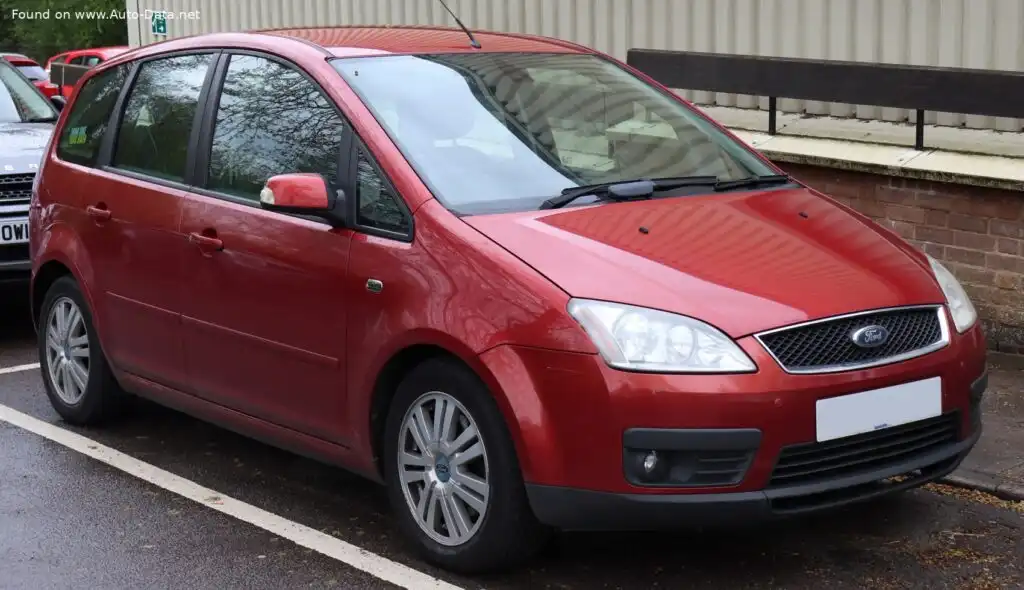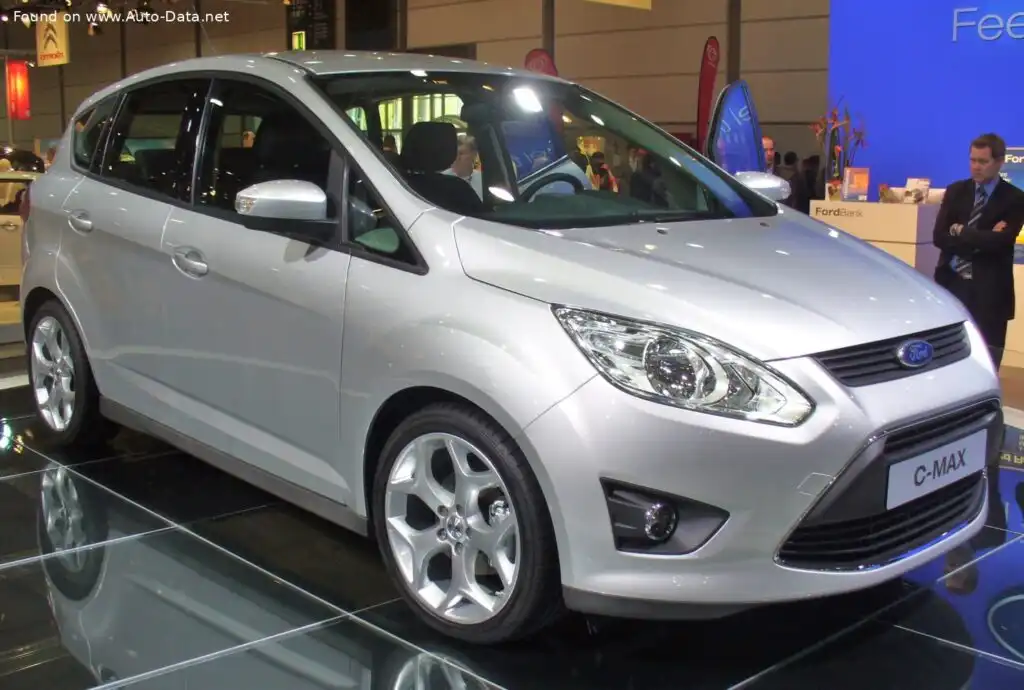
The Ford C-MAX II 1.6 Ti-VCT (117 hp) LPG, produced between 2010 and 2015, was a significant variant within the second generation of Ford’s C-MAX compact multi-purpose vehicle (MPV) lineup. Positioned as a fuel-conscious alternative, this model combined a 1.6-liter gasoline engine with a dedicated Liquefied Petroleum Gas (LPG) conversion, offering drivers a choice of fuels and potential cost savings. It was primarily marketed in Europe, where demand for alternative fuel vehicles and MPVs remained strong. The C-MAX II itself was built on the Ford C1 platform, shared with the Focus Mk III, and aimed to provide a practical and versatile vehicle for families.
Technical Specifications
| Brand | Ford |
| Model | C-MAX |
| Generation | C-MAX II |
| Type (Engine) | 1.6 Ti-VCT (117 Hp) LPG |
| Start of production | 2010 |
| End of production | 2015 |
| Powertrain Architecture | Internal Combustion engine |
| Body type | MPV |
| Seats | 5 |
| Doors | 5 |
| Fuel consumption (economy) – urban | 8.9 l/100 km (26.4 US mpg, 31.7 UK mpg, 11.2 km/l) |
| Fuel consumption (economy) – urban (LPG) | 11.3 l/100 km |
| Fuel consumption (economy) – extra urban | 5.6 l/100 km (42 US mpg, 50.4 UK mpg, 17.9 km/l) |
| Fuel consumption (economy) – extra urban (LPG) | 6.3 l/100 km |
| Fuel consumption (economy) – combined | 6.8 l/100 km (34.6 US mpg, 41.5 UK mpg, 14.7 km/l) |
| Fuel consumption (economy) – combined (LPG) | 8.2 l/100 km |
| CO2 emissions | 159 g/km |
| CO2 emissions (LPG) | 132 g/km |
| Fuel Type | Petrol / LPG |
| Acceleration 0 – 100 km/h | 11.7 sec |
| Acceleration 0 – 62 mph | 11.7 sec |
| Acceleration 0 – 60 mph | 11.1 sec |
| Maximum speed | 185 km/h (114.95 mph) |
| Emission standard | Euro 5 |
| Weight-to-power ratio | 11.7 kg/Hp, 85.5 Hp/tonne |
| Weight-to-torque ratio | 9.8 kg/Nm, 102.3 Nm/tonne |
| Power | 117 Hp @ 6400 rpm |
| Power per litre | 73.3 Hp/l |
| Torque | 140 Nm @ 4200 rpm (103.26 lb.-ft. @ 4200 rpm) |
| Engine layout | Front, Transverse |
| Engine Model/Code | MUDD |
| Engine displacement | 1596 cm3 (97.39 cu. in.) |
| Number of cylinders | 4 |
| Engine configuration | Inline |
| Cylinder Bore | 79 mm (3.11 in.) |
| Piston Stroke | 81.4 mm (3.2 in.) |
| Compression ratio | 11:1 |
| Number of valves per cylinder | 4 |
| Fuel injection system | Multi-port manifold injection |
| Engine aspiration | Naturally aspirated engine |
| Valvetrain | DOHC |
| Engine oil capacity | 4.1 l (4.33 US qt, 3.61 UK qt) |
| Coolant | 5.5 l (5.81 US qt, 4.84 UK qt) |
| Kerb Weight | 1369 kg (3018.13 lbs.) |
| Max. weight | 1870 kg (4122.64 lbs.) |
| Max load | 501 kg (1104.52 lbs.) |
| Trunk (boot) space – minimum | 432 l (15.26 cu. ft.) |
| Trunk (boot) space – maximum | 1723 l (60.85 cu. ft.) |
| Fuel tank capacity | 55 l (14.53 US gal, 12.1 UK gal) |
| Max. roof load | 75 kg (165.35 lbs.) |
| Permitted towbar download | 75 kg (165.35 lbs.) |
| Length | 4380 mm (172.44 in.) |
| Width | 1828 mm (71.97 in.) |
| Width with mirrors folded | 1858 mm (73.15 in.) |
| Width including mirrors | 2067 mm (81.38 in.) |
| Height | 1626 mm (64.02 in.) |
| Wheelbase | 2648 mm (104.25 in.) |
| Front track | 1544-1559 mm (60.79 – 61.38 in.) |
| Rear (Back) track | 1554-1559 mm (61.18 – 61.38 in.) |
| Minimum turning circle | 10.7 m (35.1 ft.) |
| Drivetrain Architecture | The Internal combustion engine (ICE) drives the front wheels of the vehicle. |
| Drive wheel | Front wheel drive |
| Number of gears and type of gearbox | 5 gears, manual transmission |
| Front suspension | Independent, type McPherson with coil spring and anti-roll bar |
| Rear suspension | Independent multi-link spring suspension with stabilizer |
| Front brakes | Ventilated discs |
| Rear brakes | Disc |
| Assisting systems | ABS (Anti-lock braking system) |
| Steering type | Steering rack and pinion |
| Power steering | Electric Steering |
| Tires size | 205/55 R16; 215/55 R16 |
| Wheel rims size | 6.5 J x 16; 7.0 J x 16 |
Powertrain & Engine Architecture
The heart of this C-MAX variant is the 1.6-liter Ti-VCT (Twin Independent Variable Camshaft Timing) inline-four cylinder engine, designated with the engine code MUDD. This engine utilizes multi-point fuel injection and a naturally aspirated design. The Ti-VCT system allows for independent control of intake and exhaust valve timing, optimizing engine performance and efficiency across a wider RPM range. The LPG conversion is a dedicated system, meaning it operates independently of the gasoline system, switching between fuels at the driver’s command. The engine produces 117 horsepower at 6400 rpm and 140 Nm (103 lb-ft) of torque at 4200 rpm. This power is delivered through a five-speed manual transmission, which was the only transmission option available with this engine/fuel combination.
Driving Characteristics
The 1.6 Ti-VCT engine, paired with the five-speed manual gearbox, provided adequate, though not exhilarating, performance. Acceleration from 0-100 km/h (0-62 mph) took approximately 11.7 seconds. The engine felt relatively responsive in the mid-range, making it suitable for everyday driving. Compared to the more powerful 1.6 EcoBoost or 2.0-liter diesel options available in the C-MAX II lineup, this variant offered a more economical driving experience, but at the expense of outright speed. The LPG system, when engaged, slightly reduced power output compared to running on gasoline, but offered significantly lower fuel costs. The gear ratios were tuned for fuel efficiency, meaning the engine could feel strained when climbing hills or during rapid acceleration.
Equipment & Trim Levels
The 1.6 Ti-VCT LPG variant typically occupied a mid-range position within the C-MAX II lineup. Standard equipment generally included air conditioning, power windows, power mirrors, a basic audio system with USB connectivity, and ABS brakes. Higher trim levels, such as Titanium, added features like alloy wheels, automatic climate control, a more advanced audio system, and parking sensors. Interior upholstery was typically cloth, with options for upgraded materials available. The dashboard layout was functional and straightforward, prioritizing usability over luxury.
Chassis & Braking
The C-MAX II utilized an independent front suspension with McPherson struts and a multi-link independent rear suspension, providing a comfortable ride quality. Stabilizer bars were fitted to both axles to reduce body roll during cornering. The braking system consisted of ventilated discs on the front wheels and solid discs on the rear. ABS (Anti-lock Braking System) was standard. The suspension tuning was geared towards comfort and practicality, rather than sporty handling.
Market Reception & Comparison
The Ford C-MAX II 1.6 Ti-VCT LPG was well-received by consumers seeking a fuel-efficient and versatile MPV. Critics praised its practicality, comfortable ride, and the cost savings offered by the LPG system. However, some reviewers noted the engine’s lack of outright power compared to other options in the range. Fuel economy on gasoline was respectable, averaging around 6.8 l/100 km (34.6 US mpg), but significantly improved when running on LPG. Reliability was generally good, with the 1.6 Ti-VCT engine proving to be a durable unit. Compared to the diesel variants, the LPG model offered lower emissions, but potentially higher maintenance costs due to the complexity of the dual-fuel system.
Legacy
The Ford C-MAX II 1.6 Ti-VCT LPG remains a relatively common sight on European roads today. The 1.6 Ti-VCT engine itself has proven to be a reliable powertrain, although regular maintenance is crucial, particularly for the LPG system. The availability of LPG refueling infrastructure varies significantly by region, which can impact the practicality of owning this variant. In the used car market, these models typically command lower prices than their gasoline or diesel counterparts, reflecting the niche appeal of LPG conversions. However, for drivers seeking a cost-effective and practical MPV, the C-MAX II 1.6 Ti-VCT LPG continues to offer a compelling option.