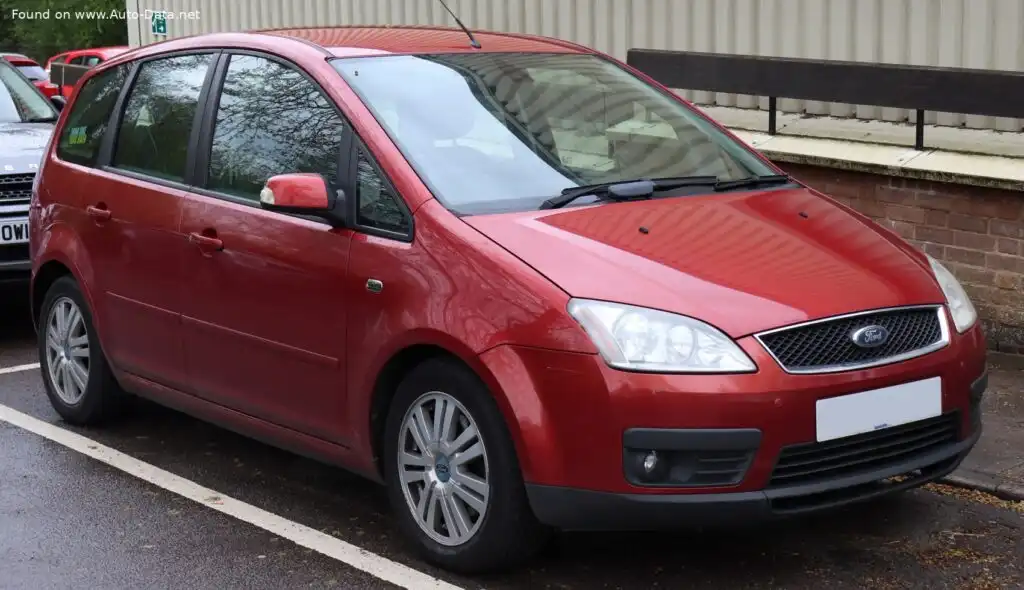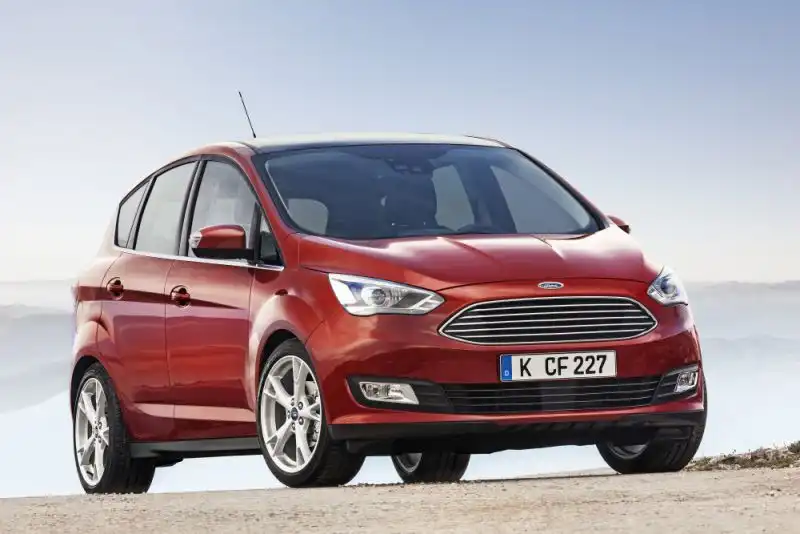
The Ford C-MAX II, specifically the 1.5 EcoBoost variant produced from 2015 to 2018, represents a mid-cycle refresh of the second-generation C-MAX compact multi-purpose vehicle (MPV). Positioned as a mainstream offering within the C-MAX lineup, this version aimed to balance fuel efficiency with respectable performance, appealing to families and individuals seeking a practical and versatile vehicle. It was primarily marketed in Europe, where compact MPVs enjoyed significant popularity, though limited numbers were also available in other markets. This particular configuration, pairing the 1.5-liter EcoBoost engine with the six-speed PowerShift dual-clutch transmission and Start/Stop system, was a key volume seller for Ford during those years.
Technical Specifications
| Brand | Ford |
| Model | C-MAX |
| Generation | C-MAX II (facelift 2015) |
| Type (Engine) | 1.5 EcoBoost (182 Hp) PowerShift S&S |
| Start of production | 2015 |
| End of production | 2018 |
| Powertrain Architecture | Internal Combustion engine |
| Body type | MPV |
| Seats | 5 |
| Doors | 5 |
| Fuel consumption (urban) | 8.9 l/100 km (26.4 US mpg, 31.7 UK mpg, 11.2 km/l) |
| Fuel consumption (extra urban) | 5.1 l/100 km (46.1 US mpg, 55.4 UK mpg, 19.6 km/l) |
| Fuel consumption (combined) | 6.5 l/100 km (36.2 US mpg, 43.5 UK mpg, 15.4 km/l) |
| CO2 emissions | 149 g/km |
| Fuel Type | Petrol (Gasoline) |
| Acceleration 0 – 100 km/h | 9.2 sec |
| Acceleration 0 – 62 mph | 9.2 sec |
| Acceleration 0 – 60 mph | 8.7 sec |
| Maximum speed | 213 km/h (132.35 mph) |
| Emission standard | Euro 6 |
| Weight-to-power ratio | 7.4 kg/Hp, 136 Hp/tonne |
| Weight-to-torque ratio | 5.6 kg/Nm, 179.4 Nm/tonne |
| Power | 182 Hp @ 6000 rpm |
| Power per litre | 121.4 Hp/l |
| Torque | 240 Nm @ 1600-5000 rpm (177.01 lb.-ft. @ 1600-5000 rpm) |
| Engine layout | Front, Transverse |
| Engine Model/Code | M9DB |
| Engine displacement | 1499 cm3 (91.47 cu. in.) |
| Number of cylinders | 4 |
| Engine configuration | Inline |
| Cylinder Bore | 79 mm (3.11 in.) |
| Piston Stroke | 76.5 mm (3.01 in.) |
| Compression ratio | 10:1 |
| Number of valves per cylinder | 4 |
| Fuel injection system | Direct injection |
| Engine aspiration | Turbocharger, Intercooler |
| Valvetrain | DOHC |
| Engine oil capacity | 4.05 l (4.28 US qt | 3.56 UK qt) |
| Coolant capacity | 9.5 l (10.04 US qt | 8.36 UK qt) |
| Kerb Weight | 1338 kg (2949.79 lbs.) |
| Max. weight | 2000 kg (4409.25 lbs.) |
| Max load | 662 kg (1459.46 lbs.) |
| Trunk (boot) space – minimum | 432 l (15.26 cu. ft.) |
| Trunk (boot) space – maximum | 1684 l (59.47 cu. ft.) |
| Fuel tank capacity | 55 l (14.53 US gal | 12.1 UK gal) |
| Max. roof load | 75 kg (165.35 lbs.) |
| Permitted trailer load (braked) | 1500 kg (3306.93 lbs.) |
| Permitted trailer load (unbraked) | 705 kg (1554.26 lbs.) |
| Length | 4379 mm (172.4 in.) |
| Width | 1828 mm (71.97 in.) |
| Width with mirrors folded | 1858 mm (73.15 in.) |
| Width including mirrors | 2067 mm (81.38 in.) |
| Height | 1610 mm (63.39 in.) |
| Wheelbase | 2648 mm (104.25 in.) |
| Front track | 1543-1557 mm (60.75 – 61.3 in.) |
| Rear track | 1554-1569 mm (61.18 – 61.77 in.) |
| Minimum turning circle | 11.1 m (36.42 ft.) |
| Drivetrain | Front wheel drive |
| Number of gears | 6 |
| Gearbox type | Automatic transmission PowerShift |
| Front suspension | Independent, McPherson with coil spring and anti-roll bar |
| Rear suspension | Independent multi-link spring suspension with stabilizer |
| Front brakes | Ventilated discs, 300×25 mm |
| Rear brakes | Disc, 280×11 mm |
| Assisting systems | ABS (Anti-lock braking system) |
| Steering type | Steering rack and pinion |
| Power steering | Electric |
| Tires size | 205/55 R16; 215/55 R16; 215/50 R17; 235/40 R18 |
| Wheel rims size | 6.5J x 16; 7J x 16; 7J x 17; 8J x 18 |
Powertrain & Engine Architecture
The heart of this C-MAX variant is the 1.5-liter EcoBoost inline-four cylinder engine, designated with the Ford engine code M9DB. This engine is a member of Ford’s EcoBoost family, characterized by direct fuel injection, turbocharging, and variable valve timing. The direct injection system, operating at pressures up to 200 bar, ensures precise fuel delivery for improved combustion efficiency and reduced emissions. The single scroll turbocharger, coupled with an intercooler, provides a boost in power and torque across a broad RPM range. The engine utilizes a dual overhead camshaft (DOHC) valvetrain with four valves per cylinder, optimizing airflow for enhanced performance. The 1.5 EcoBoost engine produces 182 horsepower at 6000 rpm and 240 Nm (177 lb-ft) of torque between 1600 and 5000 rpm. This power is delivered to the front wheels via a six-speed PowerShift dual-clutch transmission (DCT). The PowerShift transmission offers quicker and smoother gear changes compared to a traditional automatic, contributing to both performance and fuel economy. The inclusion of a Start/Stop system further enhances fuel efficiency by automatically shutting off the engine when the vehicle is stationary.
Driving Characteristics
The 1.5 EcoBoost with the PowerShift transmission provides a reasonably engaging driving experience for a compact MPV. While not overtly sporty, the engine delivers sufficient power for everyday driving and overtaking maneuvers. Acceleration from 0 to 60 mph takes approximately 8.7 seconds, and the top speed is rated at 132.35 mph. The PowerShift transmission contributes to a responsive feel, with quick shifts and minimal torque interruption. Compared to the lower-powered 1.0 EcoBoost variants, the 1.5 offers a noticeable improvement in performance, particularly when fully loaded or tackling inclines. However, it doesn’t match the outright performance of the higher-end trims equipped with larger engines. The gear ratios are tuned for a balance between fuel efficiency and drivability, with a relatively tall final drive. The steering is light and precise, making the C-MAX easy to maneuver in urban environments.
Equipment & Trim Levels
The 1.5 EcoBoost PowerShift S&S trim typically included a good level of standard equipment. This generally encompassed air conditioning, power windows and mirrors, a basic audio system with USB connectivity, and alloy wheels. Higher trim levels, such as Titanium, added features like automatic climate control, a larger touchscreen infotainment system with navigation, parking sensors, and upgraded interior upholstery. Optional extras included a panoramic sunroof, leather seats, and advanced driver-assistance systems like lane departure warning and automatic emergency braking.
Chassis & Braking
The C-MAX II utilizes an independent front suspension with McPherson struts and a multi-link independent rear suspension, providing a comfortable and controlled ride. A stabilizer bar is fitted to both the front and rear axles to reduce body roll during cornering. The braking system consists of ventilated discs on the front wheels and solid discs on the rear. Anti-lock Braking System (ABS) is standard, enhancing braking performance and stability. The suspension tuning is geared towards comfort and practicality, rather than outright sportiness.
Market Reception & Comparison
The 1.5 EcoBoost PowerShift C-MAX was generally well-received by automotive critics. It was praised for its fuel efficiency, comfortable ride, and spacious interior. However, some reviewers noted that the PowerShift transmission could occasionally exhibit hesitation or jerky shifts, particularly at low speeds. Compared to the 1.0 EcoBoost variants, the 1.5 offered a significant performance upgrade, making it a more suitable choice for drivers who frequently carry passengers or travel long distances. The 1.5 EcoBoost also offered better fuel economy than the larger 1.6 EcoBoost engine, making it a more economical option overall.
Legacy
The 1.5 EcoBoost engine, while generally reliable, has been subject to some reports of timing chain issues in certain applications. The PowerShift transmission, while innovative, also experienced some reliability concerns, particularly in early production units. However, many owners have reported years of trouble-free operation. On the used car market, the 1.5 EcoBoost C-MAX represents a good value proposition, offering a practical and fuel-efficient MPV at a competitive price. Regular maintenance, including timely oil changes and transmission fluid services, is crucial to ensure the long-term reliability of this powertrain.