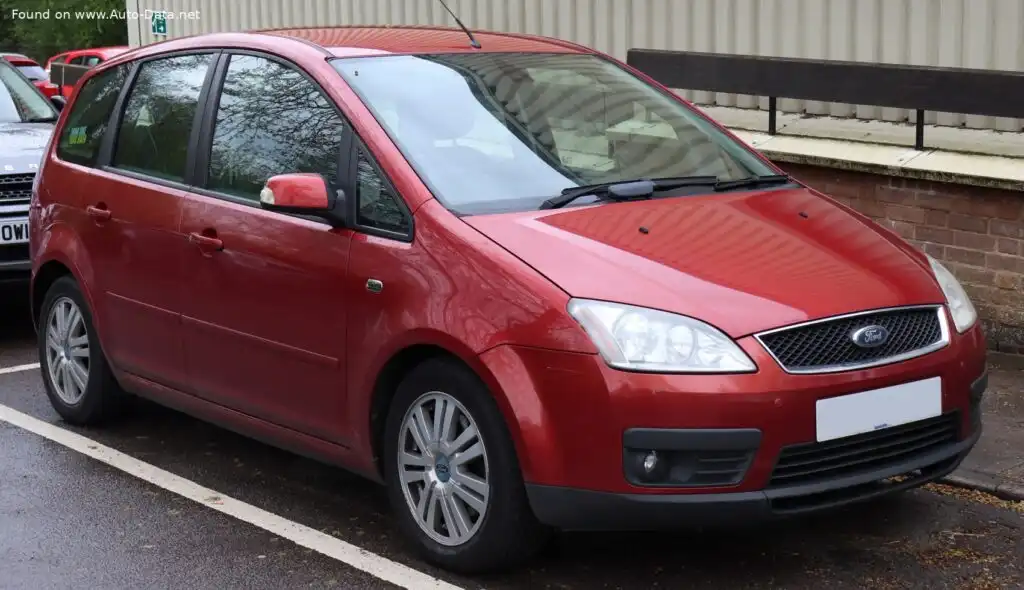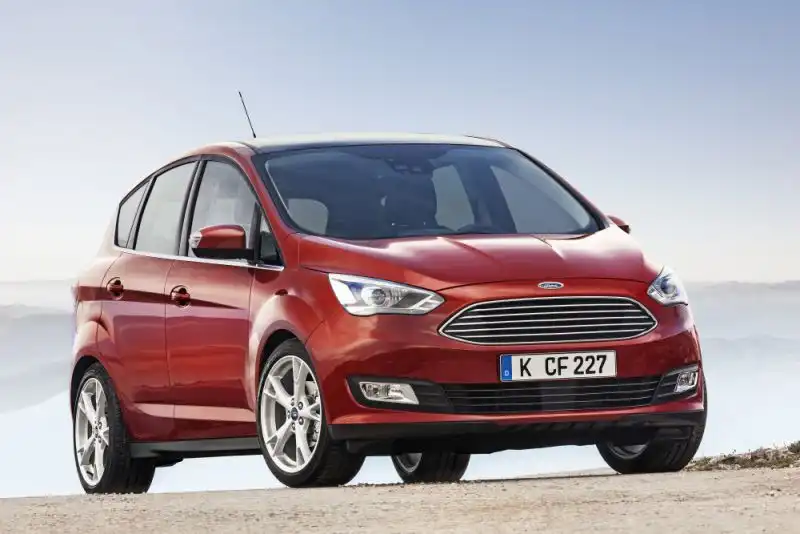
The Ford C-MAX II 1.5 Econetic (105 hp) S&S, produced from 2015 to 2018, represents a fuel-efficient variant within the second generation of the Ford C-MAX compact multi-purpose vehicle (MPV). Positioned as an entry-level to mid-range option, this model focused on maximizing fuel economy through the use of a smaller displacement diesel engine and start-stop technology. It was primarily marketed in Europe, where demand for economical and practical family vehicles was high. The C-MAX II, overall, aimed to blend the practicality of a minivan with the driving dynamics of a hatchback, offering a versatile option for families and individuals alike.
Technical Specifications
| Brand | Ford |
| Model | C-MAX |
| Generation | C-MAX II (facelift 2015) |
| Type (Engine) | 1.5 ECOnetic (105 Hp) S&S |
| Start of production | 2015 |
| End of production | 2018 |
| Powertrain Architecture | Internal Combustion engine |
| Body type | MPV |
| Seats | 5 |
| Doors | 5 |
| Fuel consumption (urban) | 4.3 l/100 km (54.7 US mpg, 65.7 UK mpg, 23.3 km/l) |
| Fuel consumption (extra urban) | 3.5 l/100 km (67.2 US mpg, 80.7 UK mpg, 28.6 km/l) |
| Fuel consumption (combined) | 3.8 l/100 km (61.9 US mpg, 74.3 UK mpg, 26.3 km/l) |
| CO2 emissions | 99 g/km |
| Fuel Type | Diesel |
| Acceleration 0 – 100 km/h | 12.1 sec |
| Acceleration 0 – 62 mph | 12.1 sec |
| Acceleration 0 – 60 mph | 11.5 sec |
| Maximum speed | 184 km/h (114.33 mph) |
| Emission standard | Euro 6 |
| Weight-to-power ratio | 12.7 kg/Hp |
| Weight-to-torque ratio | 4.9 kg/Nm |
| Power | 105 Hp @ 3600 rpm |
| Torque | 270 Nm @ 1750 rpm (199.14 lb.-ft. @ 1750 rpm) |
| Engine layout | Front, Transverse |
| Engine Model/Code | AEDA |
| Engine displacement | 1500 cm3 (91.54 cu. in.) |
| Number of cylinders | 4 |
| Engine configuration | Inline |
| Cylinder Bore | 73.5 mm (2.89 in.) |
| Piston Stroke | 88.3 mm (3.48 in.) |
| Compression ratio | 16:1 |
| Number of valves per cylinder | 2 |
| Fuel injection system | Diesel Commonrail |
| Engine aspiration | Turbocharger, Intercooler |
| Valvetrain | SOHC |
| Engine oil capacity | 3.85 l (4.07 US qt, 3.39 UK qt) |
| Coolant capacity | 7.3 l (7.71 US qt, 6.42 UK qt) |
| Kerb Weight | 1330 kg (2932.15 lbs.) |
| Max. weight | 1915 kg (4221.85 lbs.) |
| Max load | 585 kg (1289.7 lbs.) |
| Trunk (boot) space – minimum | 432 l (15.26 cu. ft.) |
| Trunk (boot) space – maximum | 1684 l (59.47 cu. ft.) |
| Fuel tank capacity | 53 l (14 US gal, 11.66 UK gal) |
| Max. roof load | 75 kg (165.35 lbs.) |
| Permitted trailer load (braked) | 400 kg (881.85 lbs.) |
| Permitted trailer load (unbraked) | 400 kg (881.85 lbs.) |
| Length | 4379 mm (172.4 in.) |
| Width | 1828 mm (71.97 in.) |
| Width with mirrors folded | 1858 mm (73.15 in.) |
| Width including mirrors | 2067 mm (81.38 in.) |
| Height | 1610 mm (63.39 in.) |
| Wheelbase | 2648 mm (104.25 in.) |
| Front track | 1543-1557 mm (60.75 – 61.3 in.) |
| Rear track | 1554-1569 mm (61.18 – 61.77 in.) |
| Minimum turning circle | 11.1 m (36.42 ft.) |
| Drivetrain | Front wheel drive |
| Number of gears | 6 |
| Gearbox type | Manual |
| Front suspension | Independent, McPherson with coil spring and anti-roll bar |
| Rear suspension | Independent multi-link with stabilizer |
| Front brakes | Ventilated discs, 278×25 mm |
| Rear brakes | Disc, 280×11 mm |
| Assisting systems | ABS |
| Steering type | Steering rack and pinion |
| Power steering | Electric |
| Tires size | 205/55 R16, 215/55 R16, 215/50 R17, 235/40 R18 |
| Wheel rims size | 6.5J x 16, 7J x 16, 7J x 17, 8J x 18 |
INTRODUCTION
The Ford C-MAX II 1.5 Econetic (105 hp) S&S, launched in 2015 as part of the C-MAX II facelift, was designed to appeal to buyers seeking a practical and economical family vehicle. Built on the Ford C-platform (also known as the 1HX0/A3 platform, shared with the Focus), the C-MAX II offered a higher seating position and more versatile interior space compared to traditional hatchbacks. The Econetic trim level specifically emphasized fuel efficiency, making it a popular choice in European markets with high fuel costs and stringent emissions regulations. The “S&S” designation indicates the inclusion of Ford’s Auto-Start-Stop system, further contributing to fuel savings in urban driving conditions.
Powertrain & Engine Architecture
At the heart of the C-MAX II 1.5 Econetic is the Duratorq TDCi 1.5-liter inline-four diesel engine, bearing the engine code AEDA. This engine utilizes a common-rail direct fuel injection system, delivering fuel directly into the combustion chamber at extremely high pressure for improved combustion efficiency and reduced emissions. The engine features a single overhead camshaft (SOHC) valvetrain operating two valves per cylinder. A turbocharger with an intercooler is employed to boost power output and improve torque across a wider rev range. The 1.5-liter engine produces 105 horsepower at 3600 rpm and 270 Nm (199 lb-ft) of torque at 1750 rpm. This engine was paired with a six-speed manual transmission, optimized for fuel economy rather than outright performance. The transmission’s gear ratios were relatively long, prioritizing efficiency at cruising speeds.
Driving Characteristics
The 1.5 Econetic variant of the C-MAX II offered a comfortable, if not particularly exhilarating, driving experience. The 105 hp output and 270 Nm of torque provided adequate power for everyday driving, but acceleration was modest. The 0-62 mph (0-100 km/h) sprint took approximately 12.1 seconds. The long gear ratios of the six-speed manual transmission contributed to good fuel economy on the highway, but required frequent downshifts when overtaking or climbing hills. Compared to higher-powered C-MAX variants, such as those equipped with the 1.6-liter EcoBoost petrol engine, the 1.5 Econetic felt noticeably slower. However, the diesel engine’s strong low-end torque made it well-suited for urban driving and carrying a full load of passengers and luggage.
Equipment & Trim Levels
The C-MAX II 1.5 Econetic typically came equipped with a reasonable level of standard features. These included air conditioning, power windows, power mirrors, a basic audio system with USB connectivity, and ABS brakes. Safety features such as front and side airbags were also standard. Interior upholstery was typically cloth, with a functional and durable design. Optional extras included alloy wheels, a more advanced audio system with navigation, rear parking sensors, and climate control. The Econetic trim generally focused on practicality and efficiency, so luxury features were less common than in higher-spec models.
Chassis & Braking
The C-MAX II utilized an independent front suspension with McPherson struts and a coil spring and anti-roll bar. The rear suspension employed an independent multi-link setup, also with a stabilizer bar. This suspension configuration provided a good balance between ride comfort and handling. The front brakes were ventilated discs measuring 278×25 mm, while the rear brakes were solid discs measuring 280×11 mm. ABS (Anti-lock Braking System) was standard. The chassis was tuned to prioritize comfort and stability, rather than sporty handling. The weight distribution was reasonably balanced, contributing to predictable handling characteristics.
Market Reception & Comparison
The Ford C-MAX II 1.5 Econetic was generally well-received by critics for its fuel efficiency and practicality. It was often praised as a sensible choice for families and individuals seeking a cost-effective MPV. However, some reviewers noted that the engine lacked outright power and that the interior, while functional, was not particularly stylish. Compared to other C-MAX variants, the 1.5 Econetic offered the best fuel economy but the slowest performance. It competed with other compact MPVs such as the Volkswagen Touran, Opel Meriva, and Citroën C4 Picasso, often offering a more affordable price point.
Legacy
The 1.5 Duratorq TDCi engine, in general, has proven to be a relatively reliable unit, although like any diesel engine, it is susceptible to issues related to the diesel particulate filter (DPF) if not properly maintained. Regular servicing and the use of high-quality diesel fuel are essential for ensuring long-term reliability. On the used car market, the C-MAX II 1.5 Econetic represents a good value proposition for buyers seeking an economical and practical MPV. Its fuel efficiency and relatively low running costs make it an attractive option, but potential buyers should be aware of the potential for DPF-related issues and ensure that the vehicle has been properly maintained.