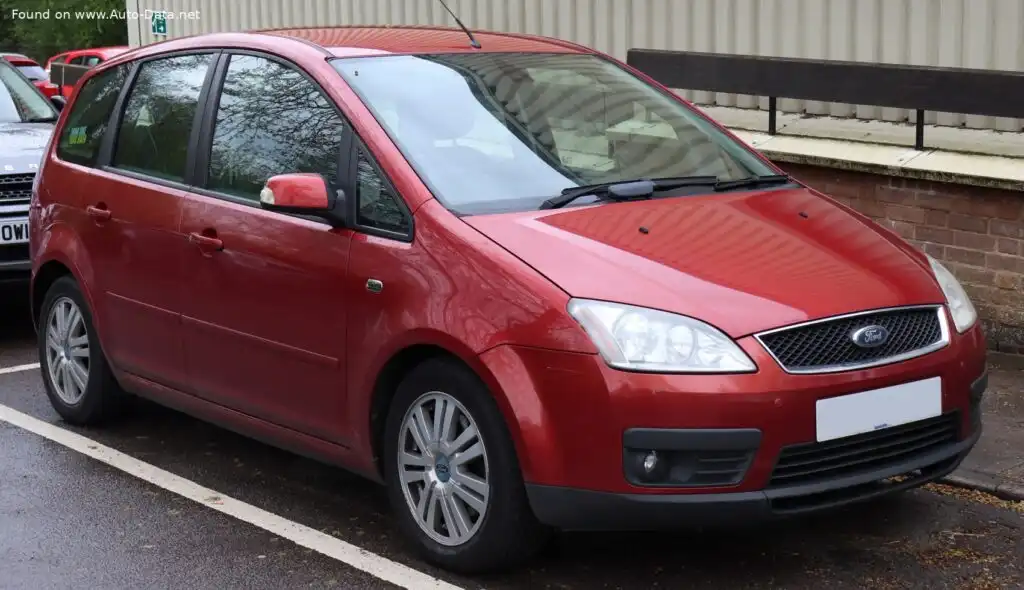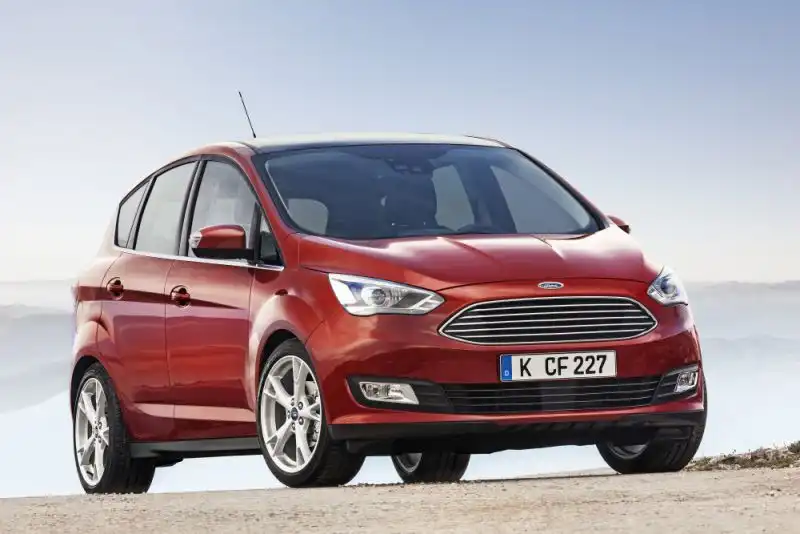
The Ford C-MAX II, specifically the 1.5 TDCi 95 horsepower variant produced from 2015 to 2019, represents a key offering in Ford’s European compact multi-purpose vehicle (MPV) lineup. This iteration, introduced with the facelift of the second-generation C-MAX, aimed to provide an economical and practical option for families and individuals seeking a versatile vehicle. Positioned as an entry-level diesel offering, it served as a more affordable alternative to the higher-powered TDCi engines and the petrol variants available. The C-MAX II, built on the Ford C-platform (shared with the Focus), was designed to compete with vehicles like the Opel/Vauxhall Meriva, Renault Scenic, and Volkswagen Touran, offering a blend of space, practicality, and Ford’s typically engaging driving dynamics.
Technical Specifications
| Brand | Ford |
| Model | C-MAX |
| Generation | C-MAX II (facelift 2015) |
| Type (Engine) | 1.5 TDCi (95 Hp) |
| Start of production | 2015 |
| End of production | 2019 |
| Powertrain Architecture | Internal Combustion engine |
| Body type | MPV |
| Seats | 5 |
| Doors | 5 |
| Fuel consumption (urban) | 5.1 l/100 km (46.1 US mpg, 55.4 UK mpg, 19.6 km/l) |
| Fuel consumption (extra urban) | 3.7 l/100 km (63.6 US mpg, 76.3 UK mpg, 27 km/l) |
| Fuel consumption (combined) | 4.2 l/100 km (56 US mpg, 67.3 UK mpg, 23.8 km/l) |
| CO2 emissions | 110 g/km |
| Fuel Type | Diesel |
| Acceleration 0 – 100 km/h | 13.4 sec |
| Acceleration 0 – 62 mph | 13.4 sec |
| Acceleration 0 – 60 mph | 12.7 sec |
| Maximum speed | 170 km/h (105.63 mph) |
| Emission standard | Euro 6 |
| Weight-to-power ratio | 14 kg/Hp, 71.5 Hp/tonne |
| Weight-to-torque ratio | 4.9 kg/Nm, 203.3 Nm/tonne |
| Power | 95 Hp @ 3600 rpm |
| Power per litre | 63.4 Hp/l |
| Torque | 270 Nm @ 1500-2000 rpm (199.14 lb.-ft. @ 1500-2000 rpm) |
| Engine layout | Front, Transverse |
| Engine Model/Code | XXDA, XXDC, XXDD |
| Engine displacement | 1499 cm3 (91.47 cu. in.) |
| Number of cylinders | 4 |
| Engine configuration | Inline |
| Cylinder Bore | 73.5 mm (2.89 in.) |
| Piston Stroke | 88.3 mm (3.48 in.) |
| Compression ratio | 16:1 |
| Number of valves per cylinder | 2 |
| Fuel injection system | Diesel Commonrail |
| Engine aspiration | Turbocharger, Intercooler |
| Valvetrain | SOHC |
| Engine oil capacity | 3.85 l (4.07 US qt | 3.39 UK qt) |
| Coolant capacity | 7.3 l (7.71 US qt | 6.42 UK qt) |
| Kerb Weight | 1328 kg (2927.74 lbs.) |
| Max. weight | 1915 kg (4221.85 lbs.) |
| Max load | 587 kg (1294.11 lbs.) |
| Trunk (boot) space – minimum | 432 l (15.26 cu. ft.) |
| Trunk (boot) space – maximum | 1684 l (59.47 cu. ft.) |
| Fuel tank capacity | 55 l (14.53 US gal | 12.1 UK gal) |
| Max. roof load | 75 kg (165.35 lbs.) |
| Permitted trailer load with brakes (12%) | 1200 kg (2645.55 lbs.) |
| Permitted trailer load without brakes | 700 kg (1543.24 lbs.) |
| Length | 4379 mm (172.4 in.) |
| Width | 1828 mm (71.97 in.) |
| Width with mirrors folded | 1858 mm (73.15 in.) |
| Width including mirrors | 2067 mm (81.38 in.) |
| Height | 1610 mm (63.39 in.) |
| Wheelbase | 2648 mm (104.25 in.) |
| Front track | 1543-1557 mm (60.75 – 61.3 in.) |
| Rear track | 1554-1569 mm (61.18 – 61.77 in.) |
| Minimum turning circle | 11.1 m (36.42 ft.) |
| Drivetrain | Front wheel drive |
| Number of gears | 6 |
| Gearbox type | Manual transmission |
| Front suspension | Independent, McPherson with coil spring and anti-roll bar |
| Rear suspension | Independent multi-link spring suspension with stabilizer |
| Front brakes | Ventilated discs, 278×25 mm |
| Rear brakes | Disc, 280×11 mm |
| Assisting systems | ABS (Anti-lock braking system) |
| Steering type | Steering rack and pinion |
| Power steering | Electric |
| Tires size | 205/55 R16; 215/55 R16; 215/50 R17; 235/40 R18 |
| Wheel rims size | 6.5J x 16; 7J x 16; 7J x 17; 8J x 18 |
INTRODUCTION
The 1.5 TDCi 95 horsepower version of the Ford C-MAX II (facelift 2015) was a significant model within the range, targeting buyers prioritizing fuel efficiency and affordability. Introduced as part of the mid-life refresh of the C-MAX II, this variant utilized Ford’s latest 1.5-liter diesel engine, replacing the older 1.6-liter units. Production ran from 2015 through 2019. This engine was part of Ford’s broader strategy to offer downsized, more efficient powertrains across its European lineup. The C-MAX II, in general, aimed to provide a more dynamic and car-like driving experience compared to some of its more traditionally styled MPV competitors, while still offering the practicality expected of the segment.
Powertrain & Engine Architecture
The heart of this C-MAX variant is the 1.5-liter TDCi diesel engine, specifically the XXDA, XXDC, or XXDD engine codes depending on the specific market and year. This engine is a four-cylinder, inline configuration, featuring a turbocharger with intercooling and a common-rail direct fuel injection system. The common-rail system, operating at high pressure, ensures precise fuel delivery for optimized combustion and reduced emissions. The engine utilizes a Single Overhead Camshaft (SOHC) valvetrain with two valves per cylinder. The 16:1 compression ratio is typical for a diesel engine, contributing to its efficiency. The engine’s output of 95 horsepower at 3600 rpm and 270 Nm of torque between 1500-2000 rpm provides a balance between fuel economy and usable performance. The engine is transversely mounted at the front of the vehicle, driving the front wheels. The 6-speed manual transmission was standard, chosen for its efficiency and driver engagement.
Driving Characteristics
The 1.5 TDCi 95 hp C-MAX offers a comfortable and practical driving experience, though it’s not designed for outright performance. Acceleration from 0-60 mph takes around 12.7 seconds, and top speed is limited to 170 km/h (105.63 mph). The engine delivers its peak torque at relatively low revs, providing adequate pulling power for everyday driving and overtaking maneuvers. The 6-speed manual transmission is well-matched to the engine, allowing drivers to keep the engine in its optimal power band. Compared to the higher-powered TDCi variants (like the 120 hp or 150 hp versions), this engine feels less responsive, particularly when fully loaded. However, it excels in fuel economy, making it an ideal choice for long commutes or frequent highway driving. The C-MAX’s suspension provides a good balance between comfort and handling, absorbing bumps effectively while maintaining a relatively stable feel in corners.
Equipment & Trim Levels
The 1.5 TDCi 95 hp C-MAX typically came equipped with a reasonable level of standard features. These generally included air conditioning, power windows, power mirrors, a basic audio system with USB connectivity, and ABS brakes. Higher trim levels, such as Titanium, added features like alloy wheels, a more advanced infotainment system with touchscreen display, automatic climate control, rear parking sensors, and cruise control. Interior upholstery was typically cloth, with options for upgraded materials on higher trims. Optional extras included a panoramic sunroof, navigation system, and various driver assistance features like lane departure warning and automatic emergency braking.
Chassis & Braking
The C-MAX II utilizes an independent front suspension with McPherson struts and a coil spring and anti-roll bar. The rear suspension is an independent multi-link setup, also with a stabilizer bar. This configuration provides a comfortable ride and good handling characteristics. Braking duties are handled by ventilated discs at the front and solid discs at the rear. ABS (Anti-lock Braking System) is standard. The steering is electric power-assisted, providing a light and responsive feel. The C-MAX’s chassis is designed to provide a stable and predictable driving experience, even when carrying a full load.
Market Reception & Comparison
The 1.5 TDCi 95 hp C-MAX was generally well-received by critics as a practical and economical MPV. It was praised for its fuel efficiency, comfortable ride, and spacious interior. However, some reviewers noted that the engine could feel underpowered, especially when carrying passengers or luggage. Compared to the higher-powered TDCi variants, this engine offered significantly better fuel economy but at the expense of performance. Against competitors like the Renault Scenic and Volkswagen Touran, the C-MAX offered a more engaging driving experience, but some rivals offered more flexible seating arrangements. The C-MAX’s reliability was generally considered good, although some owners reported minor issues with the diesel particulate filter (DPF).
Legacy
The 1.5 TDCi engine proved to be a reliable and durable powertrain when properly maintained. The C-MAX II 1.5 TDCi 95 hp remains a popular choice in the used car market, particularly for buyers seeking an affordable and fuel-efficient MPV. Regular servicing, including timely DPF regeneration, is crucial for maintaining the engine’s longevity. While not the most exciting vehicle to drive, the C-MAX II 1.5 TDCi 95 hp offers a compelling combination of practicality, economy, and reliability, making it a sensible choice for families and individuals alike.