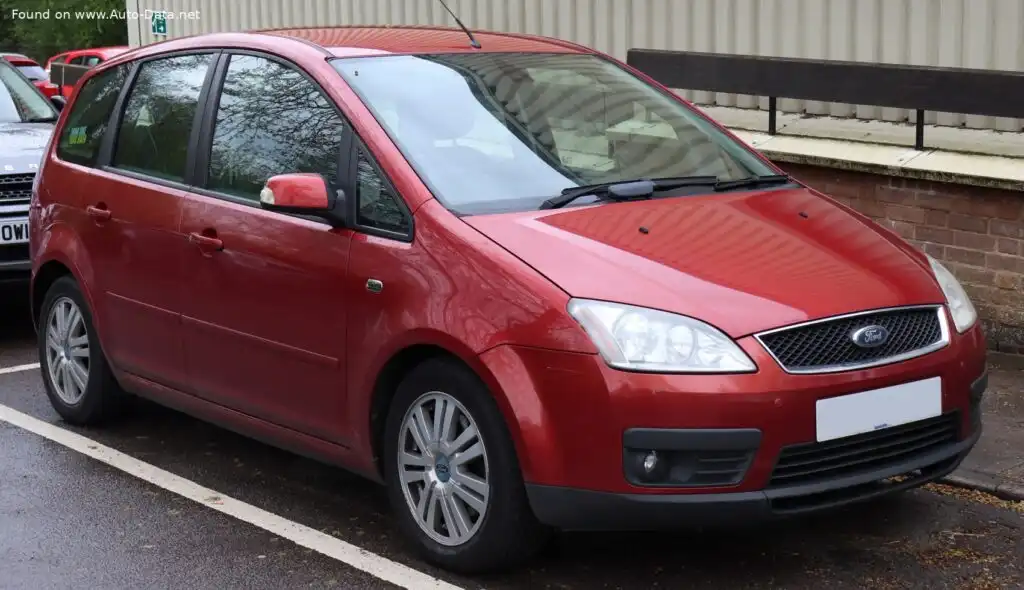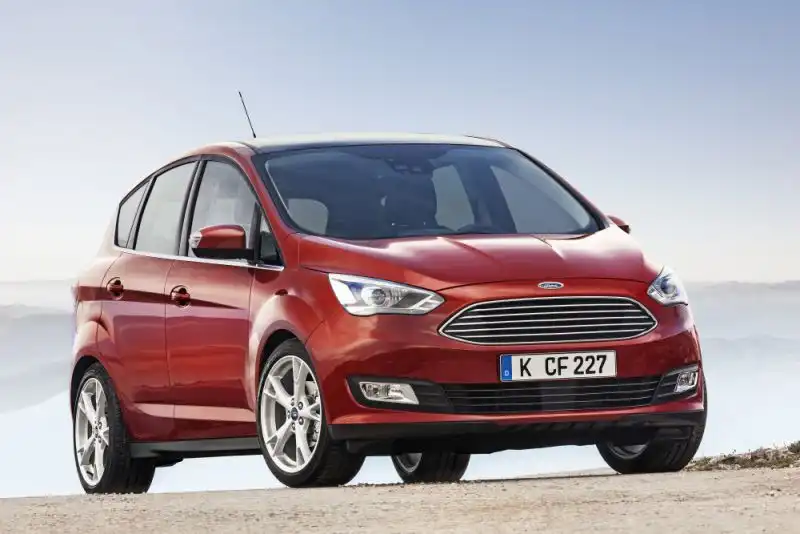
The Ford C-MAX II, specifically the 1.6 Ti-VCT 85 horsepower variant produced from 2015 to 2018, represented an entry-level offering within the refreshed second generation of Ford’s compact multi-purpose vehicle (MPV). Positioned as a budget-friendly option, this model aimed to provide practical family transport with reasonable fuel economy. The facelifted C-MAX II, built on the Ford C-platform (shared with the Focus), sought to improve upon the original C-MAX by refining its styling, interior, and technology. This particular engine and transmission combination was primarily sold in European markets, where smaller displacement engines and a focus on fuel efficiency were highly valued.
Technical Specifications
| Brand | Ford |
| Model | C-MAX |
| Generation | C-MAX II (facelift 2015) |
| Type (Engine) | 1.6 Ti-VCT (85 Hp) |
| Start of production | 2015 |
| End of production | 2018 |
| Powertrain Architecture | Internal Combustion engine |
| Body type | MPV |
| Seats | 5 |
| Doors | 5 |
| Fuel consumption (urban) | 8.4 l/100 km (28 US mpg, 33.6 UK mpg, 11.9 km/l) |
| Fuel consumption (extra urban) | 5.2 l/100 km (45.2 US mpg, 54.3 UK mpg, 19.2 km/l) |
| Fuel consumption (combined) | 6.4 l/100 km (36.8 US mpg, 44.1 UK mpg, 15.6 km/l) |
| CO2 emissions | 149 g/km |
| Fuel Type | Petrol (Gasoline) |
| Acceleration 0 – 100 km/h | 15.9 sec |
| Acceleration 0 – 62 mph | 15.9 sec |
| Acceleration 0 – 60 mph | 15.1 sec |
| Maximum speed | 165 km/h (102.53 mph) |
| Emission standard | Euro 6 |
| Weight-to-power ratio | 15.3 kg/Hp, 65.4 Hp/tonne |
| Weight-to-torque ratio | 9.2 kg/Nm, 108.5 Nm/tonne |
| Power | 85 Hp @ 6000 rpm |
| Power per litre | 53.3 Hp/l |
| Torque | 141 Nm @ 2500 rpm (104 lb.-ft. @ 2500 rpm) |
| Engine layout | Front, Transverse |
| Engine Model/Code | XTDB |
| Engine displacement | 1596 cm3 (97.39 cu. in.) |
| Number of cylinders | 4 |
| Engine configuration | Inline |
| Cylinder Bore | 79 mm (3.11 in.) |
| Piston Stroke | 81.4 mm (3.2 in.) |
| Compression ratio | 11:1 |
| Number of valves per cylinder | 4 |
| Fuel injection system | Multi-port manifold injection |
| Engine aspiration | Naturally aspirated engine |
| Valvetrain | DOHC |
| Engine oil capacity | 4.1 l (4.33 US qt | 3.61 UK qt) |
| Coolant capacity | 5.7 l (6.02 US qt | 5.02 UK qt) |
| Kerb Weight | 1299 kg (2863.8 lbs.) |
| Max. weight | 1860 kg (4100.6 lbs.) |
| Max load | 561 kg (1236.79 lbs.) |
| Trunk (boot) space – minimum | 432 l (15.26 cu. ft.) |
| Trunk (boot) space – maximum | 1684 l (59.47 cu. ft.) |
| Fuel tank capacity | 53 l (14 US gal | 11.66 UK gal) |
| Max. roof load | 75 kg (165.35 lbs.) |
| Permitted trailer load with brakes (12%) | 800 kg (1763.7 lbs.) |
| Permitted trailer load without brakes | 685 kg (1510.17 lbs.) |
| Length | 4379 mm (172.4 in.) |
| Width | 1828 mm (71.97 in.) |
| Width with mirrors folded | 1858 mm (73.15 in.) |
| Width including mirrors | 2067 mm (81.38 in.) |
| Height | 1610 mm (63.39 in.) |
| Wheelbase | 2648 mm (104.25 in.) |
| Front track | 1543-1557 mm (60.75 – 61.3 in.) |
| Rear track | 1554-1569 mm (61.18 – 61.77 in.) |
| Minimum turning circle | 11.1 m (36.42 ft.) |
| Drivetrain | Front wheel drive |
| Number of gears and type of gearbox | 6 gears, manual transmission |
| Front suspension | Independent, type McPherson with coil spring and anti-roll bar |
| Rear suspension | Independent multi-link spring suspension with stabilizer |
| Front brakes | Ventilated discs, 278×25 mm |
| Rear brakes | Disc, 280×11 mm |
| Assisting systems | ABS (Anti-lock braking system) |
| Steering type | Steering rack and pinion |
| Power steering | Electric Steering |
| Tires size | 205/55 R16; 215/55 R16; 215/50 R17; 235/40 R18 |
| Wheel rims size | 6.5J x 16; 7J x 16; 7J x 17; 8J x 18 |
INTRODUCTION
The Ford C-MAX II (facelift 2015) 1.6 Ti-VCT 85 hp model was a key component of Ford’s European lineup, designed to appeal to families seeking a practical and affordable MPV. Produced between 2015 and 2018, this version of the C-MAX sat at the lower end of the engine range, offering a more economical alternative to the higher-powered 1.5 EcoBoost and diesel variants. It was built on the global Ford C-platform, also underpinning the Focus, providing a familiar and well-engineered base. The facelift brought updated styling, improved interior materials, and enhanced technology compared to the pre-2015 models.
Powertrain & Engine Architecture
The heart of this C-MAX variant is the 1.6-liter Ti-VCT (Twin Independent Variable Camshaft Timing) four-cylinder gasoline engine, designated XTDB by Ford. This engine is a naturally aspirated unit, meaning it doesn’t employ turbocharging or supercharging. It utilizes multi-port fuel injection and a double overhead camshaft (DOHC) valvetrain with four valves per cylinder. The Ti-VCT system allows for independent control of both intake and exhaust valve timing, optimizing engine performance and efficiency across a wider range of engine speeds. The engine produces 85 horsepower at 6000 rpm and 141 Nm (104 lb-ft) of torque at 2500 rpm. The engine’s relatively simple design contributes to its reliability, but also limits its outright performance. The engine is paired with a 6-speed manual transmission, which was the standard offering for this trim level.
Driving Characteristics
The 1.6 Ti-VCT 85 hp C-MAX offers a comfortable, but unhurried driving experience. Acceleration is modest, taking approximately 15.9 seconds to reach 62 mph (100 km/h). The engine feels strained when pushed hard, particularly when fully loaded with passengers and luggage. The 6-speed manual transmission helps to keep the engine in its optimal power band, but frequent downshifts are often necessary for overtaking or climbing hills. Compared to the more powerful EcoBoost or diesel versions, this variant prioritizes fuel economy over performance. The gear ratios are tuned for efficiency, resulting in a relatively long-legged feel on the highway. The C-MAX’s suspension provides a comfortable ride, absorbing bumps and imperfections in the road well, but it’s not particularly sporty in handling.
Equipment & Trim Levels
The 1.6 Ti-VCT 85 hp C-MAX typically came equipped with a reasonable level of standard features, though it was positioned as the entry-level trim. Standard equipment generally included air conditioning, power front windows, a basic audio system with USB connectivity, and ABS brakes. Interior upholstery was typically cloth, and the dashboard featured a functional, if somewhat basic, design. Optional extras included alloy wheels, parking sensors, a more advanced audio system, and Ford’s SYNC infotainment system. Higher trim levels added features like automatic headlights, rain-sensing wipers, and cruise control.
Chassis & Braking
The C-MAX II utilizes an independent McPherson strut suspension at the front and an independent multi-link suspension at the rear, providing a good balance of ride comfort and handling. The front brakes are ventilated discs measuring 278x25mm, while the rear brakes are solid discs measuring 280x11mm. ABS (Anti-lock Braking System) is standard. The suspension setup is tuned for comfort, prioritizing a smooth ride over sporty handling. Stabilizer bars are fitted to both the front and rear axles to reduce body roll during cornering.
Market Reception & Comparison
The 1.6 Ti-VCT 85 hp C-MAX was generally well-received as a practical and affordable family vehicle. Critics praised its spacious interior, comfortable ride, and reasonable fuel economy. However, the engine’s lack of power was a common criticism, particularly when compared to the more potent alternatives in the C-MAX lineup. The 1.5 EcoBoost offered significantly more performance, while the 1.6 and 2.0-liter diesel engines provided superior fuel economy. The 1.6 Ti-VCT model appealed to buyers who prioritized affordability and fuel efficiency over outright performance.
Legacy
The 1.6 Ti-VCT engine, while not known for its blistering performance, has proven to be a relatively reliable unit. Common issues are generally minor and related to routine maintenance items. On the used car market, the 1.6 Ti-VCT C-MAX represents a good value proposition for buyers seeking an affordable and practical MPV. Its lower purchase price and reasonable running costs make it an attractive option for families on a budget. However, potential buyers should be aware of its limited power output and consider whether it meets their performance needs. The C-MAX II, in general, has established a reputation as a dependable and versatile family vehicle, and the 1.6 Ti-VCT variant continues to offer a cost-effective entry point into the model range.