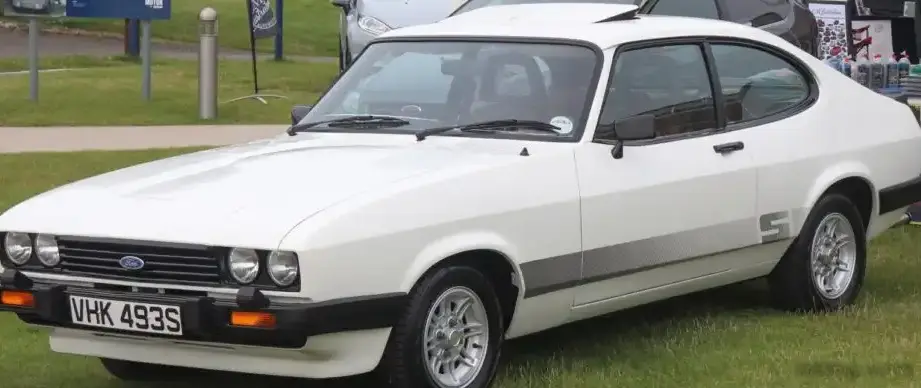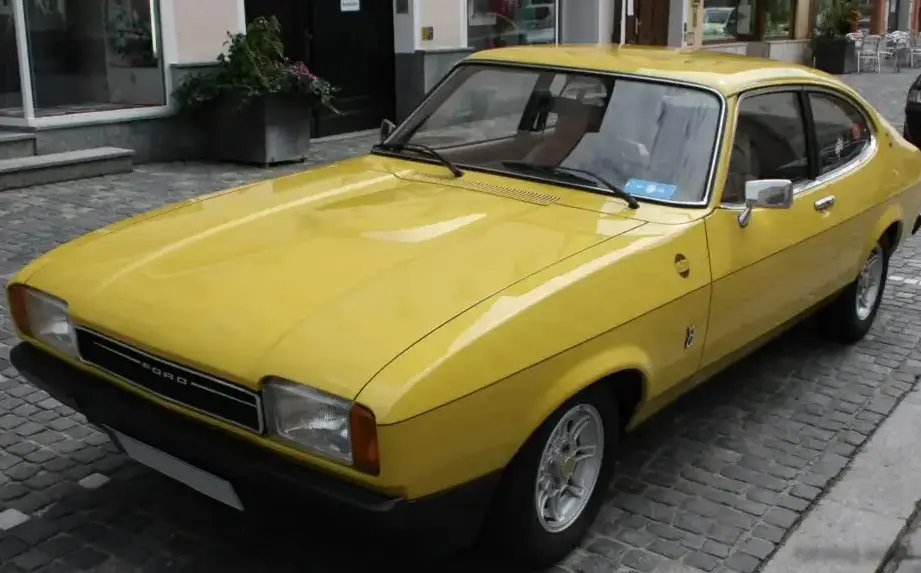
The Ford Capri II 1.6, produced between 1974 and 1977, represented the entry point into the second generation of Ford’s iconic coupe. Positioned as the most accessible version of the Capri II (GECP), it aimed to deliver stylish motoring to a broader audience. The Capri II, built on the platform shared with the Ford Cortina, was intended to be a “European Mustang,” offering a sporty appearance and driving experience at a relatively affordable price. The 1.6-liter variant, while not the most powerful in the range, played a significant role in the model’s overall sales success, particularly in the UK and continental Europe. It served as a stepping stone for buyers who desired the Capri’s aesthetics but prioritized fuel economy and lower running costs over outright performance.
Technical Specifications
| Brand | Ford |
| Model | Capri |
| Generation | Capri II (GECP) |
| Type (Engine) | 1.6 (72 Hp) |
| Start of Production | 1974 |
| End of Production | 1977 |
| Powertrain Architecture | Internal Combustion Engine |
| Body Type | Coupe |
| Fuel Type | Petrol (Gasoline) |
| Power | 72 Hp |
| Engine Aspiration | Naturally Aspirated |
Powertrain & Engine Architecture
The Capri II 1.6 was powered by the Ford Essex engine, specifically the 1600cc version. This engine, designated as the 1600 pre-crossflow, was a four-cylinder, inline configuration. It featured a cast iron block and cylinder head, with a two-barrel carburetor managing fuel delivery. While not a particularly advanced engine by the standards of the mid-1970s, it was known for its robustness and relative simplicity. The engine produced 72 horsepower at approximately 5,000 rpm and 98 lb-ft of torque at 3,000 rpm. The 1.6L engine utilized a single overhead camshaft (SOHC) valvetrain. The transmission offered was typically a four-speed manual, but a three-speed automatic transmission (Ford C4) was also available, though less common. The automatic transmission, while providing convenience, did noticeably impact the car’s acceleration and fuel economy.
Driving Characteristics
The driving experience in the Capri II 1.6 was geared towards comfortable cruising rather than spirited performance. With 72 horsepower propelling a relatively heavy coupe, acceleration was modest. Zero to sixty mph times were typically in the 12-14 second range. The automatic transmission further dulled acceleration, with noticeable ‘hunting’ for gears on inclines. However, the Capri’s suspension – independent front suspension with MacPherson struts and a live axle rear suspension – provided a reasonably comfortable ride, absorbing bumps and imperfections in the road surface effectively. The steering, while not power-assisted in the base models, was relatively light and provided adequate feedback. Compared to the Capri II 2.0L or 3.0L models, the 1.6 felt significantly less powerful, particularly when overtaking or climbing hills. The manual transmission version offered a more engaging driving experience, allowing the driver to better utilize the engine’s limited power band.
Equipment & Trim Levels
The Capri II 1.6 was generally offered in a base trim level, focusing on affordability. Standard equipment included cloth upholstery, a basic instrument cluster, and vinyl floor coverings. Exterior features typically included chrome bumpers, steel wheels with hubcaps, and relatively simple interior trim. Optional extras included a vinyl roof, upgraded interior trim, a radio, and, on some markets, a limited-slip differential. The Capri II’s interior design, while functional, was somewhat dated even for the mid-1970s. The dashboard layout was straightforward, with clearly marked gauges for speed, fuel level, and engine temperature. The seats offered reasonable comfort for long journeys, although they lacked the bolstering found in more sporting models.
Chassis & Braking
The Capri II utilized a body-on-frame construction, contributing to its relatively heavy weight. The front suspension featured MacPherson struts, coil springs, and an anti-roll bar. The rear suspension employed a live axle with leaf springs. Braking on the Capri II 1.6 typically consisted of front disc brakes and rear drum brakes. The braking system was adequate for normal driving conditions, but lacked the stopping power of more modern vehicles. Later models sometimes featured larger diameter brakes for improved performance. Steering was a recirculating ball system, providing a reasonable level of feel and control. The chassis, while robust, was prone to rust, particularly in areas exposed to salt and moisture.
Market Reception & Comparison
The Capri II 1.6 was generally well-received as an affordable and stylish coupe. Critics acknowledged its limitations in terms of performance, but praised its comfortable ride and attractive design. It was often compared to other coupes in its price range, such as the Opel Manta and the Vauxhall Firenza. The 1.6L Capri offered better fuel economy than the larger-engined variants, making it a popular choice for drivers who prioritized running costs. However, the automatic transmission version was often criticized for its sluggish performance and reduced fuel efficiency. Compared to the 2.0L and 3.0L Capri II models, the 1.6 was significantly less expensive to purchase and maintain, but it lacked the performance and prestige of its more powerful siblings. The 2.0L offered a noticeable performance boost without a significant increase in price, making it a popular alternative for buyers seeking a more engaging driving experience.
Legacy
The Ford Capri II 1.6, while not the most sought-after version of the Capri, remains a popular classic car among enthusiasts. Its relative affordability and mechanical simplicity make it an attractive option for those looking to enter the classic car market. The Essex 1.6L engine is generally considered to be reliable, although regular maintenance is essential to prevent issues such as oil leaks and overheating. Parts availability is generally good, although some trim-specific components can be difficult to find. Today, the Capri II 1.6 is valued for its nostalgic appeal and its representation of 1970s automotive design. Well-maintained examples command reasonable prices in the used car market, and the model continues to be celebrated by Ford enthusiasts around the world. The Capri, in all its forms, left a lasting impression on the automotive landscape, solidifying Ford’s reputation for producing stylish and accessible vehicles.