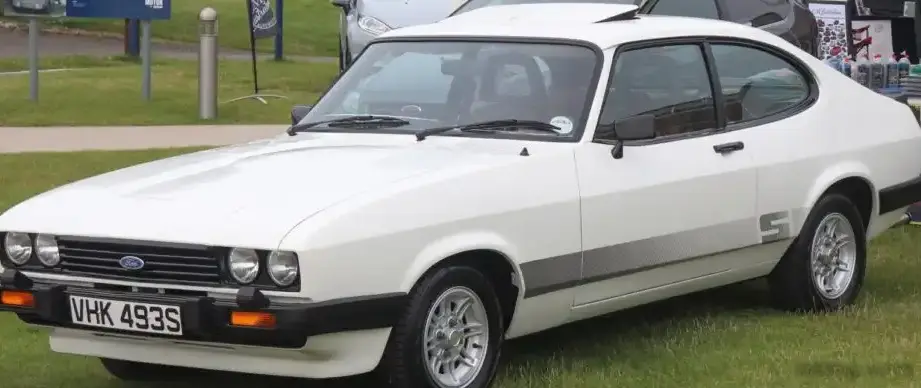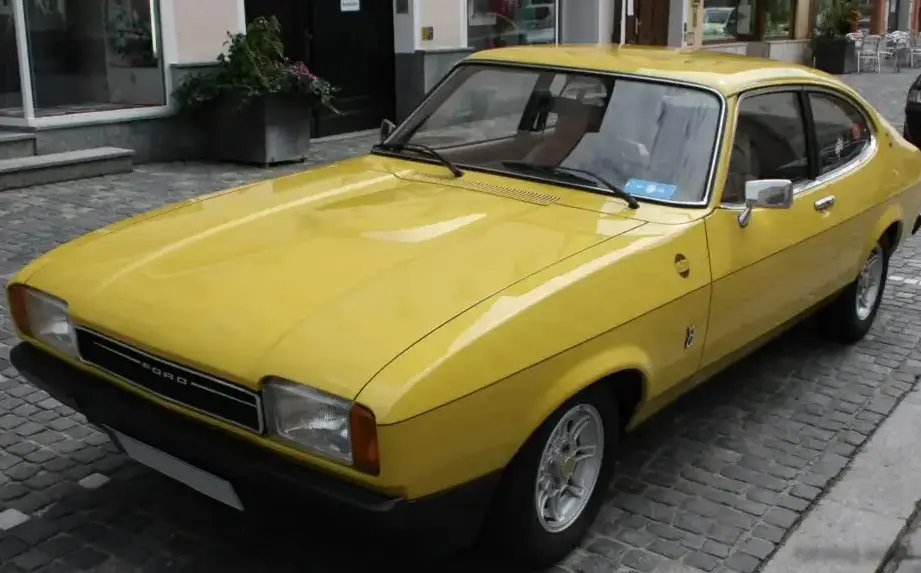
The Ford Capri II 1.6, produced between 1974 and 1977, represented a key entry point into the Capri range during the second generation (GECP) of this iconic Ford coupe. Positioned as the more accessible model, it offered a blend of sporty styling and reasonable running costs, appealing to a broader market than the higher-performance V6 variants. The Capri II, launched in 1974, was a significant restyling of the original Capri, featuring a more aggressive front end and improved interior. The 1.6-liter model served as the foundation of the lineup, providing a balance between performance and affordability for European buyers.
Technical Specifications
| Brand | Ford |
| Model | Capri |
| Generation | Capri II (GECP) |
| Type (Engine) | 1.6 (88 Hp) |
| Start of Production | 1974 |
| End of Production | 1977 |
| Powertrain Architecture | Internal Combustion Engine |
| Body Type | Coupe |
| Fuel Type | Petrol (Gasoline) |
| Power | 88 Hp |
| Engine Aspiration | Naturally Aspirated |
Powertrain & Engine Architecture
The Capri II 1.6 was powered by the Ford Essex engine, specifically the 1600cc variant. This engine, internally designated as the 2000E, was a four-cylinder, inline engine featuring a cast iron block and an aluminum cylinder head. It utilized a single overhead camshaft (SOHC) design, operating two valves per cylinder. Fuel delivery was managed by a Ford-designed carburetor, typically a Weber 32 DFEV or a similar specification, providing adequate fuel atomization for the engine’s output. The engine’s 88 horsepower at approximately 5,600 rpm and 98 lb-ft of torque at 3,000 rpm were respectable for its displacement and the era.
The transmission paired with the 1.6-liter engine was typically a four-speed manual gearbox, although a three-speed automatic transmission (Ford C3) was also available, albeit less common. The automatic transmission, while offering convenience, did noticeably impact the car’s acceleration and fuel economy. The automatic’s gear ratios were geared towards comfortable cruising rather than spirited driving. The engine’s relatively low compression ratio (around 8.9:1) meant it could run on lower octane fuel, a significant advantage in many European markets at the time.
Driving Characteristics
The driving experience in a Capri II 1.6 was characterized by its comfortable ride and predictable handling. The 88 hp engine provided sufficient power for everyday driving, but it wasn’t a particularly quick car. Acceleration from 0 to 60 mph took around 12-13 seconds, depending on the transmission and vehicle weight. The manual transmission offered a more engaging driving experience, allowing the driver to better utilize the engine’s power band. The automatic transmission, while smooth, resulted in slower acceleration and a less responsive feel. The Capri’s rear-wheel-drive layout contributed to a balanced handling characteristic, although it required careful throttle control in wet or slippery conditions.
Compared to the Capri II 2.0L and 3.0L models, the 1.6 offered a more economical driving experience. The 2.0L provided a noticeable performance boost, while the 3.0L V6 was significantly faster but also considerably more expensive to run. The 1.6’s lighter weight also contributed to slightly better fuel economy, averaging around 25-30 mpg in mixed driving conditions.
Equipment & Trim Levels
The Capri II 1.6 typically came equipped with basic but functional features. Standard equipment included cloth upholstery, a basic instrument cluster with speedometer, fuel gauge, and temperature gauge, and manually operated windows and door locks. The interior trim was relatively simple, reflecting the car’s position as the entry-level model. Optional extras included a vinyl roof, upgraded interior trim, a radio, and a heated rear window. The Capri II 1.6 was often seen as a blank canvas for personalization, with many owners adding aftermarket accessories to enhance its appearance and comfort.
Trim levels were relatively limited for the 1.6 model. It was generally offered in a base specification, with the option to add individual extras. Later models might have featured minor cosmetic upgrades, such as different wheel trims or interior color schemes.
Chassis & Braking
The Capri II utilized a MacPherson strut front suspension and a leaf spring rear suspension. This setup provided a comfortable ride, but it wasn’t particularly sophisticated in terms of handling precision. The steering was a recirculating ball system, which offered reasonable accuracy but lacked the feel of more modern steering technologies. Braking on the Capri II 1.6 typically consisted of disc brakes on the front wheels and drum brakes on the rear wheels. The braking system was adequate for the car’s performance, but it lacked the stopping power of the larger-engined models, which often featured disc brakes all around.
Stabilizer bars were fitted as standard to reduce body roll during cornering, improving handling stability. The suspension was tuned to prioritize ride comfort over outright handling performance, making it a pleasant car for long-distance cruising.
Market Reception & Comparison
The Capri II 1.6 was generally well-received by critics as an affordable and stylish coupe. It was praised for its comfortable ride, decent fuel economy, and attractive design. However, it was also criticized for its relatively modest performance and somewhat dated interior. Compared to rivals such as the Opel Manta and the Volkswagen Scirocco, the Capri II 1.6 offered a more spacious interior and a more comfortable ride, but it lacked the sporting pretensions of the Scirocco.
Fuel economy was a key selling point for the 1.6 model, averaging around 25-30 mpg, which was competitive for the time. Reliability was generally good, although the carburetor could require occasional adjustment. Maintenance costs were relatively low, making it an attractive option for budget-conscious buyers.
Legacy
The Ford Capri II 1.6 remains a popular classic car today, particularly among enthusiasts who appreciate its retro styling and affordable running costs. The 1.6-liter engine is known for its durability and relative simplicity, making it a relatively easy engine to maintain and repair. Parts availability is generally good, although some specific components can be difficult to find. The Capri II 1.6 has become a sought-after model for restoration projects, with many examples being lovingly restored to their original condition. Its status as an accessible entry point into the Capri range has ensured its continued popularity among classic car collectors and enthusiasts. While not the fastest or most technologically advanced Capri variant, the 1.6 holds a special place in automotive history as a stylish and affordable coupe that captured the spirit of the 1970s.