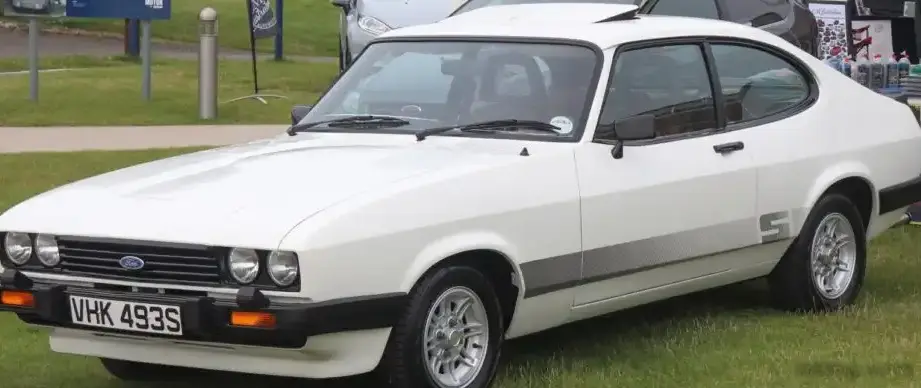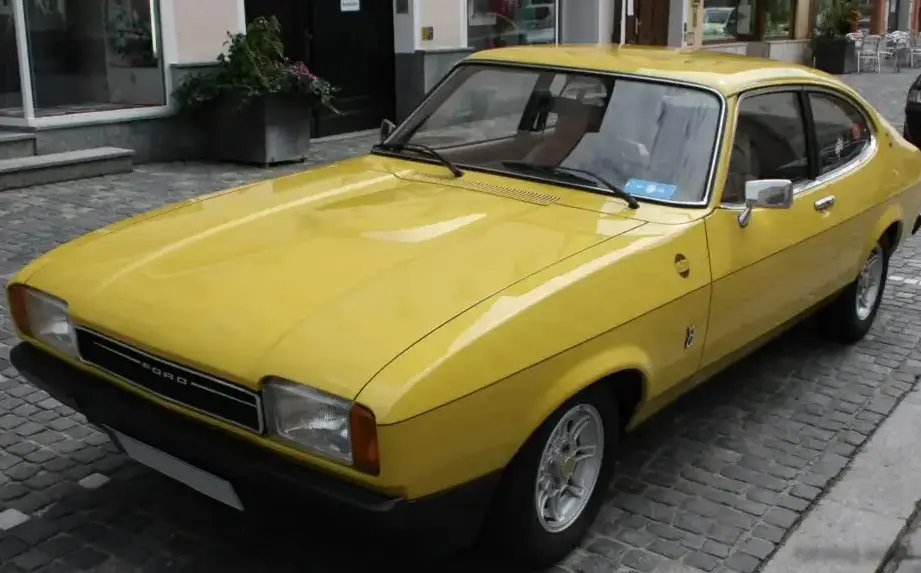
The Ford Capri II 2.0 (90 hp) represented a key offering within the second generation of Ford’s iconic coupe, produced between 1976 and 1977. Falling within the GECP model designation, this variant aimed to provide a balance of affordability and respectable performance for the European market. The Capri II, launched in 1974, was a significant restyling of the original Capri, adopting a more angular and modern aesthetic. The 2.0-liter, 90 hp engine coupled with an automatic transmission positioned this model as a comfortable, easy-to-drive option, appealing to buyers who prioritized convenience over outright sporting prowess. It occupied a mid-range position in the Capri II lineup, slotting below the more powerful V6 models and above the base 1.6-liter versions.
Technical Specifications
| Brand | Ford |
| Model | Capri |
| Generation | Capri II (GECP) |
| Type (Engine) | 2.0 (90 Hp) |
| Start of Production | 1976 |
| End of Production | 1977 |
| Powertrain Architecture | Internal Combustion Engine |
| Body Type | Coupe |
| Fuel Type | Petrol (Gasoline) |
| Power | 90 hp |
| Engine Aspiration | Naturally Aspirated |
Powertrain & Engine Architecture
The Capri II 2.0 (90 hp) was powered by the Ford Taunus 2.0-liter inline-four cylinder engine, a mainstay of the Ford of Europe lineup during the 1970s. While various iterations of this engine existed, the 90 hp version utilized a single downdraft carburetor – typically a Ford 32 DFEV – for fuel delivery. This contrasted with the fuel injection systems found on some higher-performance European models. The engine featured a single overhead camshaft (SOHC) valvetrain, operating two valves per cylinder. The engine code is often referenced as 2000cc. The automatic transmission offered with this variant was a three-speed unit, a Borg-Warner design licensed and produced by Ford. This transmission was chosen for its smoothness and ease of use, aligning with the target demographic for this trim level. The engine’s relatively low compression ratio (typically around 8.8:1) and conservative camshaft profile contributed to its reliability and suitability for regular unleaded gasoline.
Driving Characteristics
The driving experience in the Capri II 2.0 (90 hp) automatic was characterized by relaxed cruising and adequate, though not exhilarating, performance. The three-speed automatic transmission, while smooth, did impact acceleration compared to the available four-speed manual gearbox. The gear ratios were optimized for fuel economy and comfortable highway driving, rather than rapid acceleration. Zero to sixty mph times were typically in the 11-12 second range, making it slower than the V6-powered Capris. However, the engine provided sufficient torque for everyday driving situations, and the automatic transmission eliminated the need for constant gear changes. The Capri II’s rear-wheel-drive layout provided a balanced feel, although the relatively soft suspension tuning prioritized ride comfort over sharp handling. Compared to the manual transmission versions, the automatic felt less engaging, but significantly easier to live with in urban environments.
Equipment & Trim Levels
The Capri II 2.0 (90 hp) automatic typically came equipped with a reasonable level of standard features for its time. Interior appointments generally included cloth upholstery, a basic instrument cluster with speedometer, fuel gauge, and temperature gauge, and a woodgrain-effect dashboard trim. Power steering was often included as standard, enhancing ease of maneuverability. Optional extras included a vinyl roof, upgraded audio systems (typically a basic AM/FM radio), and more luxurious interior trim options. The Capri II offered a range of trim packages, allowing buyers to customize their vehicles to some extent. The 2.0-liter automatic often formed the basis for the ‘L’ trim level, which added some additional comfort and convenience features. Exterior features typically included chrome bumpers and trim, and a selection of paint colors.
Chassis & Braking
The Capri II utilized a traditional body-on-frame construction, providing a robust and relatively lightweight chassis. The front suspension consisted of independent, double wishbones with coil springs and anti-roll bar. The rear suspension employed a live axle with leaf springs. Braking on the 2.0-liter models typically featured disc brakes on the front wheels and drum brakes on the rear. The size of the front discs varied slightly depending on the specific year and market. Power-assisted braking was often standard, providing improved stopping power. The steering was a recirculating ball system, offering a reasonable level of precision. Stabilizer bars (anti-roll bars) were fitted to both the front and rear axles, helping to reduce body roll during cornering. The suspension setup was tuned for a comfortable ride, prioritizing smoothness over aggressive handling.
Market Reception & Comparison
The Capri II 2.0 (90 hp) automatic received generally positive reviews for its comfort, practicality, and affordability. Critics acknowledged that it wasn’t a sports car in the truest sense, but praised its suitability for everyday driving and long-distance cruising. Fuel economy was considered reasonable for the time, although it lagged behind the smaller-engined Capri models. Compared to the V6-powered Capris, the 2.0-liter automatic offered a significant price advantage, making it accessible to a wider range of buyers. Reliability was generally good, although the automatic transmission could be prone to wear and tear if not properly maintained. The 1.6-liter Capri models were even more affordable, but offered noticeably less performance. The 2.0-liter engine provided a good compromise between performance and economy, making it a popular choice for those seeking a comfortable and practical coupe.
Legacy
The Ford Capri II 2.0 (90 hp) automatic, while not the most sought-after variant today, holds a significant place in automotive history as a representative of 1970s European motoring. The powertrain, while relatively simple, proved to be reasonably durable, and many examples are still on the road today. However, finding well-maintained examples can be challenging, as rust and age have taken their toll on many vehicles. In the used car market, these Capris are appreciated by enthusiasts for their classic styling and relatively affordable entry price. Parts availability is generally good, although some specific trim pieces can be difficult to source. The Capri II 2.0 (90 hp) automatic remains a nostalgic reminder of a time when coupes offered a blend of style, comfort, and practicality, appealing to a broad spectrum of drivers.