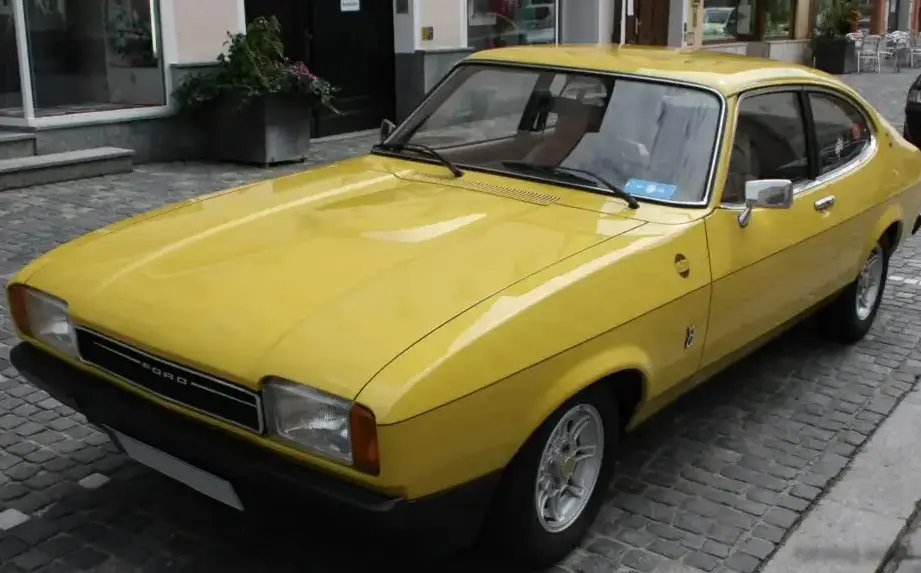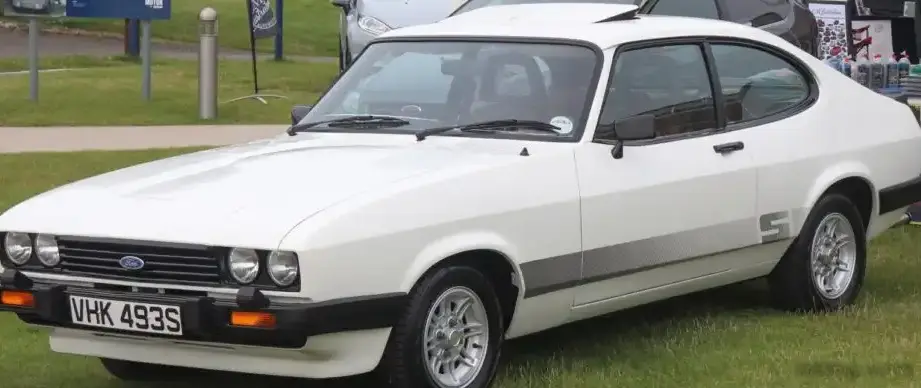
The Ford Capri III 2.0, produced between 1978 and 1985, represented a significant iteration of Ford’s iconic coupe. Falling within the GECP generation, this 2.0-liter, 100 horsepower variant occupied a middle-ground position in the Capri lineup, offering a balance between performance and affordability. It aimed to appeal to buyers seeking a stylish, sporty coupe without the higher price tag of the more powerful V6 models. The Capri, originally conceived as Ford of Europe’s answer to the Chevrolet Camaro and Ford Mustang, had evolved over its lifespan, and the MkIII represented a refinement of the original formula, with a greater emphasis on comfort and a more modern aesthetic.
Technical Specifications
| Brand | Ford |
| Model | Capri |
| Generation | Capri III (GECP) |
| Type (Engine) | 2.0 (100 Hp) |
| Start of Production | 1978 |
| End of Production | 1985 |
| Powertrain Architecture | Internal Combustion Engine |
| Body Type | Coupe |
| Fuel Type | Petrol (Gasoline) |
| Power | 100 Hp |
| Engine Model/Code | Pinto / TL20H |
| Engine Aspiration | Naturally Aspirated |
| Engine Oil Capacity | 4.25 l (4.49 US qt | 3.74 UK qt) |
| Coolant Capacity | 7.8 l (8.24 US qt | 6.86 UK qt) |
Powertrain & Engine Architecture
The heart of the Capri III 2.0 was the Ford Pinto engine, specifically the TL20H variant. This 1994cc, inline-four cylinder engine was a mainstay of Ford of Europe’s offerings during the late 1970s and early 1980s. The TL20H featured a cast iron block and an aluminum cylinder head, utilizing a single overhead camshaft (SOHC) design. Fuel delivery was managed by a Bosch K-Jetronic mechanical fuel injection system, a relatively sophisticated setup for the time, offering improved fuel efficiency and reduced emissions compared to carbureted engines. The Pinto engine was known for its relatively simple design, making it reasonably easy to maintain, but also for potential cooling issues if not properly cared for. The 100 horsepower output was achieved at 5,500 rpm, with a torque figure of approximately 118 lb-ft at 3,000 rpm. The engine was typically paired with a four-speed automatic transmission, although a five-speed manual was also available. The automatic transmission, while providing ease of use, did impact acceleration and overall responsiveness compared to the manual option.
Driving Characteristics
The Capri III 2.0 automatic offered a comfortable, rather than overtly sporty, driving experience. The automatic transmission, while smooth, resulted in a noticeable delay in response compared to the manual gearbox. Acceleration from 0 to 60 mph was typically around 11-12 seconds, making it competitive with other coupes of the era, but slower than the Capri 2.8i or 3.0S models. The gear ratios were geared towards cruising comfort, with a relatively tall final drive. This meant that highway speeds were easily maintained, but overtaking required careful planning. The Pinto engine, while not particularly powerful, provided adequate torque for everyday driving. The Capri’s suspension, consisting of MacPherson struts at the front and a live axle with trailing arms at the rear, offered a reasonable compromise between ride comfort and handling. The car felt stable and predictable, but lacked the sharp handling characteristics of more modern sports coupes.
Equipment & Trim Levels
The 2.0-liter Capri III typically came equipped with a reasonable level of standard features. Interior upholstery was usually cloth, available in a variety of colors and patterns. The dashboard featured a woodgrain finish, and instrumentation included a speedometer, tachometer, fuel gauge, and coolant temperature gauge. Power steering was often included as standard, although air conditioning was typically an optional extra. Other available options included a sunroof, upgraded stereo systems, and alloy wheels. The 2.0 model generally sat in the mid-range of the Capri lineup, offering more features than the base 1.6-liter model but lacking the luxury appointments of the higher-spec 2.8i and 3.0S variants. Trim levels varied slightly depending on the market, with some countries offering specific packages with unique interior and exterior styling cues.
Chassis & Braking
The Capri III utilized a body-on-frame construction, a relatively traditional approach for the time. The chassis was designed to provide a good balance between rigidity and weight. Front suspension consisted of MacPherson struts with anti-roll bar, while the rear featured a live axle with trailing arms and, depending on the specific model, a stabilizer bar. Braking systems varied. Earlier models often featured front disc brakes and rear drum brakes, while later models typically had disc brakes all around. The braking system was generally adequate for the car’s performance, but lacked the sophistication of more modern anti-lock braking systems. Steering was typically power-assisted, providing relatively light and easy steering feel.
Market Reception & Comparison
The Capri III 2.0 automatic received generally positive reviews from automotive journalists. It was praised for its stylish design, comfortable ride, and reasonable fuel economy. However, critics also noted that the automatic transmission dulled the driving experience and that the engine lacked the outright performance of the larger-displacement V6 models. Compared to its siblings, the 2.0 offered a more affordable entry point into the Capri range. The 1.6-liter model was considered too underpowered for many buyers, while the 2.8i and 3.0S were significantly more expensive. The 1.9 TDI versions (available later in the Capri’s lifespan in some markets) offered superior fuel economy but lacked the smooth refinement of the Pinto engine. Fuel economy for the 2.0 automatic was typically around 22-26 mpg, depending on driving conditions.
Legacy
The Ford Capri, and specifically the 2.0 variant, holds a significant place in automotive history as a stylish and attainable coupe. While the Pinto engine had a reputation for potential cooling issues, the Capri 2.0 proved to be a relatively reliable car when properly maintained. Today, the Capri III 2.0 is a popular choice among classic car enthusiasts, offering a blend of retro style and affordable running costs. Good examples are becoming increasingly collectible, and the car is often seen at classic car shows and events. The Capri’s enduring appeal lies in its distinctive design, its comfortable driving experience, and its status as a symbol of 1980s automotive culture. Parts availability is generally good, although some specific trim pieces can be difficult to find. The Capri remains a testament to Ford of Europe’s ability to create desirable and affordable cars that captured the imagination of a generation.